Salmon, Sweet Potato and Asparagus
A crisp-skinned salmon fillet with roasted sweet potato and charred asparagus — about 48 grams of protein and 690 honest calories. Clean fats, slow carbs, and the kind of plate that builds you up while feeling light. Bulking food that doesn’t sit like a brick.
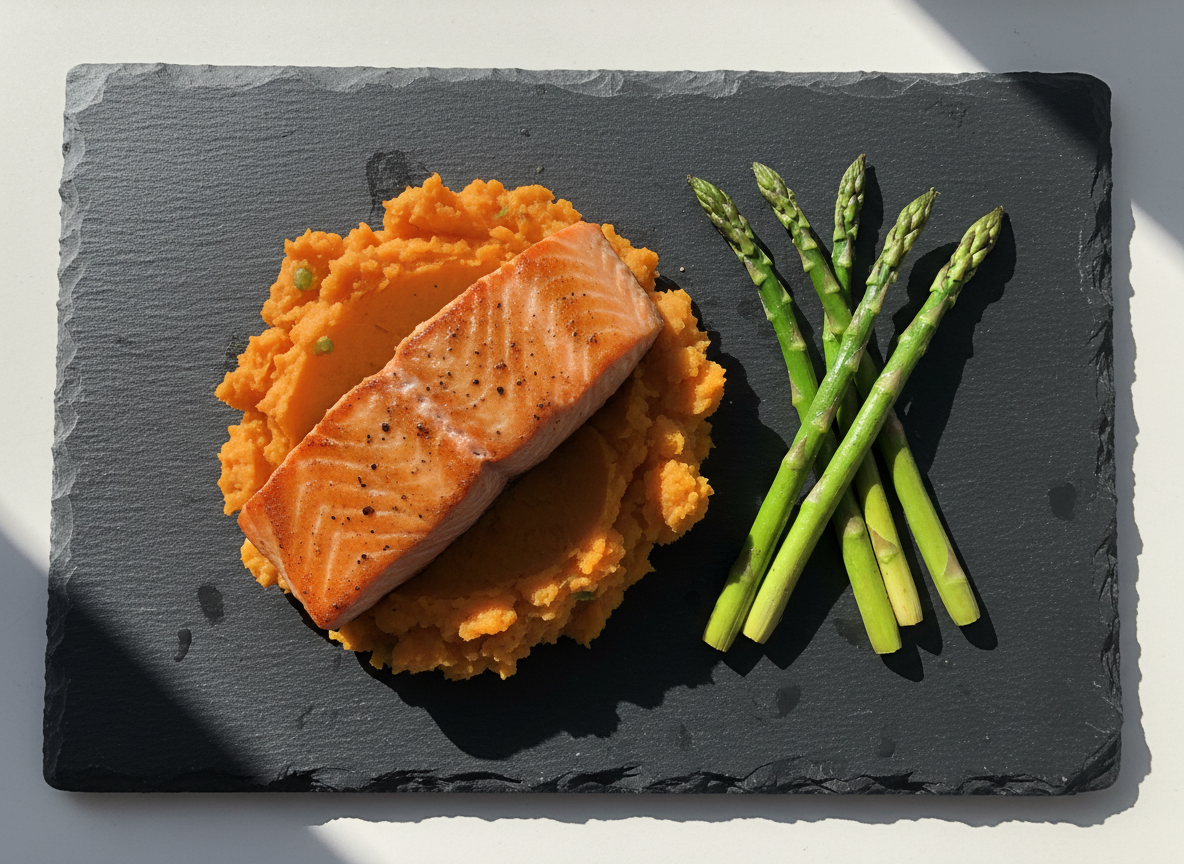 Plate 01 / Finished
Not every bulking meal has to be a wall of red meat and white rice. I learned that the hard way during one off-season where I ate so much beef and pasta that I felt heavy and sluggish for weeks — strong in the gym, but foggy and bloated the rest of the time. So I started rotating in plates like this one: salmon for the protein and the good fats, sweet potato for slow carbs that don’t leave you crashing, asparagus because it’s quick and it makes the plate feel like dinner rather than fuel. I felt human again within days.
The fats in salmon are doing real work here. They carry calories — which you want on a bulk — but they sit lighter than a fatty steak, and the omega-3s are good for you in a way I’m happy to put my name to. Roasted sweet potato gives you around 690 honest calories and a steady release of energy, and the asparagus adds colour, fibre and a little char that makes the whole thing taste like you tried. About 48 grams of protein, all from real food.
This is the plate I cook when I want to build but my appetite’s flagging — it’s substantial without being a slog to eat. I make it on a quiet evening, salmon skin crackling in the pan while the tray roasts, the kitchen smelling of garlic and char. It’s bulking food that respects your gut. Cook it once on a heavy week and you’ll keep coming back. I’ve got you on this one.
01Who it’s for & when to eat it
This is a clean, high-protein plate that flexes to your goal. The salmon and asparagus stay the same; you move the sweet potato and the oil. Here’s how I steer it.
The default plate
Full sweet potato, salmon crisped in a little oil, asparagus charred with garlic. Calorie-dense from good fats and slow carbs, light on the gut — ideal when red meat’s starting to sit heavy.
Lean it out
Halve the sweet potato, roast everything with just a teaspoon of oil, and double the asparagus. You keep the salmon’s protein and good fats for far fewer calories. See the variations below.
Steady fuel
A moderate sweet potato portion with the full salmon fillet and plenty of greens. Quality fats, slow carbs and lean protein — full, satisfied, and gentle on digestion for an evening meal.
Timing: this makes a lovely evening meal — the slow carbs and good fats keep you full overnight, and it’s light enough not to weigh you down before bed. It also works post-training when you want quality fuel without the heaviness of a big meat plate.
02Ingredients
Makes 1 plate. Scale every line in proportion to feed more — give the salmon room in the pan so the skin crisps rather than steams.
Servings 1 · adjust on the live recipe card- Salmon fillet skin on200 g · 7 oz
- Sweet potato250 g · 8.8 oz
- Asparagus150 g · 5.3 oz
- Garlic, crushed2 cloves
- Olive oil1 tbsp · 15 ml
- Lemon1/2
- Smoked paprika1/2 tsp
- Sea saltto taste
- Black pepperto taste
Swaps I actually use: for a cut, halve the sweet potato and roast with the bare minimum of oil — the salmon’s own fat does plenty. No asparagus? Tenderstem broccoli, green beans or courgette all char beautifully on the same tray. Want it bigger for a hard bulk? Add a second small sweet potato and finish the salmon with a spoon of pesto or tahini.
03Step by step
Cube the sweet potato, oven on
Heat the oven to 200°C (400°F). Cut the sweet potato into even cubes, toss with half the oil, the paprika, salt and pepper, and spread on a tray. Even cubes roast evenly — a mix of big and small gives you some burnt, some raw.
Give the potato a head start
Roast the sweet potato for about 20 minutes, turning once. It needs longer than everything else, so get it going alone — the asparagus joins later so it doesn’t turn to mush before the potato’s soft.
Pat the skin bone-dry, season
While the potato roasts, pat the salmon skin completely dry with paper towel and season both sides. Dry skin is the whole secret to a crisp, crackling finish — any moisture and it steams and goes limp.
Magnus says: a wet salmon skin will never crisp. Dry it properly and you’re halfway to a great fillet.
Greens onto the tray
Toss the asparagus with the crushed garlic and a little oil, then add it to the tray with the sweet potato for the last 8 to 10 minutes. You want it tender with a bit of char, not floppy.
Skin-side down, press it flat
Heat the rest of the oil in a pan over medium-high. Lay the salmon skin-side down and press gently with a spatula for ten seconds so the skin makes full contact. Leave it four to five minutes until crisp, then flip for a minute to finish.
Magnus says: pressing the fillet down stops the skin curling away from the pan. Hold it just long enough to set.
Build it, squeeze the lemon
Pile the sweet potato and asparagus onto a plate, lay the salmon on top skin-up so it stays crisp, and squeeze the lemon over the lot. A last pinch of salt and you’re done — substantial, light, and good for you.
04The spec sheet
Real numbers, calculated — not guessed. The recipe makes 1 plate, around 560g of cooked food total. Here’s what the full plate and a flat 100g actually give you.
| Nutrient | Per serving | Per 100g |
|---|---|---|
| Energy | 690 kcal | 123 kcal |
| Protein | 48.0 g | 8.6 g |
| Carbohydrate | 52.0 g | 9.3 g |
| — of which sugars | 14.0 g | 2.5 g |
| Fat | 32.0 g | 5.7 g |
| — of which saturates | 6.0 g | 1.1 g |
| Fibre | 9.0 g | 1.6 g |
| Sodium | ~0.45 g | ~0.08 g |
Moderate, and that’s the appeal — you get bulking calories from quality fats without a plate that sits like a brick. Volume and fullness, not heaviness.
A lifter’s metric. The salmon’s fat carries calories, so the protein density is moderate — exactly right for a building plate that’s also good for you.
- Vitamin A~1300 µg · 144% DV
- Vitamin B12~5 µg · 208% DV
- Selenium~45 µg · 82% DV
- Vitamin D~12 µg · 60% DV
- Potassium~1300 mg · 28% DV
- Folate~120 µg · 30% DV
Macros are calculated from standard food-composition data and will shift a little with your exact ingredients and brands. Micronutrient figures are estimates against general adult Daily Values. Numbers are for guidance, not medical advice — see our Nutrition Disclaimer.
05Bulk / Cut / TRT variations
One plate, three jobs. The salmon and asparagus hold steady; you move the sweet potato and the added fat. Macros below are for a full serving (one plate built as described).
Build it up
Full sweet potato plus a small extra one, salmon finished with a spoon of pesto, and a generous drizzle of olive oil over the asparagus. Clean, calorie-dense fuel that still sits light.
The lean version
Halve the sweet potato, roast everything with just a teaspoon of oil, double the asparagus, and lean on the salmon’s own fat. Big plate, quality protein and fats, far fewer calories.
Steady & balanced
A moderate sweet potato, the full salmon fillet, and plenty of charred greens with lemon. Quality fats, slow carbs and lean protein to keep you full and recovering without overshooting.
06Meal prep & storage
Salmon is happiest fresh, but the roasted veg preps brilliantly and cooked salmon keeps well for a couple of days. Here’s how I handle it without ending up with a dry, fishy fridge.
Cooked salmon keeps two days, ideally boxed separately from the veg. Eat it cold over the roasted potato or warm it gently — don’t blast it.
Roasted sweet potato freezes fine; I freeze cooked salmon only if I must. Thaw in the fridge and reheat low and slow to keep it from drying out.
Warm salmon gently — a covered pan or a short, low microwave burst. Overheat it and it dries and toughens. Honestly, cold flaked salmon over warm potato is lovely.
My move for prep: batch-roast a big tray of sweet potato and asparagus, then cook the salmon fresh to order — it takes five minutes in a pan. That way the part that suffers from reheating is the part you don’t reheat.
Want a whole week built around food like this?
Drop your email and I’ll send you my free 7-day plan — meals, macros already counted, grocery list written. No spam, no lectures.
No spam. Unsubscribe whenever. See what’s in the plan →
07Common questions
How do I stop the salmon skin sticking? +
Three things: dry the skin thoroughly, get the pan and oil properly hot before the fillet goes in, and then leave it alone. Salmon releases itself from the pan when the skin is crisp — if it’s still stuck, it isn’t ready, so give it another minute before you try to move it.
Can I use frozen salmon? +
Yes, and it’s often cheaper. Thaw it fully in the fridge overnight, then pat it very dry — frozen-then-thawed fish holds extra water, so drying it well is even more important if you want crisp skin. The macros are the same.
Can I swap the sweet potato for regular potato? +
Absolutely. White or new potatoes roast the same way and the calories are similar. Sweet potato gives you more vitamin A and a slightly sweeter, slower carb, but use whatever you’ve got and enjoy your dinner.
How do I bump the calories for a hard bulk? +
Lean on the good fats: a spoon of pesto or tahini on the salmon, a heavier drizzle of olive oil on the veg, and a second small sweet potato. That carries the plate past 880 calories while keeping it real food and easy on the gut. See the Bulk variation above.
Is the salmon skin worth eating? +
When it’s properly crisp, it’s the best part — and it carries some of the good fats too. If you’d rather skip it, pull it off after cooking; the macros drop only a little. But cook it crisp once and I think you’ll be a convert.
This plate lives inside a full week of meals.
This salmon plate is one dinner in my 7-day bulking plan — seven days of high-protein, calorie-dense meals with the macros counted and the grocery list written. You pick the goal; I do the maths.
See the bulking meal plan →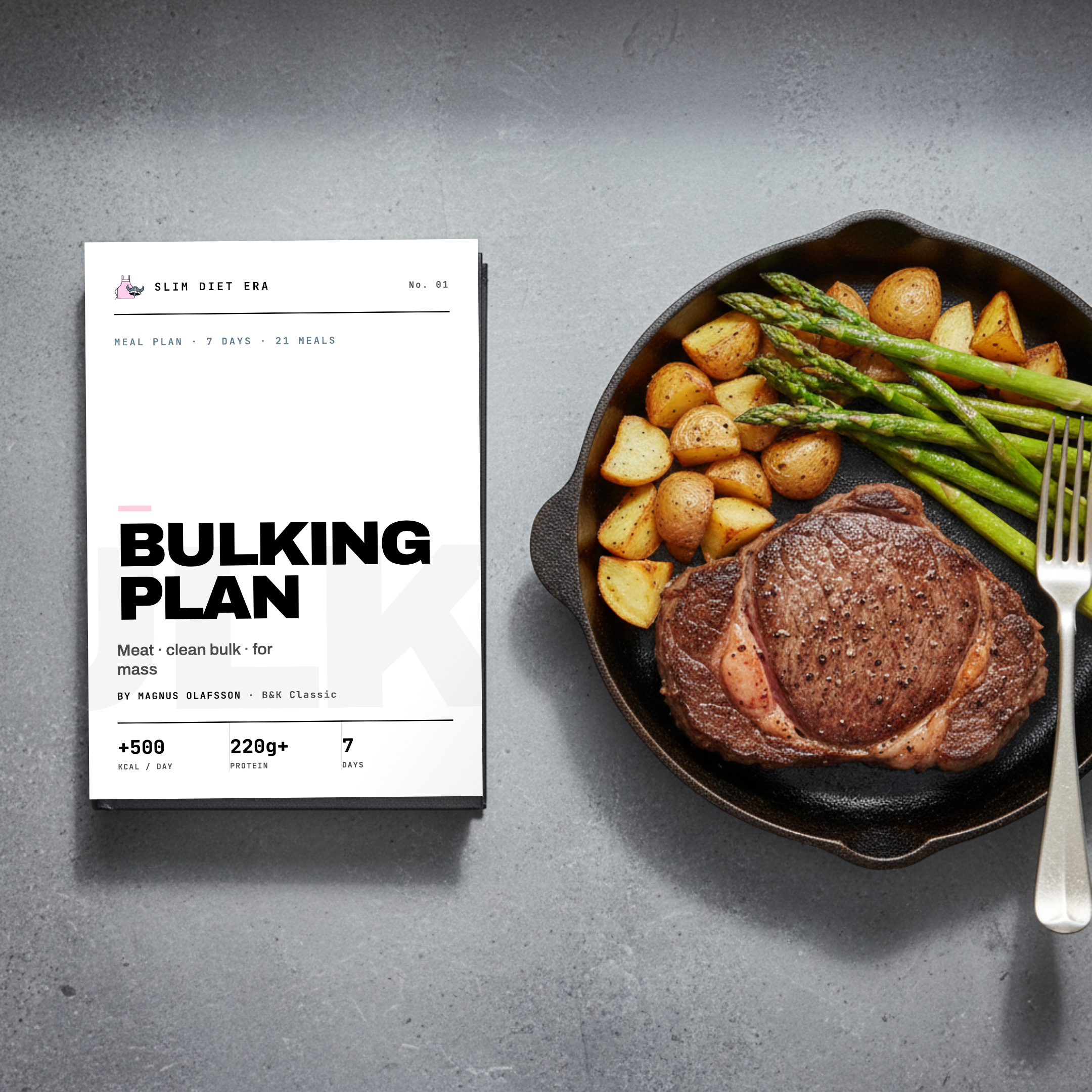
08Pairs well with

Magnus Olafsson
I’m Magnus — twenty years under the iron, from a cold gym in Stockholm to the classic-physique stage, and now mostly in my kitchen in a pink apron. I’ve cut for shows, bulked through winters, and I’ve been on TRT since I was thirty-five. I know what it takes to eat for the body you’re chasing, and I know it shouldn’t come with a side of shame.
Everything here is food I actually cook and macros I actually count. I don’t diagnose, I don’t promise, and I never make a number up. I just feed you well and tell you the truth.
Slim Diet Era shares recipes and general nutrition information. It is not medical or dietetic advice, and we do not provide guidance on obtaining or using any controlled substance. See our Medical Disclaimer and Nutrition Disclaimer.