Category: Anabolic

  • High-Protein Pancakes

    High-Protein Pancakes

    Recipe · Anabolic / Breakfast / High-protein

    High-Protein Pancakes

    A proper stack of fluffy pancakes with 38 grams of protein and 480 calories — soft, golden, and built to fill you up on a morning you actually want breakfast. No chalky protein-powder taste, no sad single rubbery disc. Just a real stack that loves your macros back.

    GoalAnabolic
    Total time15 min
    Servings1 stack
    Protein / serving38 g
    Calories / serving480 kcal
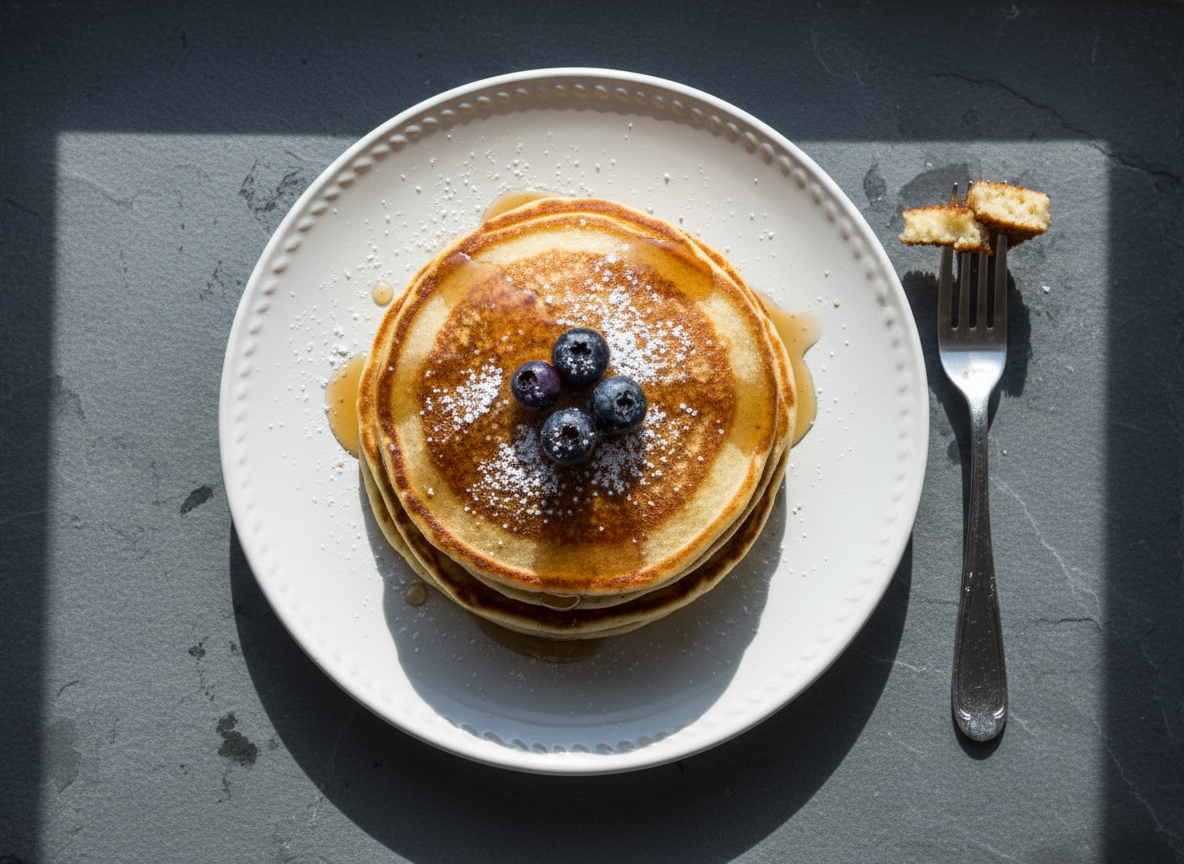
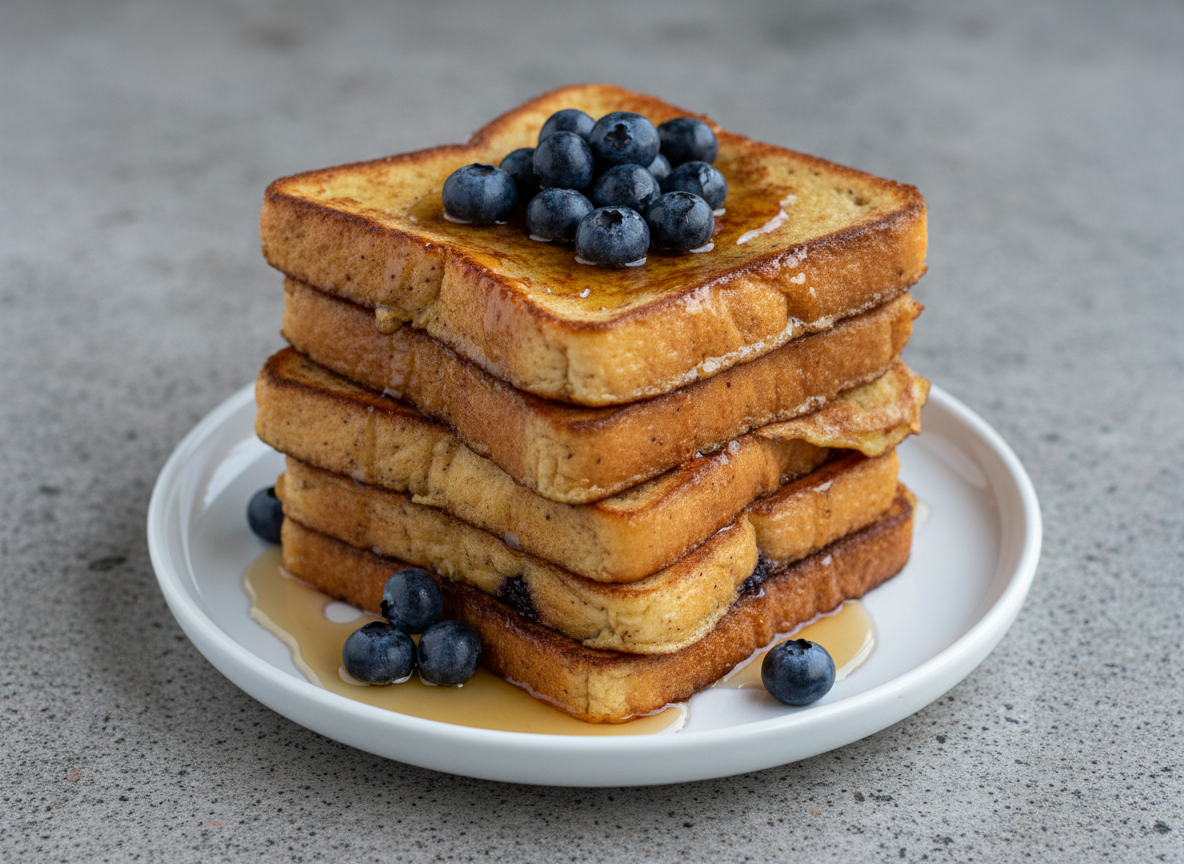
    A tall stack of golden high-protein pancakes topped with berries, plated under cold light Plate 01 / Finished

    I have a memory of being maybe seven years old, standing on a chair at my mother’s elbow on a grey Sunday, watching her flip pancakes one after another while the windows steamed up. She’d slide them onto my plate the second they were done, too hot to eat, and I’d burn my mouth every single time and never learn. So you’ll understand that when I got serious about training and the bro wisdom of the day told me breakfast was now egg whites and a scoop of powder in water, something in me quietly rebelled. A man should be allowed pancakes, love. Even a man chasing a stage-lean physique.

    The problem with most “protein pancakes” is they taste like a punishment — dense, chalky, the protein powder shouting over everything. So I spent a frankly silly number of Sunday mornings working out how to get a real, fluffy, golden stack with serious protein in it. The fix turned out to be balance: oats blended into a flour for structure, cottage cheese and egg for a tender crumb and a protein hit, and just a touch of baking powder to lift the whole thing. The result is soft, it browns properly, and it doesn’t fall apart when you flip it.

    This is a stack I’m genuinely happy to put in front of anyone — 38 grams of protein, 480 sensible calories, and it eats like a Sunday treat rather than a supplement. It keeps me full till lunch, which is more than I can say for most breakfasts. Make it once on a quiet morning and I think you’ll find your weekends have a new ritual. I’ve got you on this one.

    01Who it’s for & when to eat it

    A high-protein breakfast that bends to the morning you’re having. The batter stays the same; what changes is what you stack it with. Here’s how I steer it.

    On a cut

    Keep it clean

    Use egg whites instead of the whole egg and top with fresh berries and a spoon of zero-cal syrup or plain Greek yoghurt. You keep the stack and the protein, you pull the calories down toward 360. A filling breakfast that fits a deficit.

    On a bulk

    Stack it taller

    Add an extra 30g oats and a whole banana to the batter, then top with a spoon of peanut butter and real maple syrup. Easy, clean morning calories — well over 700, still real food, still a genuine pleasure to eat.

    On TRT

    Steady start

    The recipe as written makes a balanced breakfast — good protein, moderate carbs, sensible fat. Top with berries and a few chopped nuts for a morning meal that keeps you full and level until lunch.

    Timing: these shine as a weekend or post-training breakfast — the protein and carbs land nicely after a morning session. They also batch beautifully (see meal prep), so a Sunday cook-up means a fast, real breakfast on a hectic weekday.

    02Ingredients

    Makes 1 stack of about 4 pancakes — one serving. Want a double batch for the week? Scale every line; keep the oats-to-liquid ratio steady so the batter stays pourable.

    Servings 1 · adjust on the live recipe card
    • Rolled oats blended to flour50 g · 1.8 oz
    • Cottage cheese low-fat100 g · 3.5 oz
    • Egg1 large
    • Egg white1
    • Skimmed milk50 ml · 3½ tbsp
    • Baking powder1 tsp
    • Vanilla extract½ tsp
    • Cinnamon¼ tsp
    • Sweetener or sugar optionalto taste
    • Oil or spray for the panlight coat

    Swaps I actually use: a scoop (≈25g) of vanilla whey can replace some of the oats for an even higher-protein stack — just add a splash more milk, as whey drinks up liquid. No cottage cheese? Thick Greek yoghurt works and keeps it tender. For a dairy-free version, a plant milk and a flax egg will get you there, though the stack will be a touch denser. Blend the batter for the smoothest result, or leave the oats whole for a heartier, oatier pancake.

    03Step by step

    Blend the batter

    Everything in, blitz it smooth

    Tip the oats, cottage cheese, whole egg, egg white, milk, baking powder, vanilla and cinnamon into a blender. Blitz until you’ve got a smooth, pourable batter — thick like double cream but still falling off the spoon. Add a splash more milk if it’s too stiff.

    Magnus says: blending the oats and cottage cheese is what gives you a fluffy stack instead of a dense brick.

    Pancake batter being blended smooth in a blender jug
    Rest it

    Let the batter sit 3–5 minutes

    Let the batter rest a few minutes while the pan heats. The oats soften and the baking powder wakes up, which is exactly what you want for a tender, lifted pancake. Don’t skip this — it’s a free upgrade.

    The pancake batter resting in a jug, slightly thickened
    Heat the pan

    Medium-low, lightly greased

    Set a non-stick pan over a medium-low heat and wipe it with the lightest coat of oil. Protein pancakes scorch faster than flour ones because of the dairy, so resist the urge to crank the heat — patient and gentle wins here.

    Magnus says: too hot and they burn outside while staying raw in the middle. Low and steady, love.

    A non-stick pan heating with a light coat of oil
    Pour & cook

    Small rounds, wait for the bubbles

    Pour the batter into small rounds — smaller pancakes are far easier to flip than big ones. Cook until bubbles form on top and the edges look set, about 2–3 minutes. That’s your signal they’re ready to turn.

    Pancake rounds cooking in the pan with bubbles forming on top
    Flip & finish

    One confident turn, then a minute more

    Slide a thin spatula right under and flip in one clean move. Cook the second side for a minute or two until golden and cooked through. Stack them up, top with berries or whatever you fancy, and eat them warm.

    Magnus says: one confident flip beats three nervous pokes. Commit to it.

    The finished stack of golden pancakes topped with fresh berries

    04The spec sheet

    Real numbers, calculated — not guessed. The recipe makes one stack of about 4 pancakes, roughly 280g of finished food before toppings. Here’s what that serving and a flat 100g give you.

    Macros — per serving & per 100g
    NutrientPer servingPer 100g
    Energy480 kcal171 kcal
    Protein38.0 g13.6 g
    Carbohydrate46.0 g16.4 g
    — of which sugars6.0 g2.1 g
    Fat13.0 g4.6 g
    — of which saturates4.0 g1.4 g
    Fibre5.0 g1.8 g
    Sodium~0.62 g~0.22 g
    Calorie density
    171 kcal / 100g

    Moderate, and far gentler than a café stack swimming in butter and syrup. You get a genuinely filling breakfast with real bulk to it for the calories.

    Protein per 100 kcal
    7.9 g / 100 kcal

    Excellent for a breakfast that eats like a treat. A normal pancake stack is nearly all carbs and fat; this one carries proper protein to keep you full and support recovery.

    Key micros (per serving, approx.)
    • Calcium~190 mg · 19% DV
    • Phosphorus~340 mg · 49% DV
    • Selenium~28 µg · 51% DV
    • Vitamin B12~1.1 µg · 46% DV
    • Magnesium~70 mg · 17% DV
    • Iron~2.4 mg · 13% DV

    Macros are calculated from standard food-composition data and will shift a little with your exact ingredients, brands and toppings. Micronutrient figures are estimates against general adult Daily Values. Numbers are for guidance, not medical advice — see our Nutrition Disclaimer.

    05Bulk / Cut / TRT variations

    One batter, three breakfasts. The method stays the same — you adjust the eggs, the add-ins and the toppings. Macros below are for the full stack as described, with toppings included.

    Cut

    The lean stack

    Use 2 egg whites in place of the whole egg, skip the optional sugar, and top with fresh berries and a spoon of plain 0% Greek yoghurt. You keep the fluff and the protein and pull the calories right down. My morning pick when I’m dieting.

    360Kcal
    40G Protein
    6G Fat
    Bulk

    The mass stack

    Add 30g more oats and a whole banana to the batter, then top with a tablespoon of peanut butter and a drizzle of real maple syrup. Calorie-dense, clean, and a proper feast of a breakfast after a morning lift.

    720Kcal
    44G Protein
    22G Fat
    TRT

    The balanced stack

    The recipe as written, topped with berries and a small handful of chopped walnuts. Good protein, moderate carbs, a little healthy fat — a level, satisfying start that holds you to lunch.

    560Kcal
    40G Protein
    20G Fat

    06Meal prep & storage

    These batch beautifully, which is half of why I love them. I make a triple stack on a Sunday so a real breakfast is a 30-second reheat on a weekday morning.

    Fridge
    4 days

    Cool fully and stack in an airtight container with a square of paper between each so they don’t stick. Reheat or eat cold — they’re soft enough to enjoy straight from the fridge.

    Freezer
    2 months

    Freeze flat in a single layer first, then bag them. They thaw and reheat brilliantly — no loss of texture, which is rare for a pancake.

    Reheat
    60 sec

    Microwave for 30–60 seconds, or pop them in the toaster on a low setting for a slightly crisp edge. From frozen, give them a couple of minutes.

    If you batch them, freeze in single-serving stacks so you can grab exactly one breakfast at a time. A frozen stack and a handful of berries is a real, high-protein morning meal with almost no effort — which is the whole point on a busy week.

    Free · the 7-day “Get Fed” plan

    Want a whole week built around food like this?

    Drop your email and I’ll send you my free 7-day plan — meals, macros already counted, grocery list written. No spam, no lectures.

    No spam. Unsubscribe whenever. See what’s in the plan →

    07Common questions

    Do I have to use protein powder? +

    Not at all — the recipe as written gets its 38g of protein from cottage cheese, egg and oats, no powder needed. If you want to push the protein even higher, you can swap a scoop of whey for some of the oats, but plenty of folks find protein powder makes pancakes chalky, so don’t feel you have to.

    Why are mine falling apart when I flip them? +

    Two usual culprits: pancakes too big, or flipped too soon. Keep them small, and wait until bubbles form on top and the edges look set before you turn them. A thin, wide spatula and one confident flip does the rest. If the batter’s very loose, a touch more blended oats firms it up.

    Can I make the batter the night before? +

    You can, and it’s a great move for a weekday. Blend it, keep it covered in the fridge overnight, and give it a quick stir in the morning. It’ll thicken as the oats absorb liquid, so loosen with a splash of milk before you cook. The baking powder still gives a good lift.

    How do I turn this into a proper bulk breakfast? +

    Add carbs and a little fat: 30g more oats and a whole banana into the batter, then top with a tablespoon of peanut butter and real maple syrup. That takes the stack to around 720 calories with 44g protein — clean, calorie-dense mass-gaining fuel. See the Bulk variation above.

    Can I make these dairy-free? +

    Yes. Swap the cottage cheese for a thick dairy-free yoghurt, use a plant milk, and you can replace the whole egg with a flax egg if needed. The stack comes out a touch denser and the protein dips a little, but it’s still a real, satisfying breakfast.

    From my high-protein meal plans

    This stack lives inside a full week of meals.

    A breakfast that eats like a treat and still hits your protein is exactly what my meal plans are built on — seven days of meals with the macros counted and the grocery list written. You pick the goal; I do the maths.

    See the meal plans
    A stack of golden high-protein pancakes under cold light

    08Pairs well with

    Browse all recipes →

    Magnus Olafsson in his kitchen — bald, bearded and broad, in his pink apron, under cold light
    About the author

    Magnus Olafsson

    I’m Magnus — twenty years under the iron, from a cold gym in Stockholm to the classic-physique stage, and now mostly in my kitchen in a pink apron. I’ve cut for shows, bulked through winters, and I’ve been on TRT since I was thirty-five. I know what it takes to eat for the body you’re chasing, and I know it shouldn’t come with a side of shame.

    Everything here is food I actually cook and macros I actually count. I don’t diagnose, I don’t promise, and I never make a number up. I just feed you well and tell you the truth.

    NPC Illinois NPC Classic Physique On TRT since 35 20 years training

    Slim Diet Era shares recipes and general nutrition information. It is not medical or dietetic advice, and we do not provide guidance on obtaining or using any controlled substance. See our Medical Disclaimer and Nutrition Disclaimer.
  • Anabolic Mac and Cheese

    Anabolic Mac and Cheese

    Recipe · Anabolic / Comfort / High-protein

    Anabolic Mac and Cheese

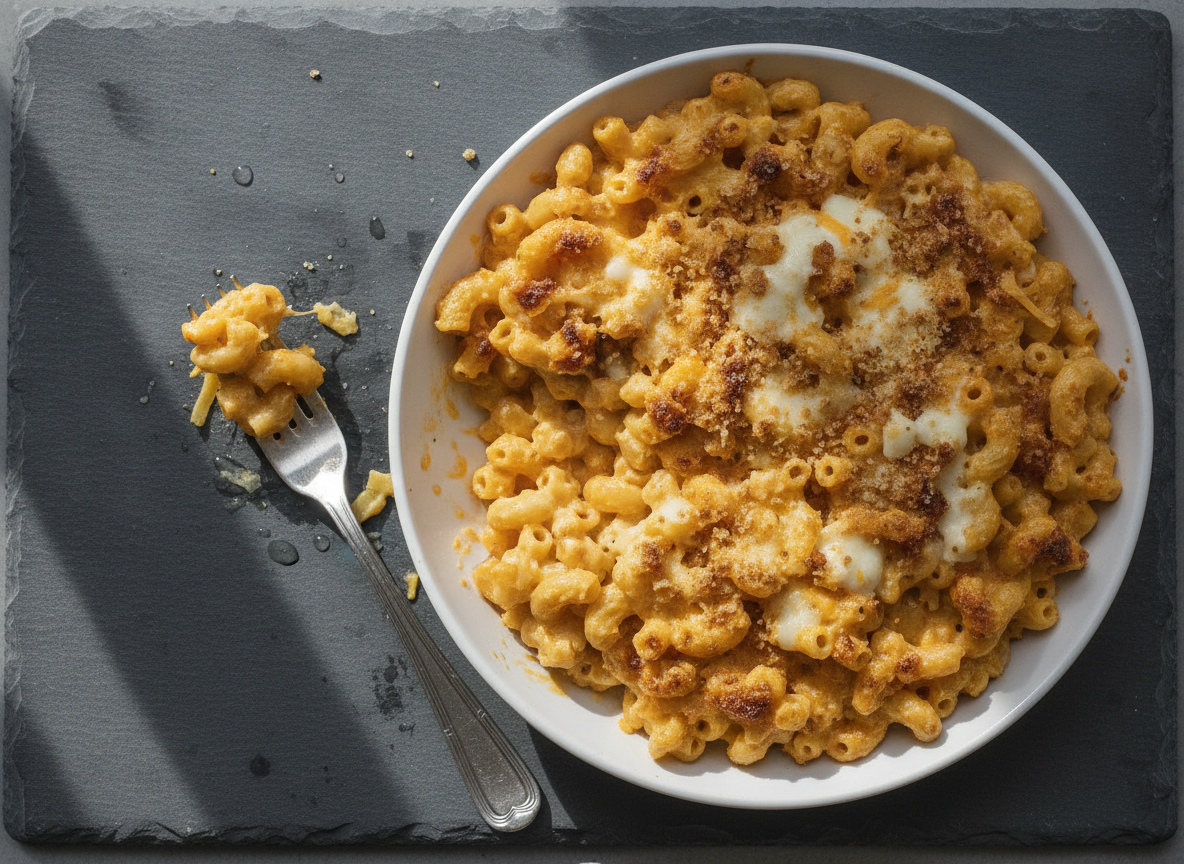
    A proper bowl of creamy, golden mac and cheese with 46 grams of protein and 560 calories — the comfort-food version that loves your macros back. Made with a cottage-cheese sauce blended smooth and a sensible amount of real cheddar, so it eats rich without running away from you.

    GoalAnabolic
    Total time25 min
    Servings1 big bowl
    Protein / serving46 g
    Calories / serving560 kcal
    A bowl of creamy golden high-protein mac and cheese with a glossy cheddar sauce, plated under cold light Plate 01 / Finished

    The first winter my partner moved in, she caught me eating plain chicken and rice at the counter, standing up, at ten at night, and she just looked at me like I’d broken her heart. “That’s your dinner?” she said. And I didn’t have a good answer, love. I’d been so deep in contest prep for so many years that I’d half-forgotten food was allowed to be a comfort as well as a fuel. So I made it my project, that whole cold January, to build a mac and cheese I could actually put in front of a person I loved — one that tasted like the bowl your gran would make, but that didn’t blow a third of my day’s calories in one sitting.

    The trick, when I finally found it, was almost stupidly simple. Cottage cheese, blended until it’s completely smooth, becomes the most velvety cheese sauce you’ve ever had — and it’s nearly all protein. You stir in a modest handful of real, sharp cheddar for the flavour that cottage cheese can’t fake, season it properly, and suddenly you’ve got a creamy bowl with 46 grams of protein in it. No protein powder, no rubbery low-fat cheese product, no apology.

    I’m not going to pretend this is a “light” dinner — it’s 560 calories and it’s meant to be a real, satisfying meal that sits you down and fills you up. But it’s a smart 560 calories, packed with protein, the kind of bowl you can build a Tuesday night around and still wake up on track. That’s the whole point of these anabolic recipes: comfort food that’s working for you, not against you. I’ve got you on this one.

    01Who it’s for & when to eat it

    This is comfort food with a backbone of protein, so it bends to almost any goal — you just shift the cheese and the pasta portion. Here’s how I steer it.

    On a cut

    Lean it down

    Swap to a high-protein or chickpea pasta, drop the cheddar to 20g, and lean hard on the blended cottage cheese for creaminess. You keep the bowl and the protein, you shave the calories down toward 420. A real dinner that still fits a deficit.

    On a bulk

    Build it up

    Go up to 90g dry pasta, add an extra 30g cheddar and a handful of shredded cooked chicken or lean mince. Now it’s a proper mass-meal — north of 800 calories and well over 60g protein, still creamy, still real food.

    On TRT

    Steady comfort

    The recipe as written is a balanced plate — good protein, moderate carbs, sensible fat. A warm, satisfying evening meal that won’t overshoot your calories or leave you raiding the cupboard an hour later.

    Timing: I love this as a post-training dinner — the carbs and protein land right when your body’s asking for them. It’s also exactly the bowl you want on a cold, tired evening when plain chicken would just make you sad. Comfort and macros, in one dish.

    02Ingredients

    Makes 1 big bowl — one generous serving. Doubling? Scale every line; the cottage-cheese-to-pasta ratio is what keeps the sauce thick, so keep it steady.

    Servings 1 · adjust on the live recipe card
    • Dry pasta macaroni or shells70 g · 2.5 oz
    • Cottage cheese low-fat, the sauce base200 g · 7 oz
    • Sharp cheddar, grated30 g · 1 oz
    • Skimmed milk40 ml · 2½ tbsp
    • Dijon mustard1 tsp
    • Garlic powder½ tsp
    • Smoked paprika¼ tsp
    • Black pepperto taste
    • Saltto taste (go light)

    Swaps I actually use: chickpea or high-protein pasta drops the calories and bumps the fibre — lovely on a cut. No cottage cheese? Blended low-fat ricotta or thick Greek yoghurt both work, though yoghurt brings a little tang. A scrape of nutritional yeast deepens the cheesy flavour without the calories of more cheddar. And if you like a bite to it, a pinch of cayenne or a dash of hot sauce stirred in at the end is never a bad idea.

    03Step by step

    Boil the pasta

    Cook it to just shy of done

    Bring a pot of lightly salted water to the boil and cook the pasta a minute under the packet time — it’ll finish in the hot sauce. Scoop out a splash of the cooking water before you drain; it’s liquid gold for loosening the sauce later.

    Magnus says: slightly underdone is the move. Mushy pasta in a creamy sauce is a sad thing.

    Macaroni boiling in a pot of water on the hob
    Blend the sauce base

    Cottage cheese, smooth as silk

    While the pasta cooks, tip the cottage cheese, milk, Dijon, garlic powder, paprika and pepper into a blender or a tall jug for a stick blender. Blend until completely smooth — no lumps, no curds. This is the step people skip, and it’s the one that makes it taste like a real cheese sauce instead of, well, blended cottage cheese.

    Magnus says: don’t stop early. You want it glossy and pourable, like custard.

    Cottage cheese and seasonings blended into a smooth glossy sauce in a jug
    Warm the sauce

    Gentle heat, then the cheddar

    Pour the blended base into a wide pan over a low heat. Warm it through gently, stirring, then take it off the direct heat and stir in the grated cheddar until it melts into the sauce. Keep it low — blast it and the cottage cheese can split on you.

    Magnus says: low and slow. This sauce hates a roaring hob.

    Grated cheddar being stirred into the warm cottage-cheese sauce in a pan
    Combine

    Fold the pasta through

    Drain the pasta and tip it straight into the sauce. Fold it through over the lowest heat until every piece is coated. If it’s looking tight, loosen it with a spoonful of that reserved pasta water until it’s creamy and glossy.

    Cooked macaroni being folded through the creamy cheese sauce in a pan
    Season & serve

    Taste, finish, eat it hot

    Taste and adjust — a little more pepper, the lightest pinch of salt, a dash of hot sauce if you like. Tip it into a bowl and eat it straight away while it’s hot and creamy. If you want the full diner experience, a quick blast under a hot grill gives you golden edges.

    Magnus says: it thickens as it sits, so don’t dawdle — this one’s meant to be eaten warm.

    The finished bowl of creamy high-protein mac and cheese, steaming and golden

    04The spec sheet

    Real numbers, calculated — not guessed. The recipe makes one big bowl of roughly 340g of finished food. Here’s what that serving and a flat 100g actually give you.

    Macros — per serving & per 100g
    NutrientPer servingPer 100g
    Energy560 kcal165 kcal
    Protein46.0 g13.5 g
    Carbohydrate58.0 g17.1 g
    — of which sugars6.0 g1.8 g
    Fat14.0 g4.1 g
    — of which saturates7.5 g2.2 g
    Fibre3.0 g0.9 g
    Sodium~0.85 g~0.25 g
    Calorie density
    165 kcal / 100g

    Moderate for comfort food. Because the bulk of this bowl is blended cottage cheese and not butter and cream, you get a big, filling portion for the calories — far more food than a classic mac would give you.

    Protein per 100 kcal
    8.2 g / 100 kcal

    Strong for a pasta dish. Most macs are mostly carbs and fat with a token bit of protein; this one carries real protein into a meal that usually has none worth counting.

    Key micros (per serving, approx.)
    • Calcium~360 mg · 36% DV
    • Phosphorus~480 mg · 69% DV
    • Selenium~38 µg · 69% DV
    • Vitamin B12~1.3 µg · 54% DV
    • Riboflavin (B2)~0.5 mg · 38% DV
    • Zinc~3.2 mg · 29% DV

    Macros are calculated from standard food-composition data and will shift a little with your exact ingredients and brands. Micronutrient figures are estimates against general adult Daily Values. Numbers are for guidance, not medical advice — see our Nutrition Disclaimer.
    05Bulk / Cut / TRT variations

    One creamy base, three jobs. The sauce technique stays the same — you adjust the pasta, the cheese, and what protein you fold through. Macros below are for the full bowl as described.

    Cut

    The lean bowl

    Use 60g of high-protein or chickpea pasta, drop the cheddar to 20g, and keep the full 200g cottage cheese. Maximum creaminess, leaner numbers, more fibre to keep you full. My pick when calories are tight but I want comfort.

    420Kcal
    45G Protein
    9G Fat
    Bulk

    The mass bowl

    Bump to 90g dry pasta, add 30g more cheddar and 80g shredded cooked chicken breast folded through at the end. Calorie-dense, easy to eat, and over 60 grams of protein in one warm bowl.

    820Kcal
    64G Protein
    22G Fat
    TRT

    The balanced bowl

    The recipe as written, served with a side of steamed broccoli or a handful of leaves. Good protein, moderate carbs, sensible fat — a full, satisfying plate that keeps the calories honest.

    560Kcal
    46G Protein
    14G Fat

    06Meal prep & storage

    Mac and cheese is best fresh, but this version holds up better than most because the sauce is protein-based rather than a fragile butter roux. Here’s how I keep it for the week.

    Fridge
    3 days

    Cool fully and store in an airtight container. The sauce firms up cold; that’s normal — it loosens again with a splash of milk when you reheat.

    Freezer
    2 months

    Freezes okay in single portions, though the texture softens a touch on thawing. Thaw overnight in the fridge before reheating gently.

    Reheat
    3 min

    Add a splash of milk, then warm gently in the microwave or a low pan, stirring. Low heat only — too hot and the cottage-cheese sauce can split.

    For a prep-ahead trick, blend a big batch of the sauce base on a Sunday and keep it in the fridge for three days. Then it’s a two-minute job to boil pasta and stir up a fresh, creamy bowl on a weeknight — far nicer than reheating the whole thing.

    Free · the 7-day “Get Fed” plan

    Want a whole week built around food like this?

    Drop your email and I’ll send you my free 7-day plan — meals, macros already counted, grocery list written. No spam, no lectures.

    No spam. Unsubscribe whenever. See what’s in the plan →

    07Common questions

    Does it actually taste like cottage cheese? +

    No — and that surprises everyone. Once it’s blended completely smooth and warmed with cheddar, mustard and seasoning, the cottage-cheese tang disappears and you’re left with a proper savoury cheese sauce. The blending is what does it; if you can still taste curds, you didn’t blend it long enough.

    Can I make it without a blender? +

    You can, but it won’t be as silky. If you’re set on it, buy a smooth-style cottage cheese and whisk it hard with the milk, or push it through a fine sieve first. Honestly though, a cheap stick blender is the single best tool for these high-protein sauces — worth the few quid.

    My sauce went grainy — what happened? +

    The heat was too high, love. Cottage-cheese-based sauces split if you boil them. Keep the pan on the lowest heat, stir in the cheddar off the direct flame, and never let it bubble. If it does split, a quick blast back in the blender can sometimes pull it back together.

    How do I turn this into a proper bulk meal? +

    Three moves: more pasta (90g dry), more cheddar (an extra 30g), and a protein boost — fold through 80g of shredded cooked chicken or some lean cooked mince. That takes one bowl up to around 820 calories and 64g protein. See the Bulk variation above for the full numbers.

    Can I bake it for a crispy top? +

    Absolutely. Tip the finished mac into an oven dish, scatter a little extra cheddar or some panko on top, and grill or bake hot for a few minutes until golden. Factor the extra cheese into your macros, but a proper crispy top is a beautiful thing.

    From my high-protein meal plans

    This bowl lives inside a full week of meals.

    Comfort food with the macros counted is the whole idea behind my meal plans — seven days of high-protein meals you’ll actually want to eat, with the grocery list written for you. You pick the goal; I do the maths.

    See the meal plans
    A bowl of creamy high-protein mac and cheese under cold light

    08Pairs well with

    Browse all recipes →

    Magnus Olafsson in his kitchen — bald, bearded and broad, in his pink apron, under cold light
    About the author

    Magnus Olafsson

    I’m Magnus — twenty years under the iron, from a cold gym in Stockholm to the classic-physique stage, and now mostly in my kitchen in a pink apron. I’ve cut for shows, bulked through winters, and I’ve been on TRT since I was thirty-five. I know what it takes to eat for the body you’re chasing, and I know it shouldn’t come with a side of shame.

    Everything here is food I actually cook and macros I actually count. I don’t diagnose, I don’t promise, and I never make a number up. I just feed you well and tell you the truth.

    NPC Illinois NPC Classic Physique On TRT since 35 20 years training

    Slim Diet Era shares recipes and general nutrition information. It is not medical or dietetic advice, and we do not provide guidance on obtaining or using any controlled substance. See our Medical Disclaimer and Nutrition Disclaimer.