Category: Bulking

  • Salmon, Sweet Potato and Asparagus

    Salmon, Sweet Potato and Asparagus

    Recipe · Bulking / Fish / High-protein

    Salmon, Sweet Potato and Asparagus

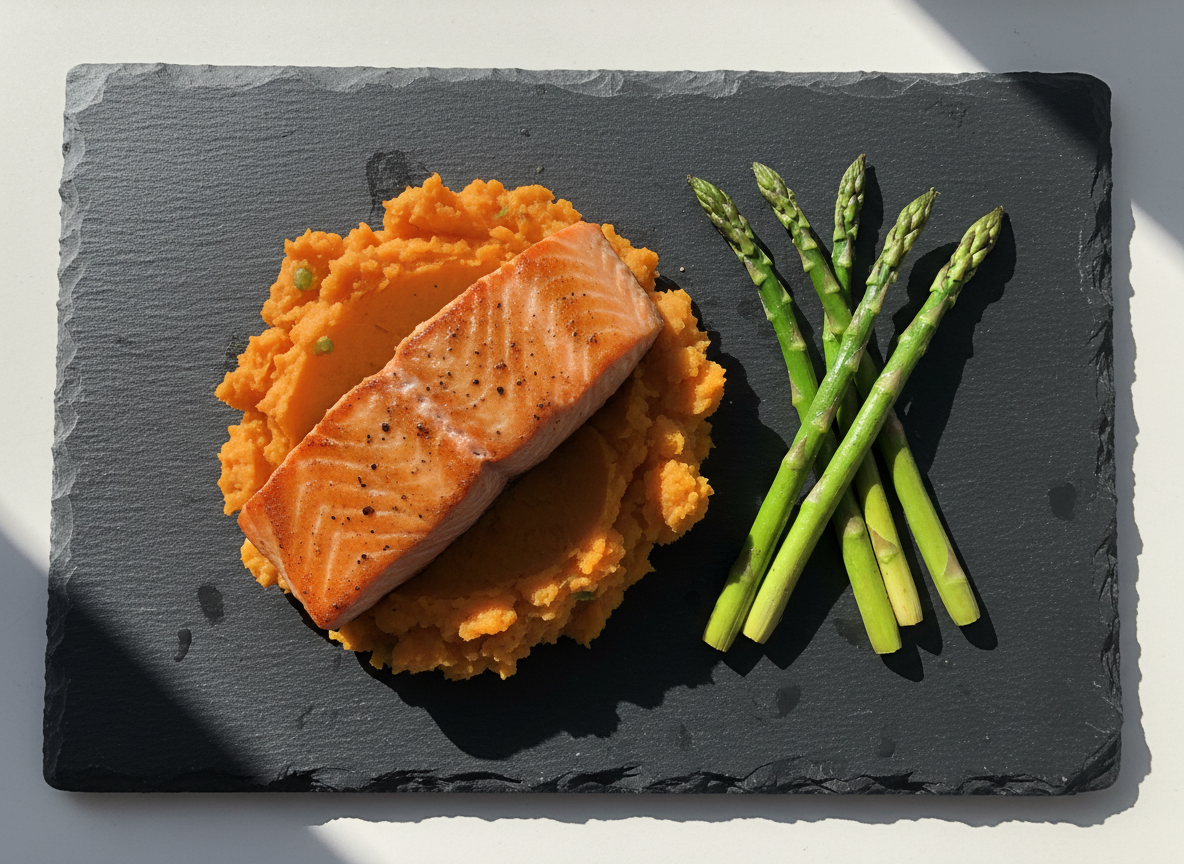
    A crisp-skinned salmon fillet with roasted sweet potato and charred asparagus — about 48 grams of protein and 690 honest calories. Clean fats, slow carbs, and the kind of plate that builds you up while feeling light. Bulking food that doesn’t sit like a brick.
    GoalBulk
    Total time35 min
    Servings1 plate
    Protein / serving48 g
    Calories / serving690 kcal
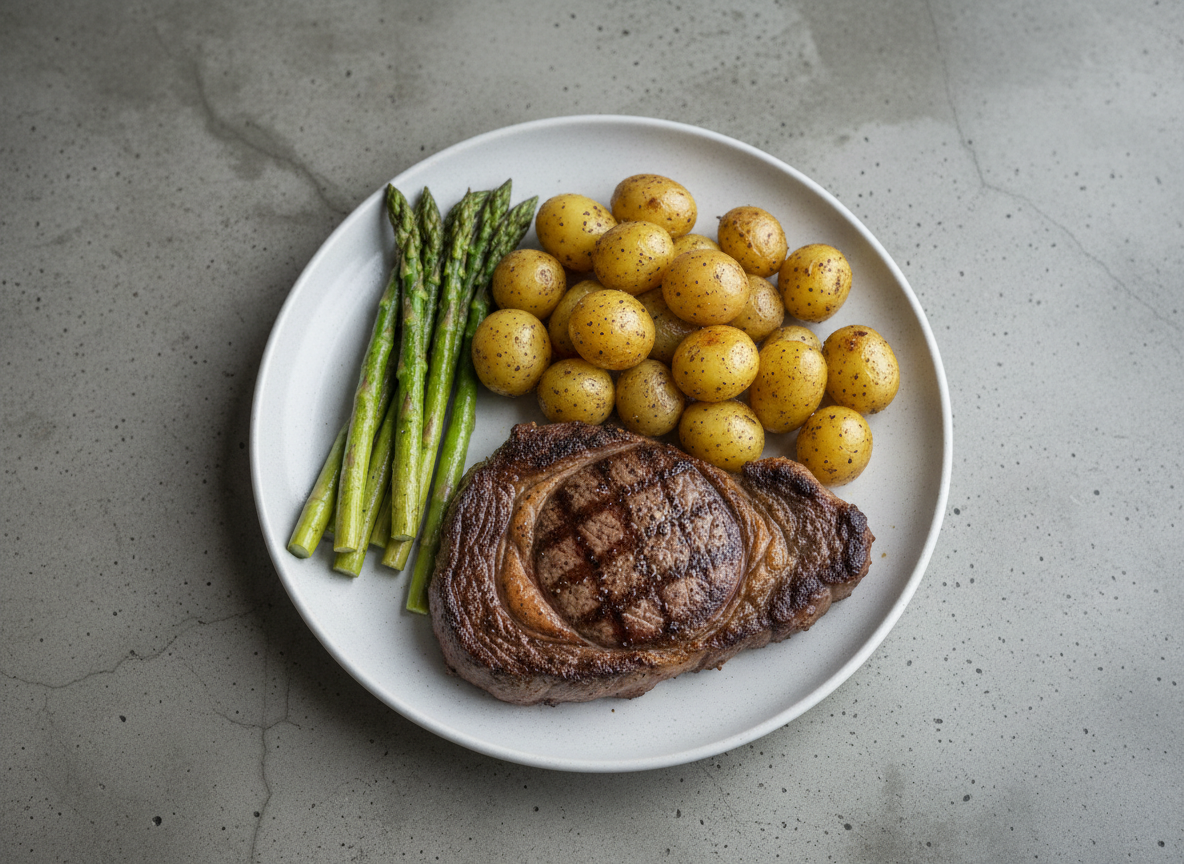
    A crisp-skinned salmon fillet with roasted sweet potato and charred asparagus, plated under cold light Plate 01 / Finished

    Not every bulking meal has to be a wall of red meat and white rice. I learned that the hard way during one off-season where I ate so much beef and pasta that I felt heavy and sluggish for weeks — strong in the gym, but foggy and bloated the rest of the time. So I started rotating in plates like this one: salmon for the protein and the good fats, sweet potato for slow carbs that don’t leave you crashing, asparagus because it’s quick and it makes the plate feel like dinner rather than fuel. I felt human again within days.

    The fats in salmon are doing real work here. They carry calories — which you want on a bulk — but they sit lighter than a fatty steak, and the omega-3s are good for you in a way I’m happy to put my name to. Roasted sweet potato gives you around 690 honest calories and a steady release of energy, and the asparagus adds colour, fibre and a little char that makes the whole thing taste like you tried. About 48 grams of protein, all from real food.

    This is the plate I cook when I want to build but my appetite’s flagging — it’s substantial without being a slog to eat. I make it on a quiet evening, salmon skin crackling in the pan while the tray roasts, the kitchen smelling of garlic and char. It’s bulking food that respects your gut. Cook it once on a heavy week and you’ll keep coming back. I’ve got you on this one.

    01Who it’s for & when to eat it

    This is a clean, high-protein plate that flexes to your goal. The salmon and asparagus stay the same; you move the sweet potato and the oil. Here’s how I steer it.

    On a bulk

    The default plate

    Full sweet potato, salmon crisped in a little oil, asparagus charred with garlic. Calorie-dense from good fats and slow carbs, light on the gut — ideal when red meat’s starting to sit heavy.

    On a cut

    Lean it out

    Halve the sweet potato, roast everything with just a teaspoon of oil, and double the asparagus. You keep the salmon’s protein and good fats for far fewer calories. See the variations below.

    On TRT

    Steady fuel

    A moderate sweet potato portion with the full salmon fillet and plenty of greens. Quality fats, slow carbs and lean protein — full, satisfied, and gentle on digestion for an evening meal.

    Timing: this makes a lovely evening meal — the slow carbs and good fats keep you full overnight, and it’s light enough not to weigh you down before bed. It also works post-training when you want quality fuel without the heaviness of a big meat plate.

    02Ingredients

    Makes 1 plate. Scale every line in proportion to feed more — give the salmon room in the pan so the skin crisps rather than steams.

    Servings 1 · adjust on the live recipe card
    • Salmon fillet skin on200 g · 7 oz
    • Sweet potato250 g · 8.8 oz
    • Asparagus150 g · 5.3 oz
    • Garlic, crushed2 cloves
    • Olive oil1 tbsp · 15 ml
    • Lemon1/2
    • Smoked paprika1/2 tsp
    • Sea saltto taste
    • Black pepperto taste

    Swaps I actually use: for a cut, halve the sweet potato and roast with the bare minimum of oil — the salmon’s own fat does plenty. No asparagus? Tenderstem broccoli, green beans or courgette all char beautifully on the same tray. Want it bigger for a hard bulk? Add a second small sweet potato and finish the salmon with a spoon of pesto or tahini.

    03Step by step

    Prep the tray

    Cube the sweet potato, oven on

    Heat the oven to 200°C (400°F). Cut the sweet potato into even cubes, toss with half the oil, the paprika, salt and pepper, and spread on a tray. Even cubes roast evenly — a mix of big and small gives you some burnt, some raw.

    Cubed sweet potato tossed with oil and paprika on a roasting tray
    Roast

    Give the potato a head start

    Roast the sweet potato for about 20 minutes, turning once. It needs longer than everything else, so get it going alone — the asparagus joins later so it doesn’t turn to mush before the potato’s soft.

    Sweet potato cubes roasting in the oven
    Dry the salmon

    Pat the skin bone-dry, season

    While the potato roasts, pat the salmon skin completely dry with paper towel and season both sides. Dry skin is the whole secret to a crisp, crackling finish — any moisture and it steams and goes limp.

    Magnus says: a wet salmon skin will never crisp. Dry it properly and you’re halfway to a great fillet.

    A salmon fillet patted dry and seasoned, skin-side up
    Add the asparagus

    Greens onto the tray

    Toss the asparagus with the crushed garlic and a little oil, then add it to the tray with the sweet potato for the last 8 to 10 minutes. You want it tender with a bit of char, not floppy.

    Asparagus added to the roasting tray with the sweet potato
    Crisp the salmon

    Skin-side down, press it flat

    Heat the rest of the oil in a pan over medium-high. Lay the salmon skin-side down and press gently with a spatula for ten seconds so the skin makes full contact. Leave it four to five minutes until crisp, then flip for a minute to finish.

    Magnus says: pressing the fillet down stops the skin curling away from the pan. Hold it just long enough to set.

    A salmon fillet crisping skin-side down in a pan
    Plate

    Build it, squeeze the lemon

    Pile the sweet potato and asparagus onto a plate, lay the salmon on top skin-up so it stays crisp, and squeeze the lemon over the lot. A last pinch of salt and you’re done — substantial, light, and good for you.

    The finished plate of crisp salmon with sweet potato and asparagus

    04The spec sheet

    Real numbers, calculated — not guessed. The recipe makes 1 plate, around 560g of cooked food total. Here’s what the full plate and a flat 100g actually give you.

    Macros — per serving & per 100g
    NutrientPer servingPer 100g
    Energy690 kcal123 kcal
    Protein48.0 g8.6 g
    Carbohydrate52.0 g9.3 g
    — of which sugars14.0 g2.5 g
    Fat32.0 g5.7 g
    — of which saturates6.0 g1.1 g
    Fibre9.0 g1.6 g
    Sodium~0.45 g~0.08 g
    Calorie density
    123 kcal / 100g

    Moderate, and that’s the appeal — you get bulking calories from quality fats without a plate that sits like a brick. Volume and fullness, not heaviness.

    Protein per 100 kcal
    7.0 g / 100 kcal

    A lifter’s metric. The salmon’s fat carries calories, so the protein density is moderate — exactly right for a building plate that’s also good for you.

    Key micros (per serving, approx.)
    • Vitamin A~1300 µg · 144% DV
    • Vitamin B12~5 µg · 208% DV
    • Selenium~45 µg · 82% DV
    • Vitamin D~12 µg · 60% DV
    • Potassium~1300 mg · 28% DV
    • Folate~120 µg · 30% DV

    Macros are calculated from standard food-composition data and will shift a little with your exact ingredients and brands. Micronutrient figures are estimates against general adult Daily Values. Numbers are for guidance, not medical advice — see our Nutrition Disclaimer.

    05Bulk / Cut / TRT variations

    One plate, three jobs. The salmon and asparagus hold steady; you move the sweet potato and the added fat. Macros below are for a full serving (one plate built as described).

    Bulk

    Build it up

    Full sweet potato plus a small extra one, salmon finished with a spoon of pesto, and a generous drizzle of olive oil over the asparagus. Clean, calorie-dense fuel that still sits light.

    880Kcal
    51G Protein
    44G Fat
    Cut

    The lean version

    Halve the sweet potato, roast everything with just a teaspoon of oil, double the asparagus, and lean on the salmon’s own fat. Big plate, quality protein and fats, far fewer calories.

    480Kcal
    46G Protein
    24G Fat
    TRT

    Steady & balanced

    A moderate sweet potato, the full salmon fillet, and plenty of charred greens with lemon. Quality fats, slow carbs and lean protein to keep you full and recovering without overshooting.

    620Kcal
    48G Protein
    30G Fat

    06Meal prep & storage

    Salmon is happiest fresh, but the roasted veg preps brilliantly and cooked salmon keeps well for a couple of days. Here’s how I handle it without ending up with a dry, fishy fridge.

    Fridge
    2 days

    Cooked salmon keeps two days, ideally boxed separately from the veg. Eat it cold over the roasted potato or warm it gently — don’t blast it.

    Freezer
    1 month

    Roasted sweet potato freezes fine; I freeze cooked salmon only if I must. Thaw in the fridge and reheat low and slow to keep it from drying out.

    Reheat
    2 min

    Warm salmon gently — a covered pan or a short, low microwave burst. Overheat it and it dries and toughens. Honestly, cold flaked salmon over warm potato is lovely.

    My move for prep: batch-roast a big tray of sweet potato and asparagus, then cook the salmon fresh to order — it takes five minutes in a pan. That way the part that suffers from reheating is the part you don’t reheat.

    Free · the 7-day “Get Fed” plan

    Want a whole week built around food like this?

    Drop your email and I’ll send you my free 7-day plan — meals, macros already counted, grocery list written. No spam, no lectures.

    No spam. Unsubscribe whenever. See what’s in the plan →

    07Common questions

    How do I stop the salmon skin sticking? +

    Three things: dry the skin thoroughly, get the pan and oil properly hot before the fillet goes in, and then leave it alone. Salmon releases itself from the pan when the skin is crisp — if it’s still stuck, it isn’t ready, so give it another minute before you try to move it.

    Can I use frozen salmon? +

    Yes, and it’s often cheaper. Thaw it fully in the fridge overnight, then pat it very dry — frozen-then-thawed fish holds extra water, so drying it well is even more important if you want crisp skin. The macros are the same.

    Can I swap the sweet potato for regular potato? +

    Absolutely. White or new potatoes roast the same way and the calories are similar. Sweet potato gives you more vitamin A and a slightly sweeter, slower carb, but use whatever you’ve got and enjoy your dinner.

    How do I bump the calories for a hard bulk? +

    Lean on the good fats: a spoon of pesto or tahini on the salmon, a heavier drizzle of olive oil on the veg, and a second small sweet potato. That carries the plate past 880 calories while keeping it real food and easy on the gut. See the Bulk variation above.

    Is the salmon skin worth eating? +

    When it’s properly crisp, it’s the best part — and it carries some of the good fats too. If you’d rather skip it, pull it off after cooking; the macros drop only a little. But cook it crisp once and I think you’ll be a convert.

    From my 7-day Bulk plan

    This plate lives inside a full week of meals.

    This salmon plate is one dinner in my 7-day bulking plan — seven days of high-protein, calorie-dense meals with the macros counted and the grocery list written. You pick the goal; I do the maths.

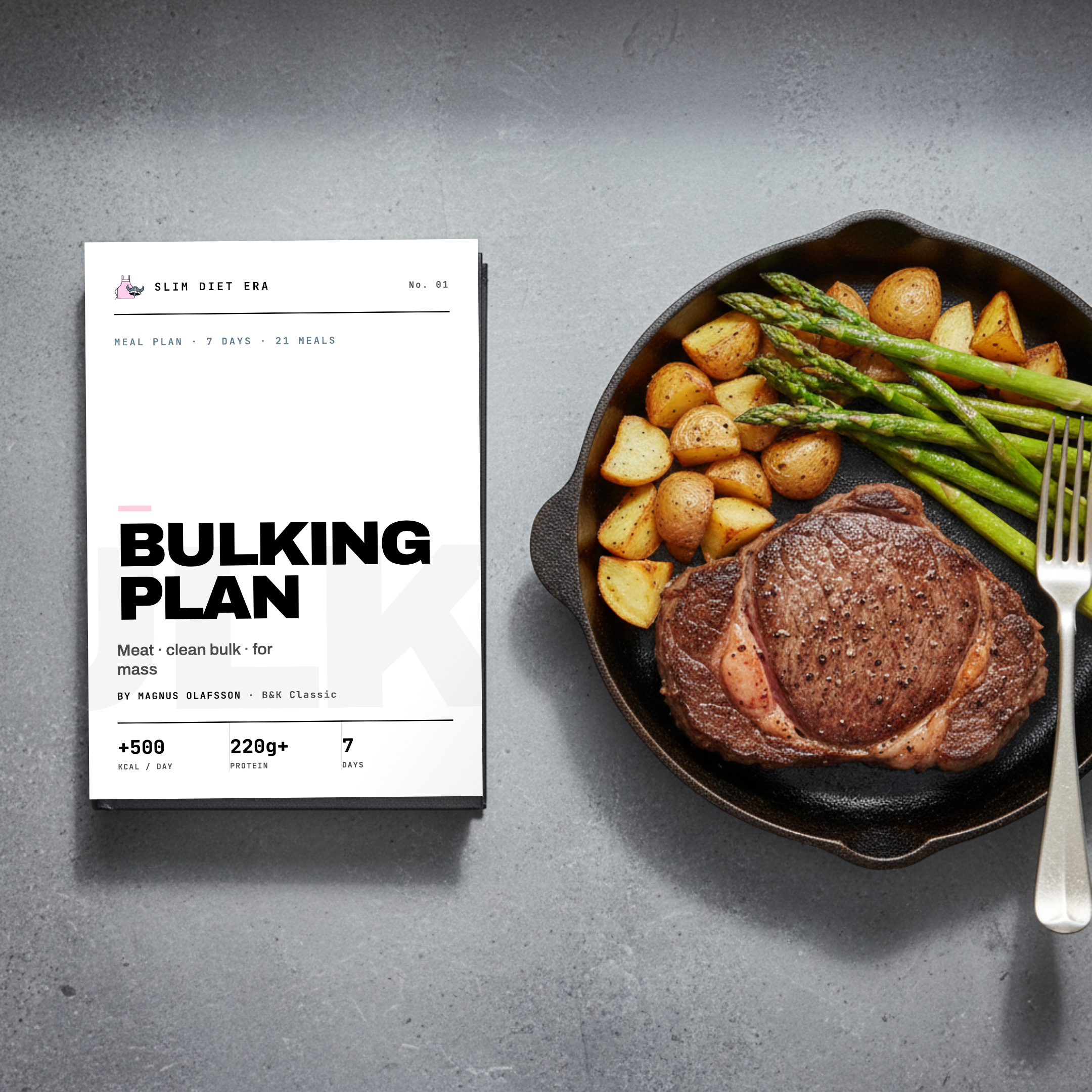
    See the bulking meal plan
    The 7-day bulking meal plan laid out as portioned meals under cold light

    08Pairs well with

    Browse all recipes →

    Magnus Olafsson in his kitchen — bald, bearded and broad, in his pink apron, under cold light
    About the author

    Magnus Olafsson

    I’m Magnus — twenty years under the iron, from a cold gym in Stockholm to the classic-physique stage, and now mostly in my kitchen in a pink apron. I’ve cut for shows, bulked through winters, and I’ve been on TRT since I was thirty-five. I know what it takes to eat for the body you’re chasing, and I know it shouldn’t come with a side of shame.

    Everything here is food I actually cook and macros I actually count. I don’t diagnose, I don’t promise, and I never make a number up. I just feed you well and tell you the truth.

    NPC Illinois NPC Classic Physique On TRT since 35 20 years training

    Slim Diet Era shares recipes and general nutrition information. It is not medical or dietetic advice, and we do not provide guidance on obtaining or using any controlled substance. See our Medical Disclaimer and Nutrition Disclaimer.
  • Chicken Thighs, Rice and Beans

    Chicken Thighs, Rice and Beans

    Recipe · Bulking / Chicken / High-protein

    Chicken Thighs, Rice and Beans

    Juicy seasoned chicken thighs over rice with a scoop of beans — about 55 grams of protein and 740 honest calories. Cheap, filling, and forgiving, this is the bulking plate I make when the budget’s tight and the appetite isn’t. Real food that goes the distance.

    GoalBulk
    Total time40 min
    Servings2 plates
    Protein / serving55 g
    Calories / serving740 kcal
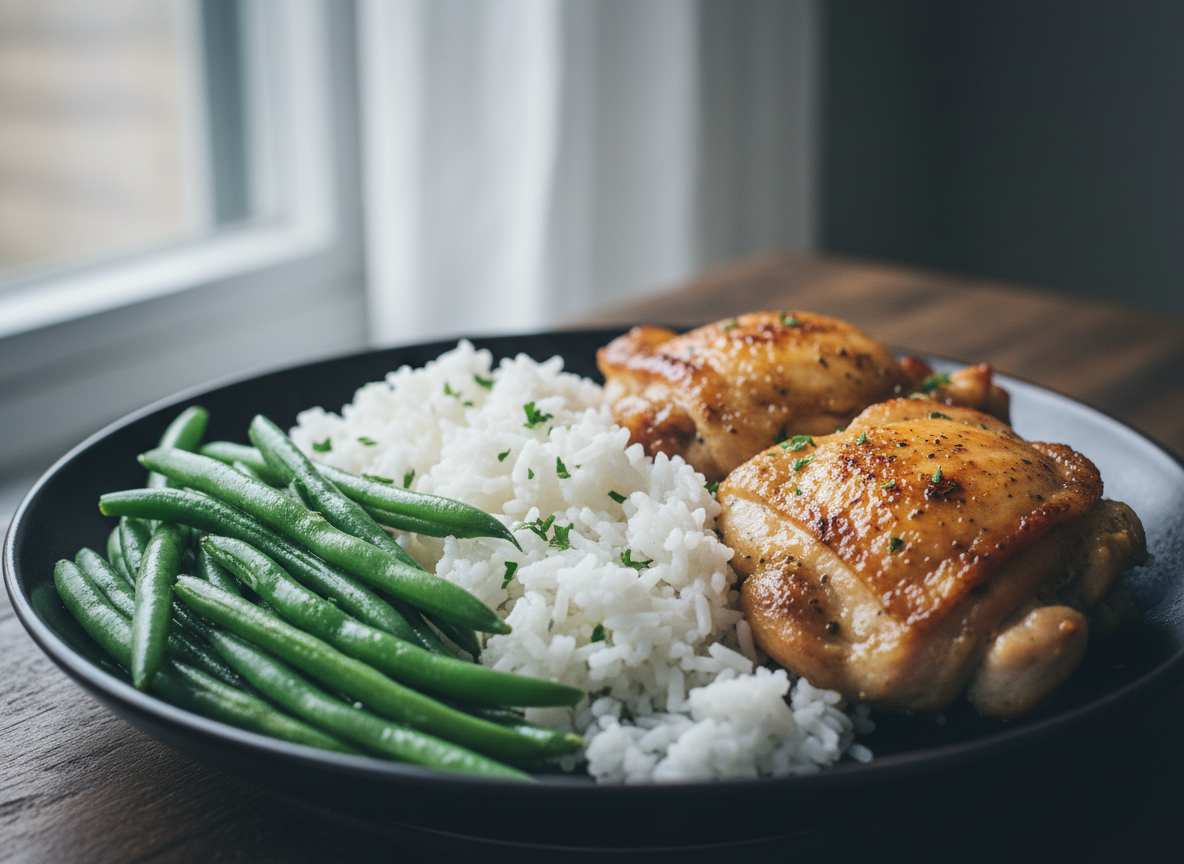
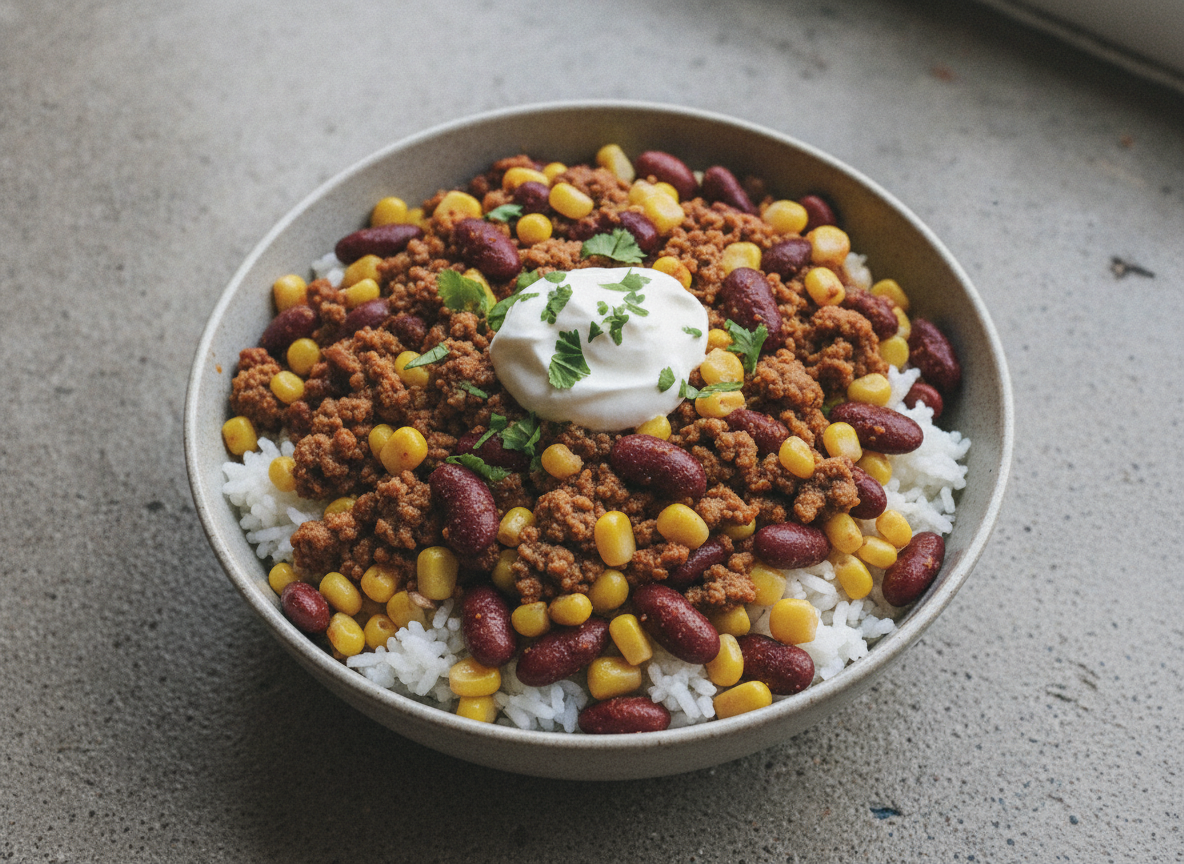
    Golden seasoned chicken thighs over rice with black beans, plated under cold light Plate 01 / Finished

    When I was young and broke and lifting in a basement gym, this was the meal that built me. Chicken thighs were the cheapest cut going, rice came by the sack, and a tin of beans cost almost nothing — so I learned to make the three of them taste like a proper dinner. Twenty years later I still cook it most weeks, not because I have to, but because I genuinely love it. Some food earns a permanent place at your table, and this earned its place a long time ago.

    Thighs get a bad rap from the breast-only crowd, and I think that’s a shame. They’re juicier, they forgive you if you walk away from the pan for a minute, and they carry seasoning beautifully. Yes, they’re a touch fattier than breast — which on a bulk is exactly what you want, honestly. Pair them with rice for the carbs and beans for the fibre and a little extra protein, and you’ve got around 55 grams of protein and 740 calories of food that actually fills you up and keeps you full.

    This is comfort food with a job to do. I make it for myself after a heavy leg session, I make a double batch to box for the week, and I’ve fed it to friends who had no idea it was a “bulking” meal — they just thought it was good dinner. That’s the whole point. Cook it once and you’ll see why it’s stayed with me all these years. I’ve got you on this one.

    01Who it’s for & when to eat it

    This is a budget-friendly, high-protein plate that flexes to your goal. The thighs and beans stay the same; you move the rice scoop and the skin. Here’s how I steer it.

    On a bulk

    The default plate

    Full rice portion, skin-on thighs, a generous scoop of beans. Calorie-dense, protein-rich, and easy on the wallet. My go-to after a heavy session when I want to eat well and recover hard.

    On a cut

    Lean it out

    Pull the skin off the thighs, drop the rice to a fist, and pile on a side of greens. You keep the juicy chicken and the beans for far fewer calories. See the variations below for numbers.

    On TRT

    Steady fuel

    A moderate rice scoop with skin-on thighs and the full bean portion. Balanced protein, carbs and fibre to keep you full and your digestion happy. A reliable main meal any day.

    Timing: this is a brilliant post-training dinner — protein, carbs and fibre all in one bowl. It also packs and reheats better than almost any chicken dish I know, which makes it a meal-prep staple.

    02Ingredients

    Makes 2 plates. Scale every line in proportion to feed more — thighs hold their juiciness even in a big batch, so this is a friendly one to double.

    Servings 2 · adjust on the live recipe card
    • Chicken thighs boneless450 g · 1 lb
    • Jasmine rice dry weight150 g · 5.3 oz
    • Black beans drained, tinned240 g · 8.5 oz
    • Onion, diced1 small
    • Garlic, grated3 cloves
    • Smoked paprika1.5 tsp
    • Ground cumin1 tsp
    • Olive oil1 tbsp · 15 ml
    • Lime to finish1
    • Salt & black pepperto taste

    Swaps I actually use: pull the skin off the thighs and use less oil to lean the whole plate out for a cut. No black beans? Kidney beans, pinto, or chickpeas all work and keep that fibre and protein up. Want it bigger for a hard bulk? Leave the skin on and add an extra scoop of rice and a drizzle of olive oil over the beans.

    03Step by step

    Rice on

    Get the rice cooking first

    Rinse the jasmine rice until the water clears, then cook it the way you trust. It takes the longest, so start it now and let it steam covered while you cook the chicken and warm the beans.

    Jasmine rice rinsed and cooking in a pot
    Season the thighs

    Dry, then rub with the spice

    Pat the thighs properly dry, then rub them all over with the paprika, cumin, salt and pepper. Dry skin is what gives you a golden, crisp finish; a wet thigh just steams in the pan.

    Magnus says: get the spice right into the meat with your hands. It’s worth a minute and a bit of mess.

    Chicken thighs rubbed with paprika and cumin on a board
    Sear the chicken

    Skin-side down, leave it alone

    Heat the oil in a wide pan over medium-high. Lay the thighs skin-side down and leave them four to five minutes until deep golden, then flip and cook through — chicken should hit 74°C / 165°F. Lift them out to rest.

    Magnus says: render the fat from the skin slowly. Rushing it leaves you flabby skin instead of crisp.

    Chicken thighs searing skin-side down until golden in a wide pan
    The beans

    Soften the onion, warm the beans

    In the same pan with the chicken fat, soften the diced onion for three minutes, then stir in the garlic for thirty seconds. Tip in the drained beans and a splash of water, season, and warm through until glossy.

    Black beans warming with onion and garlic in the chicken pan
    Rest the chicken

    Let the thighs settle

    Give the thighs a couple of minutes to rest while the beans finish — same rule as any meat, it keeps them juicy. Squeeze half the lime over the beans now and stir it through for a bright lift.

    Cooked chicken thighs resting beside the pan of beans
    Plate

    Rice, beans, thighs, lime

    Spoon rice into two plates, add the beans, and lay the thighs on top. A last squeeze of lime, a scatter of fresh coriander if you have it, and you’re done. Eat it warm and feel properly fed.

    The finished plate of chicken thighs over rice and beans

    04The spec sheet

    Real numbers, calculated — not guessed. The recipe makes 2 plates, around 900g of cooked food total. Here’s what one plate (about 450g) and a flat 100g actually give you.

    Macros — per serving & per 100g
    NutrientPer servingPer 100g
    Energy740 kcal164 kcal
    Protein55.0 g12.2 g
    Carbohydrate72.0 g16.0 g
    — of which sugars3.5 g0.8 g
    Fat22.0 g4.9 g
    — of which saturates5.5 g1.2 g
    Fibre9.0 g2.0 g
    Sodium~0.6 g~0.13 g
    Calorie density
    164 kcal / 100g

    Moderate-high, carried by the thighs and rice. On a bulk that’s ideal — real calories from a sensible plate, with the beans adding fibre to keep things moving.

    Protein per 100 kcal
    7.4 g / 100 kcal

    A lifter’s metric. A strong protein density for a high-carb bulking plate, helped by the beans chipping in alongside the chicken.

    Key micros (per serving, approx.)
    • Selenium~35 µg · 64% DV
    • Folate~150 µg · 38% DV
    • Iron~4 mg · 22% DV
    • Zinc~4 mg · 36% DV
    • Vitamin B6~1 mg · 59% DV
    • Magnesium~110 mg · 26% DV

    Macros are calculated from standard food-composition data and will shift a little with your exact ingredients and brands. Micronutrient figures are estimates against general adult Daily Values. Numbers are for guidance, not medical advice — see our Nutrition Disclaimer.

    05Bulk / Cut / TRT variations

    One plate, three jobs. The thighs and beans hold steady; you move the skin, the rice, and the oil. Macros below are for a full serving (one plate built as described).

    Bulk

    Build it up

    Skin-on thighs, 90g dry rice, full beans with a drizzle of olive oil, and a spoon of guacamole on top. Cheap, calorie-dense, and genuinely satisfying — the budget bulker’s dream plate.

    880Kcal
    57G Protein
    34G Fat
    Cut

    The lean version

    Skin off the thighs, sear in a teaspoon of oil, drop the rice to a fist (40g dry) and add a big side of greens. Keep the full bean scoop for fibre and fullness. Lean numbers, same flavour.

    470Kcal
    52G Protein
    11G Fat
    TRT

    Steady & balanced

    Skin-on thighs, a moderate 60g dry rice, full beans, plenty of fresh veg and lime. Balanced protein, carbs and good fats to keep you full and recovering without overshooting the day.

    640Kcal
    54G Protein
    20G Fat

    06Meal prep & storage

    This is one of the best meal-prep plates I know — thighs stay juicy on reheat where breast goes to cardboard, and the beans and rice only get better as they sit. I cook a double batch on a Sunday without thinking twice.

    Fridge
    4 days

    Box the thighs, rice and beans together once fully cooled. The flavour deepens overnight, so day two is honestly better than day one.

    Freezer
    3 months

    Freezes beautifully as a complete meal. Cool fully, bag or box flat, and thaw overnight in the fridge before reheating.

    Reheat
    3 min

    Microwave covered with a splash of water over the rice. The thighs hold their moisture, so this reheats far better than most chicken meals.

    For prep I box one plate per container — thighs on top, rice and beans below. Few proteins survive day four as well as thighs do, which is exactly why this one’s a staple in my fridge.

    Free · the 7-day “Get Fed” plan

    Want a whole week built around food like this?

    Drop your email and I’ll send you my free 7-day plan — meals, macros already counted, grocery list written. No spam, no lectures.

    No spam. Unsubscribe whenever. See what’s in the plan →

    07Common questions

    Can I use chicken breast instead of thighs? +

    You can, and it’ll be leaner — the calories drop and the protein nudges up. Just watch the cooking: breast overcooks and dries out far faster than thigh, so pull it the moment it hits 74°C / 165°F. For a bulk I genuinely prefer thighs; they’re juicier and far more forgiving.

    Are tinned beans fine, or should I cook dried? +

    Tinned are completely fine and what I use most days — just drain and rinse them to wash off some of the sodium. Dried beans are cheaper if you cook them in batches, but for a weeknight plate, tinned saves you an hour with no real loss.

    How do I make this for a hard bulk? +

    Keep the skin on, push the rice up to 90g dry, drizzle olive oil over the beans, and add a spoon of guacamole or some avocado. That carries one plate past 880 calories while staying real food and easy on the budget. See the Bulk variation above.

    Can I cook it all in one pan? +

    The beans, yes — they go straight into the chicken pan to pick up all that rendered flavour. The rice needs its own pot. If you want a true one-pan version, cook the rice separately and just sear the chicken and warm the beans together.

    What can I use instead of lime? +

    Lemon works just as well — you only want that bright acid to cut through the richness at the end. A splash of vinegar in a pinch, or a dollop of plain yoghurt on the side, will do a similar job of lifting the plate.

    From my 7-day Bulk plan

    This plate lives inside a full week of meals.

    This chicken-and-beans plate is one dinner in my 7-day bulking plan — seven days of high-protein, calorie-dense meals with the macros counted and the grocery list written. You pick the goal; I do the maths.

    See the bulking meal plan
    The 7-day bulking meal plan laid out as portioned meals under cold light

    08Pairs well with

    Browse all recipes →

    Magnus Olafsson in his kitchen — bald, bearded and broad, in his pink apron, under cold light
    About the author

    Magnus Olafsson

    I’m Magnus — twenty years under the iron, from a cold gym in Stockholm to the classic-physique stage, and now mostly in my kitchen in a pink apron. I’ve cut for shows, bulked through winters, and I’ve been on TRT since I was thirty-five. I know what it takes to eat for the body you’re chasing, and I know it shouldn’t come with a side of shame.

    Everything here is food I actually cook and macros I actually count. I don’t diagnose, I don’t promise, and I never make a number up. I just feed you well and tell you the truth.

    NPC Illinois NPC Classic Physique On TRT since 35 20 years training

    Slim Diet Era shares recipes and general nutrition information. It is not medical or dietetic advice, and we do not provide guidance on obtaining or using any controlled substance. See our Medical Disclaimer and Nutrition Disclaimer.

  • Ribeye, Rice and Broccoli

    Ribeye, Rice and Broccoli

    Recipe · Bulking / Beef / High-protein

    Ribeye, Rice and Broccoli

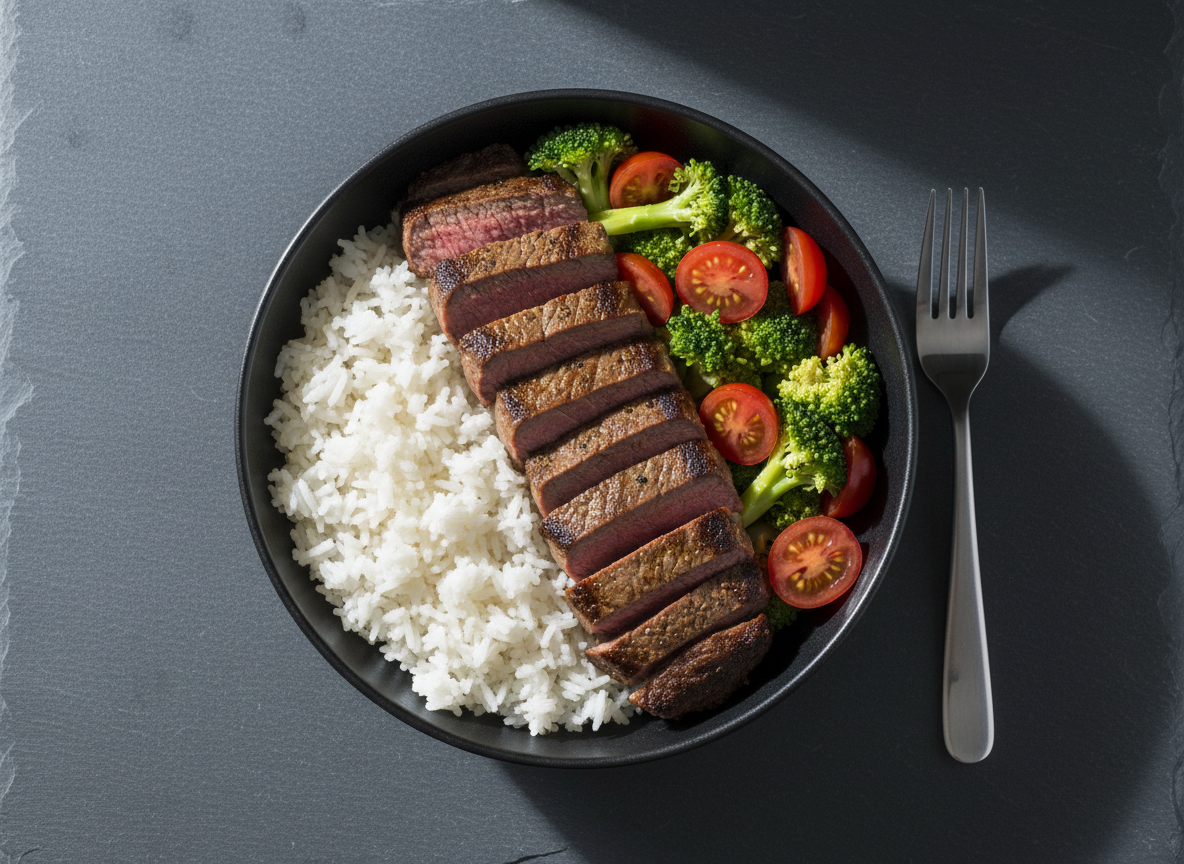
    A proper seared ribeye over a bed of rice with a heap of broccoli — about 58 grams of protein and 820 honest calories. The oldest, simplest bulking plate there is, done right. When you want one steak dinner that builds something, this is it.

    GoalBulk
    Total time25 min
    Servings1 plate
    Protein / serving58 g
    Calories / serving820 kcal
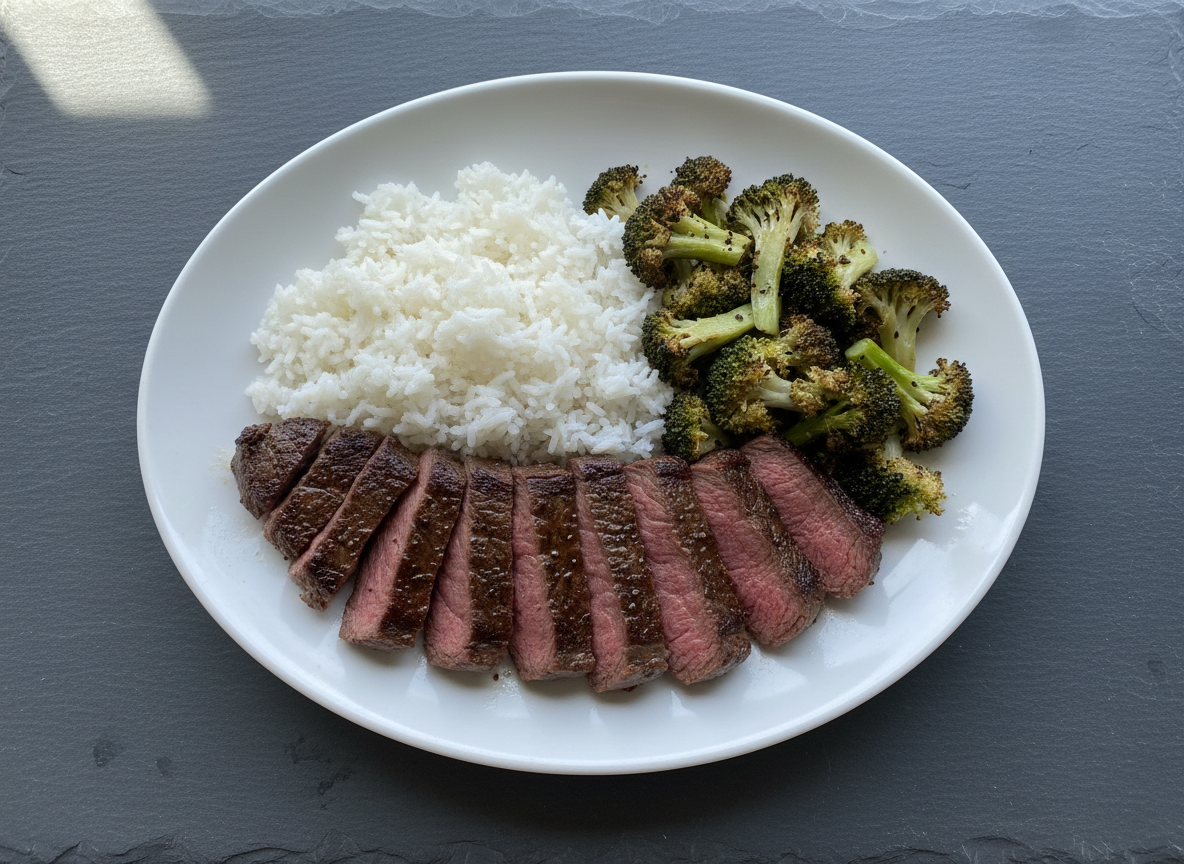
    Sliced seared ribeye over jasmine rice with steamed broccoli, plated under cold light Plate 01 / Finished

    There’s a guy I used to lift with in Stockholm — old-school, been competing since before I had a single tattoo — and his answer to every nutrition question was the same three words: ribeye, rice, broccoli. I used to tease him for it. Then I spent one off-season actually eating it, two or three times a week, and I shut up. I put on the cleanest size of my life that winter, recovered like a kid, and looked forward to dinner every single night. Some things are simple because they work.

    This is that plate, made with a little care. A ribeye seared hard so the fat renders and the crust forms, rested properly, then sliced over rice that soaks up the juices, with broccoli on the side for the fibre and the colour. About 58 grams of protein and 820 calories of real, satisfying food — no powders, no tricks, nothing you can’t pronounce. The ribeye carries the fat, the rice carries the carbs, and you do the work in the gym.

    I cook this when I want dinner to feel like a reward without being a write-off. It’s the meal I make on a Friday after a heavy week, the one I’d happily put in front of anyone whether they lift or not. Learn to sear a steak properly and you’ll have this for life. No rush, no fuss — just stand at the pan, take your time, and I’ll talk you through it.

    01Who it’s for & when to eat it

    This is a high-calorie, high-protein plate that bends to your goal. The ribeye stays the star; you move the rice scoop and trim the cut. Here’s how I steer it.

    On a bulk

    The default plate

    Full rice portion, the ribeye seared in its own fat, broccoli on the side. Calorie-dense, protein-rich, deeply satisfying — exactly what you want on a building phase. My Friday-night standard.

    On a cut

    Trim it down

    Swap the ribeye for a leaner sirloin, drop the rice to a fist, and double the broccoli. You keep the steak-dinner feel for far fewer calories. See the variations below for exact numbers.

    On TRT

    Steady fuel

    A moderate rice scoop with the full ribeye and a real pile of greens. Plenty of protein and good fats to keep you full and recovering, without tipping the day over. A solid main any time.

    Timing: this is a post-training dinner at its best — protein and carbs to refill and rebuild after a hard session. It also makes a brilliant weekend lunch when you’ve got the time to stand and sear properly.

    02Ingredients

    Makes 1 plate. Doubling up? Sear the steaks one or two at a time so the pan stays screaming hot — a crowded pan steams the crust away.

    Servings 1 · adjust on the live recipe card
    • Ribeye steak trimmed250 g · 8.8 oz
    • Jasmine rice dry weight80 g · 2.8 oz
    • Broccoli, in florets150 g · 5.3 oz
    • Garlic, crushed2 cloves
    • Olive oil to sear2 tsp · 10 ml
    • Butter to baste1 tsp · 5 g
    • Fresh thyme optional2 sprigs
    • Sea saltto taste
    • Black pepperto taste

    Swaps I actually use: on a cut I’ll switch the ribeye for a 250g sirloin or rump — far less fat, same protein, same steak-dinner feeling. No butter in the house? Sear in oil alone; you lose a little richness but the macros get leaner. Broccoli not your thing? Tenderstem, green beans, or asparagus all sit perfectly next to a steak.

    03Step by step

    Rice on

    Start the rice first

    Rinse the jasmine rice and get it cooking — pan or rice cooker, your call. It takes the longest, so set it going and leave it covered to steam while you handle the steak. Warm rice waiting for the meat, not the other way round.

    Jasmine rice rinsed and cooking in a pot
    Temper the steak

    Out of the fridge, dry it well

    Take the ribeye out so it loses its fridge chill, then pat it bone-dry with paper towel and season both sides generously with salt and pepper. A dry, room-temperature steak sears far better than a cold, wet one.

    Magnus says: moisture is the enemy of a crust. Dry the steak like you mean it.

    A ribeye steak patted dry and seasoned with salt and pepper
    Sear hard

    Get the pan smoking, then steak in

    Heat the oil in a heavy pan until it just begins to shimmer and smoke. Lay the ribeye in away from you and leave it — don’t poke it — for two to three minutes until a deep brown crust forms, then flip.

    Magnus says: if you move it too early, it tears the crust and sticks. Trust the pan and wait.

    A ribeye searing in a hot heavy pan with a brown crust forming
    Baste

    Butter, garlic, thyme — spoon it over

    Drop the heat to medium, add the butter, crushed garlic and thyme, and tilt the pan so the foaming butter pools. Spoon it over the steak for a minute or so. Cook to your liking — about 4 minutes total for a medium 250g ribeye.

    Butter, garlic and thyme being spooned over the searing steak
    Rest

    Let it sit before you cut

    Lift the steak onto a board and leave it to rest five minutes. This is not optional — cut it straight away and the juices run out onto the board instead of staying in the meat. Steam the broccoli for three to four minutes while it rests.

    Magnus says: resting is the cheapest way to a better steak. Five minutes of patience, every time.

    The seared ribeye resting on a wooden board
    Plate

    Slice against the grain, build the plate

    Slice the ribeye across the grain into thick strips and lay it over the rice so the juices soak in. Broccoli alongside, a last pinch of salt, and a spoon of the pan butter drizzled over the top. Eat it warm.

    The finished plate of sliced ribeye over rice with broccoli

    04The spec sheet

    Real numbers, calculated — not guessed. The recipe makes 1 plate, around 500g of cooked food total. Here’s what the full plate and a flat 100g actually give you.

    Macros — per serving & per 100g
    NutrientPer servingPer 100g
    Energy820 kcal164 kcal
    Protein58.0 g11.6 g
    Carbohydrate65.0 g13.0 g
    — of which sugars3.0 g0.6 g
    Fat36.0 g7.2 g
    — of which saturates15.0 g3.0 g
    Fibre4.5 g0.9 g
    Sodium~0.55 g~0.11 g
    Calorie density
    164 kcal / 100g

    Moderate-high, thanks to the ribeye’s fat. On a bulk that’s a gift — you hit big calories from a sensible plate instead of a barrel of food.

    Protein per 100 kcal
    7.1 g / 100 kcal

    A lifter’s metric. Lower than a lean cut meal, which is expected with a fatty steak — but the absolute protein is high, and that’s what matters when you’re building.

    Key micros (per serving, approx.)
    • Vitamin B12~5 µg · 208% DV
    • Zinc~11 mg · 100% DV
    • Vitamin C~85 mg · 94% DV
    • Selenium~38 µg · 69% DV
    • Iron~4.5 mg · 25% DV
    • Niacin (B3)~12 mg · 75% DV

    Macros are calculated from standard food-composition data and will shift a little with your exact ingredients and brands. Micronutrient figures are estimates against general adult Daily Values. Numbers are for guidance, not medical advice — see our Nutrition Disclaimer.

    05Bulk / Cut / TRT variations

    One plate, three jobs. The steak does the heavy lifting; you adjust the cut, the rice, and the fat. Macros below are for a full serving (one plate built as described).

    Bulk

    Build it up

    Full ribeye, 100g dry rice, and an extra knob of butter spooned over at the end. Maybe a soft-boiled egg on top for good measure. Calorie-dense, recovery-friendly, and an absolute pleasure to eat.

    960Kcal
    62G Protein
    44G Fat
    Cut

    The lean version

    Swap to a 250g sirloin or rump, sear in a teaspoon of oil with no butter, drop the rice to a fist (40g dry) and double the broccoli. Steak dinner feel, cut-friendly numbers.

    480Kcal
    56G Protein
    12G Fat
    TRT

    Steady & balanced

    Full ribeye, a moderate 60g dry rice, and a generous pile of greens with lemon. Good fats and high protein to keep you full and recovering, without overshooting the day.

    730Kcal
    57G Protein
    32G Fat

    06Meal prep & storage

    Steak is best fresh off the pan, I’ll be honest — but it does prep, and the rice and broccoli prep brilliantly. Here’s how I handle the leftovers without ruining a good ribeye.

    Fridge
    3 days

    Box the sliced steak separately from the rice. Cooked ribeye keeps three days; slice it after resting so it reheats fast and stays tender.

    Freezer
    2 months

    Rice freezes perfectly. I freeze cooked steak only if I must — thaw in the fridge and reheat gently to avoid drying it out.

    Reheat
    2 min

    Reheat steak fast and low — a quick warm in a pan, or 60–90 seconds in the microwave. Overheat it and it tightens. Or just slice it cold over a hot bowl of rice.

    My honest advice: cook the steak fresh and batch-cook the rice and broccoli ahead. That way the part that suffers from reheating is the part you make to order, and the rest is done. Best of both.

    Free · the 7-day “Get Fed” plan

    Want a whole week built around food like this?

    Drop your email and I’ll send you my free 7-day plan — meals, macros already counted, grocery list written. No spam, no lectures.

    No spam. Unsubscribe whenever. See what’s in the plan →

    07Common questions

    How do I know when the steak’s done without cutting it? +

    A thermometer is the honest answer: about 54°C / 130°F for medium-rare, 60°C / 140°F for medium, pulled a few degrees early to allow for carryover during the rest. If you’ve no thermometer, the firm-but-springy feel of the meat comes with practice — but a cheap probe takes the guesswork out for good.

    Can I make this leaner for a cut? +

    Yes — swap the ribeye for a sirloin or rump, sear in a little oil instead of butter, cut the rice to a fist and load up the broccoli. You keep nearly all the protein and the steak-dinner feel while dropping the calories by a third or more. See the Cut variation above.

    Do I really need to rest it? +

    You really do, love. Resting lets the juices settle back into the muscle instead of flooding your board when you slice. Five minutes is plenty for a steak this size, and it’s the single easiest thing you can do to make it better.

    Can I cook it from frozen? +

    Better not. A frozen steak won’t sear properly and cooks unevenly. Thaw it overnight in the fridge, then bring it to room temperature and dry it well before searing. Worth the small bit of planning for a steak this good.

    What if I don’t have a heavy pan? +

    Use the heaviest pan you have and get it properly hot before the steak goes in — heat retention is what gives you the crust. A thin pan drops temperature the moment the cold meat lands. Cast iron is ideal, but a sturdy stainless pan will do the job fine.

    From my 7-day Bulk plan

    This plate lives inside a full week of meals.

    This ribeye plate is one dinner in my 7-day bulking plan — seven days of high-protein, calorie-dense meals with the macros counted and the grocery list written. You pick the goal; I do the maths.

    See the bulking meal plan
    The 7-day bulking meal plan laid out as portioned meals under cold light

    08Pairs well with

    Browse all recipes →

    Magnus Olafsson in his kitchen — bald, bearded and broad, in his pink apron, under cold light
    About the author

    Magnus Olafsson

    I’m Magnus — twenty years under the iron, from a cold gym in Stockholm to the classic-physique stage, and now mostly in my kitchen in a pink apron. I’ve cut for shows, bulked through winters, and I’ve been on TRT since I was thirty-five. I know what it takes to eat for the body you’re chasing, and I know it shouldn’t come with a side of shame.

    Everything here is food I actually cook and macros I actually count. I don’t diagnose, I don’t promise, and I never make a number up. I just feed you well and tell you the truth.

    NPC Illinois NPC Classic Physique On TRT since 35 20 years training

    Slim Diet Era shares recipes and general nutrition information. It is not medical or dietetic advice, and we do not provide guidance on obtaining or using any controlled substance. See our Medical Disclaimer and Nutrition Disclaimer.

  • High-Volume Beef and Rice Power Bowls

    High-Volume Beef and Rice Power Bowls

    Recipe · Bulking / Beef / High-protein

    High-Volume Beef and Rice Power Bowls

    Lean beef, a proper mountain of rice, and a heap of veg in one big bowl — about 62 grams of protein and 780 honest calories. This is the bowl I build when I want to eat a lot, recover hard, and not feel like I’m forcing it. Easy to make, easier to eat.

    GoalBulk
    Total time30 min
    Servings2 big bowls
    Protein / serving62 g
    Calories / serving780 kcal
    A big bowl of seasoned lean beef over jasmine rice with steamed vegetables, plated under cold light Plate 01 / Finished

    This bowl got me through my first proper off-season, the winter I finally accepted I was too small for the classic-physique class I wanted. I’d come off a long cut, I was tired of weighing every gram of broccoli, and I needed a meal I could make half-asleep that still put real food and real calories in front of me. So I started building these bowls: a pan of lean beef browned hard, a generous scoop of rice, and whatever veg was in the fridge piled on top. Big, warm, filling. The kind of plate you sit down to after a long session and feel genuinely looked after.

    What I love about it is the honesty of the numbers. You get 62 grams of protein and a real load of carbs to refill the tank, all from food you can buy anywhere. No powders standing in for a meal, no sad little portion you have to talk yourself into. Just beef and rice doing what they’ve done for lifters for a hundred years, with enough veg to keep your gut happy through a high-calorie phase.

    I eat this most when I’m building — post-training, when my body’s asking for fuel and I want to give it plenty. But I’ve also handed this recipe to friends who just want one good, balanced bowl that fills them up and keeps them full till morning. It does both. Cook it once, learn the rhythm of it, and you’ll have it in your back pocket forever. I’ve got you on this one.

    01Who it’s for & when to eat it

    This is a high-calorie, high-protein base that flexes to your goal. The beef and the seasoning stay the same; you change the size of the rice scoop and the splash of oil. Here’s how I steer it.

    On a bulk

    The default plate

    Full rice portion, a teaspoon of oil in the pan, beef and veg piled high. Big, calorie-dense, easy to eat a lot of. My go-to post-training meal when I’m trying to put size on through the winter.

    On a cut

    Pull it back

    Drop the rice to a fist, cook the beef dry, and double the veg. You keep all the protein and most of the satisfaction for far fewer calories. See the variations below for exact numbers.

    On TRT

    Steady fuel

    A moderate rice scoop, lean beef, a real handful of veg. Balanced carbs and protein that keep you full and support recovery without overshooting. A solid main meal any day of the week.

    Timing: this is a post-training bowl through and through — protein to recover, carbs to refill what you emptied. It also reheats beautifully, so I’ll happily eat it for a midday meal straight from a prep box.

    02Ingredients

    Makes 2 big bowls. Scale every line in proportion if you’re feeding more — the beef-to-rice ratio is what makes the macros work, so keep them moving together.

    Servings 2 · adjust on the live recipe card
    • Lean beef mince 5% fat400 g · 14 oz
    • Jasmine rice dry weight150 g · 5.3 oz
    • Broccoli, in florets200 g · 7 oz
    • Red bell pepper, sliced1 medium
    • Garlic, grated3 cloves
    • Soy sauce low-sodium2 tbsp · 30 ml
    • Olive oil1 tbsp · 15 ml
    • Smoked paprika1 tsp
    • Black pepperto taste
    • Saltto taste (go light)

    Swaps I actually use: if you’re chasing more size, step up to 10% beef and add another tablespoon of oil — easy extra calories without more bulk on your plate. Want it leaner for a cut? Use 5% beef, cook it dry, and skip the oil. No jasmine? Basmati, long-grain, or even white rice all work; the macros barely move. Swap the broccoli for green beans, courgette, or whatever’s in the drawer.

    03Step by step

    The rice

    Get the rice going first

    Rinse the jasmine rice until the water runs nearly clear, then cook it the way you trust — pan, rice cooker, whatever. It needs the longest, so start it before anything else and let it sit covered while you handle the beef.

    Magnus says: rinsing washes off surface starch so the rice comes out fluffy, not gluey. Worth the extra minute.

    Jasmine rice rinsed and cooking in a pot
    Prep the veg

    Cut everything before the pan gets hot

    Break the broccoli into even florets and slice the pepper. Grate the garlic so it melts into the beef instead of leaving raw bites. Steam or boil the broccoli for three to four minutes so it stays bright and has a little bite left.

    Broccoli florets and sliced red pepper prepped on a board
    Brown the beef

    Sear it hard, don’t stew it

    Heat the oil in a wide pan over a high heat. Add the beef and press it flat — leave it alone for a minute so it browns rather than steams, then break it up. You want colour on the meat; that’s where the flavour lives.

    Magnus says: a crowded, cold pan stews the mince grey. Hot pan, leave it be, then stir.

    Lean beef mince browning in a hot wide pan
    Season

    Garlic, paprika, soy go in

    Once the beef is browned through, drop the heat a touch and stir in the grated garlic and smoked paprika. Give it thirty seconds until it smells good, then pour in the soy sauce and let it bubble down so it coats every bit of the meat.

    Garlic, paprika and soy sauce stirred into the browned beef
    Bring it together

    Fold the pepper through

    Tip the sliced pepper into the pan and toss for a minute or two — you want it warmed and a little softened but still with snap. Taste, add black pepper and the lightest pinch of salt; the soy is already doing most of the seasoning work.

    Sliced pepper tossed through the seasoned beef in the pan
    Build the bowl

    Rice down, beef and veg on top

    Scoop the rice into two big bowls, pile the beef and pepper over it, and tuck the broccoli in alongside. A little extra splash of soy or a squeeze of lime over the top finishes it. Sit down and eat it warm.

    Magnus says: stir the bottom of the pan into the rice — all that browned flavour is too good to leave behind.

    The finished power bowl with beef and veg piled over rice

    04The spec sheet

    Real numbers, calculated — not guessed. The recipe makes 2 big bowls, around 1040g of cooked food total. Here’s what one bowl (about 520g) and a flat 100g actually give you.

    Macros — per serving & per 100g
    NutrientPer servingPer 100g
    Energy780 kcal150 kcal
    Protein62.0 g11.9 g
    Carbohydrate78.0 g15.0 g
    — of which sugars5.5 g1.1 g
    Fat20.0 g3.8 g
    — of which saturates6.5 g1.3 g
    Fibre5.5 g1.1 g
    Sodium~0.85 g~0.16 g
    Calorie density
    150 kcal / 100g

    Moderate, and that’s deliberate. On a bulk you want food dense enough to hit big calories without a bowl the size of your head — the rice does that quietly.

    Protein per 100 kcal
    7.9 g / 100 kcal

    A lifter’s metric. Lower than a cut meal, as it should be — you’re carrying carbs here for a reason — but still a serious protein hit in every bowl.

    Key micros (per serving, approx.)
    • Vitamin C~130 mg · 144% DV
    • Zinc~10 mg · 91% DV
    • Vitamin B12~4.5 µg · 188% DV
    • Iron~5 mg · 28% DV
    • Selenium~30 µg · 55% DV
    • Vitamin B6~1.1 mg · 65% DV

    Macros are calculated from standard food-composition data and will shift a little with your exact ingredients and brands. Micronutrient figures are estimates against general adult Daily Values. Numbers are for guidance, not medical advice — see our Nutrition Disclaimer.

    05Bulk / Cut / TRT variations

    One base, three jobs. The beef stays the same — you move the rice, the oil, and the veg. Macros below are for a full serving (one bowl built as described).

    Bulk

    Build it up

    Full 75g dry rice per bowl, 10% beef, and an extra tablespoon of olive oil through the meat. Finish with a spoon of crushed peanuts for crunch and calories. Easy size, all real food.

    950Kcal
    64G Protein
    32G Fat
    Cut

    The lean version

    Drop the rice to a fist (about 40g dry), cook the 5% beef dry with no oil, and double the broccoli. You keep the full protein hit and the volume while the calories come right down.

    520Kcal
    60G Protein
    9G Fat
    TRT

    Steady & balanced

    A moderate 60g dry rice, lean beef with a teaspoon of oil, a real handful of veg. Balanced carbs and protein that keep you full and recovering without overshooting your day.

    650Kcal
    60G Protein
    16G Fat

    06Meal prep & storage

    These bowls were made for a Sunday cook-up. I’ll brown a kilo of beef and cook a big pot of rice at once, then box them off for the week. The beef holds its flavour better than almost any prep protein I know.

    Fridge
    4 days

    Box the rice and beef together once fully cooled. Keep the broccoli a touch underdone so it doesn’t go to mush when you reheat.

    Freezer
    3 months

    Beef and rice freeze well together. Cool fully, bag flat, and thaw overnight in the fridge before reheating.

    Reheat
    3 min

    Microwave covered with a splash of water over the rice to bring back the steam. On the hob, a hot pan with a little water revives it nicely too.

    For meal prep I box one full portion of beef and rice per container and keep the broccoli in a corner so it reheats evenly. Five minutes of cooking on a Sunday buys you a week of proper post-training food.

    Free · the 7-day “Get Fed” plan

    Want a whole week built around food like this?

    Drop your email and I’ll send you my free 7-day plan — meals, macros already counted, grocery list written. No spam, no lectures.

    No spam. Unsubscribe whenever. See what’s in the plan →

    07Common questions

    Can I use a leaner or fattier beef? +

    Both work; just know the trade. 5% mince keeps the bowl leaner and is my pick for a cut or a balanced plate. 10% gives you more flavour and easy extra calories, which is handy when you’re bulking and trying to eat enough. The protein stays high either way — only the fat and total calories move.

    How do I push this higher for a hard bulk? +

    Add carbs and fat around the edges. Step the rice up to 90g dry, add a second tablespoon of oil, and finish with crushed peanuts or a drizzle of tahini. That’ll carry one bowl past 950 calories while keeping it real food. See the Bulk variation above for the numbers.

    Can I swap the rice for something else? +

    Of course. Basmati, long-grain, brown rice, even quinoa all slot straight in. Brown rice and quinoa add a little fibre and protein; the calories barely change. Use what you’ve got and what your gut likes.

    Is this too much sodium with the soy sauce? +

    It’s moderate, and I use low-sodium soy to keep it sensible. If you’re watching water before a shoot, cut the soy to one tablespoon and lean on garlic, paprika and a squeeze of lime instead. The flavour holds up fine.

    Can I make it without a wide pan? +

    Yes, but brown the beef in two batches so the pan stays hot — a crowded small pan steams the mince grey instead of searing it. Take your time, get colour on it, then combine. That browning is most of the flavour.

    From my 7-day Bulk plan

    This bowl lives inside a full week of meals.

    This power bowl is one plate in my 7-day bulking plan — seven days of high-protein, calorie-dense meals with the macros counted and the grocery list written. You pick the goal; I do the maths.

    See the bulking meal plan
    The 7-day bulking meal plan laid out as portioned meals under cold light

    08Pairs well with

    Browse all recipes →

    Magnus Olafsson in his kitchen — bald, bearded and broad, in his pink apron, under cold light
    About the author

    Magnus Olafsson

    I’m Magnus — twenty years under the iron, from a cold gym in Stockholm to the classic-physique stage, and now mostly in my kitchen in a pink apron. I’ve cut for shows, bulked through winters, and I’ve been on TRT since I was thirty-five. I know what it takes to eat for the body you’re chasing, and I know it shouldn’t come with a side of shame.

    Everything here is food I actually cook and macros I actually count. I don’t diagnose, I don’t promise, and I never make a number up. I just feed you well and tell you the truth.

    NPC Illinois NPC Classic Physique On TRT since 35 20 years training

    Slim Diet Era shares recipes and general nutrition information. It is not medical or dietetic advice, and we do not provide guidance on obtaining or using any controlled substance. See our Medical Disclaimer and Nutrition Disclaimer.