Category: Recipes

Every recipe from the Slim Diet Era kitchen — macros counted, portions honest.

  • Marinated Tofu Prep (vegan)

    Marinated Tofu Prep (vegan)

    Recipe · Meal Prep / Vegan / High-protein

    Marinated Tofu Prep (Vegan)

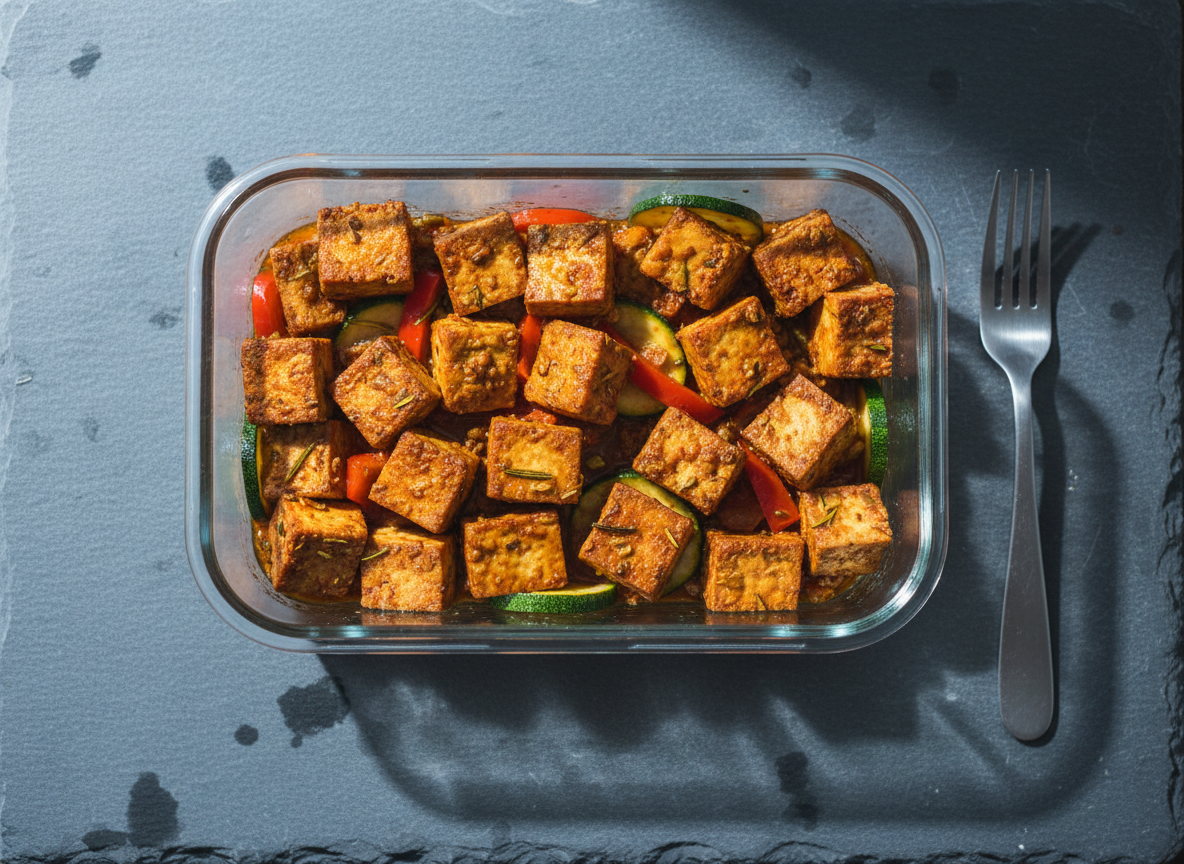
    One quiet batch cook that turns a couple of blocks of plain tofu into four ready meals you’ll genuinely look forward to — pressed, marinated days ahead in soy, garlic and ginger, baked firm and golden, then boxed over rice with edamame and veg. About 420 calories and a full 30 grams of plant protein per portion, the macros already counted. This is the prep I make for the vegans I love.
    GoalPrep
    Total time55 min
    Makes4 boxes
    Protein / box30 g
    Calories / box420 kcal
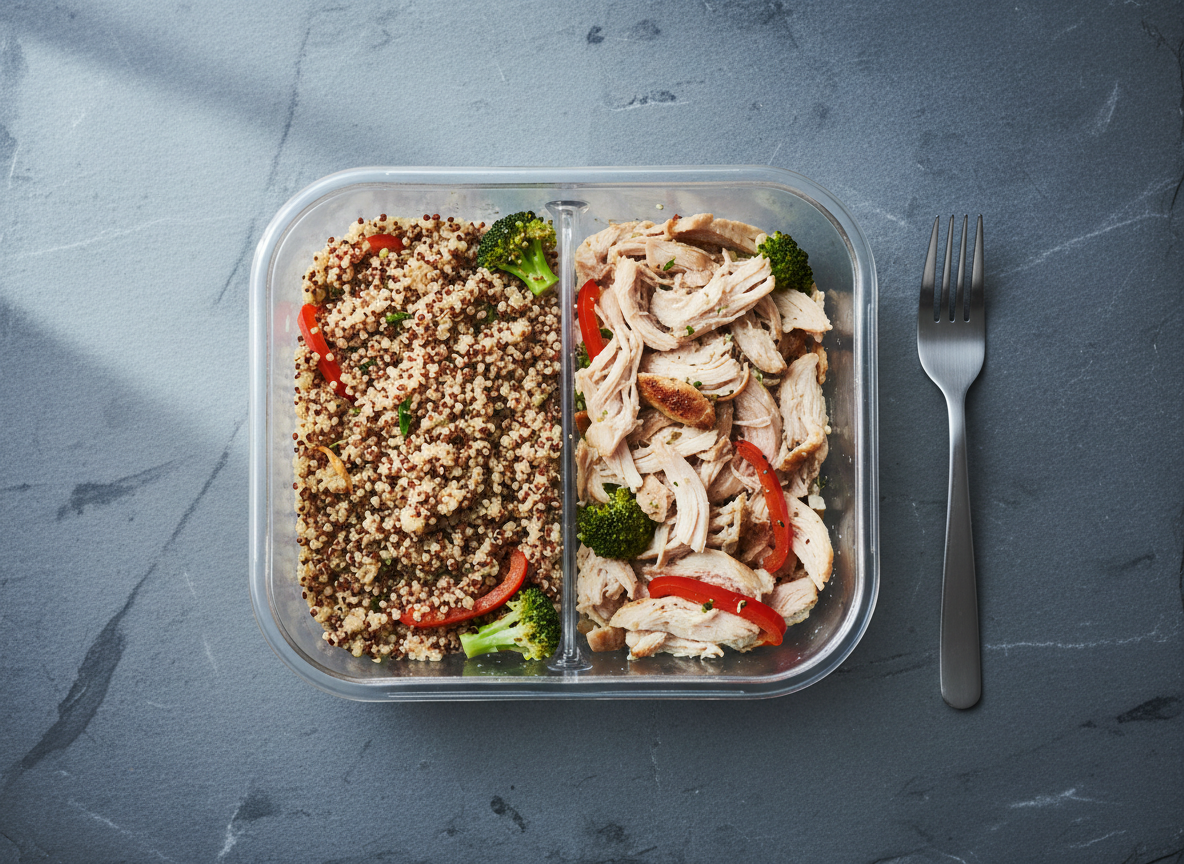
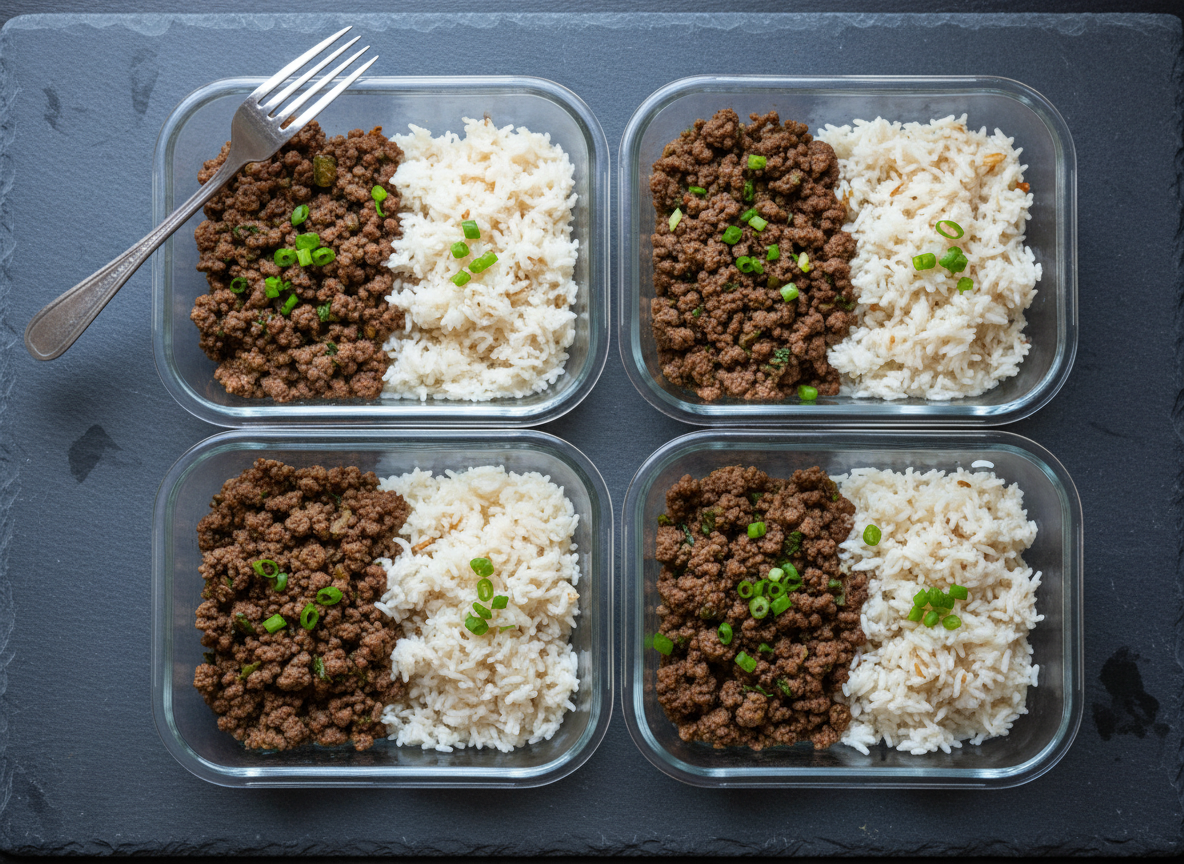
    Four meal-prep containers of golden baked marinated tofu over rice with edamame and roasted vegetables, portioned under cold light Prep 01 / Boxed

    My niece went vegan the winter she turned nineteen, and the first thing she said to me — half worried, like she’d let me down — was “you’re not going to be weird about it, are you, Magnus?” I’m not vegan myself, love. Twenty years of chicken and beef will tell you that. But the idea that I’d give a hard time to someone I’d carry across a frozen river? No. I just rolled up my sleeves and asked her to give me a week to figure out how to feed her properly.

    The trouble was, the first tofu I made her was awful. Pale, wet, bouncy — the kind of tofu that gives the whole thing a bad name, the kind that makes people swear off it for life. She ate it to be kind, and I knew. So I went back to my cold little kitchen and worked it out the way I work everything out: slowly, and on purpose. Press the water out so it can actually take on flavour. Marinate it a day ahead so the soy and garlic get right into it. Dust it with a little cornstarch so it bakes up firm and golden instead of sad and soft. By the third try she asked for seconds, and she wasn’t being kind that time.

    That’s what this prep is. Not a sad substitute, not a punishment for eating plants — four proper boxes of food that happen to be entirely vegan, and that hold up beautifully through the week. I make it for her now whenever she visits, and I make it for a few readers who’d written in sure that “meal prep” wasn’t for them. It is. I’ve got you on this one.

    01Who it’s for & when to eat it

    This is built for the vegan — or the someone-cooking-for-a-vegan — who wants real, sturdy meal prep without the protein falling off a cliff. Cook once, eat for four days, no decisions to make when you’re tired. Here’s how I steer the boxes depending on what you’re chasing.

    On a cut

    Trim the grain

    Keep the full slab of tofu and the edamame, and cut the rice down to a half portion across the boxes. You hold all 30g of plant protein and a big plate of veg for satiety, and the calories drop toward 340. Volume stays high; that’s the whole point on a cut.

    On a bulk

    Add easy calories

    Same protein, more around it. A bigger scoop of rice in each box, an extra drizzle of sesame oil, a scatter of cashews or seeds. You’ll clear 600+ calories per box with the same lean tofu base — clean, not heavy.

    On TRT

    Steady through the day

    Even boxes spread the protein and energy across the day, which keeps you full and supports recovery without a giant evening overshoot. Plant protein plus a fist of carbs in each box is a calm, dependable way to fuel a normal working day.

    Timing: I split it four ways for four days, but it’s yours to spread however your week runs. Eat a box around training if that suits you; the tofu, edamame and rice sit nicely either side of a session.

    02Ingredients

    Makes 4 boxes, each landing near 30g protein and about 420 calories. Cooking for more than four days? Multiply every line by however many boxes you want and keep the proportions the same. Everything here is vegan, top to bottom.

    Per box ~30g protein · adjust on the live recipe card
    • Extra-firm tofu pressed800 g · 28 oz (2 blocks)
    • Edamame, shelled frozen300 g · 10.6 oz
    • Soy sauce or tamari, low-sodium5 tbsp · 75 ml
    • Maple syrup1 tbsp · 15 ml
    • Rice vinegar1 tbsp · 15 ml
    • Garlic, grated3 cloves
    • Fresh ginger, grated1 tbsp · 15 g
    • Cornstarch2 tbsp · 16 g
    • Toasted sesame oil1 tbsp · 15 ml
    • Brown or jasmine rice, dry200 g · 7.1 oz
    • Broccoli florets250 g · 8.8 oz
    • Red bell pepper, sliced200 g · 7.1 oz
    • Black pepperto taste
    • Saltto taste (go light — the soy salts it)

    Swaps I actually use: No edamame? Use frozen shelled soy beans or a tin of chickpeas, drained — both keep it vegan and keep the protein up. Want a chewier centre? Swap the tofu for a block of tempeh, sliced thin; it takes the marinade just as gladly. No maple? A spoon of agave or brown sugar does the same job. Gluten-free? Use tamari in place of soy sauce, one-for-one. The tofu and edamame together are the protein here — keep those two generous and the box holds at 30g.

    03Step by step

    First, the press

    Press the water out of the tofu

    This is the step everyone skips, and it’s the one that matters most. Drain the blocks, wrap each in a clean tea towel, set them on a plate and weigh them down with a heavy pan or a few tins. Leave them 20–30 minutes. Pressed tofu can actually drink up the marinade and bake firm instead of bouncy and wet.

    Magnus says: dry tofu is the whole secret. Don’t rush this bit — go make a coffee.

    Blocks of tofu wrapped in a tea towel and weighted down with a heavy pan to press out water
    The marinade

    Mix it and marinate, ideally a day ahead

    Whisk the soy or tamari, maple, rice vinegar, garlic, ginger and sesame oil in a bowl. Cube the pressed tofu, tip it into a container, pour the marinade over and turn it gently to coat. A couple of hours is fine; a full day in the fridge is better. This is the part that makes prep so easy — start it the night before and the work’s half done.

    Magnus says: marinating ahead is the kind of small kindness your future self will thank you for.

    Cubed tofu sitting in a soy, garlic and ginger marinade in a container
    Dust & bake

    Cornstarch, then a hot oven

    Heat the oven to 200°C (400°F). Lift the tofu out of the marinade (keep the liquid), toss it with the cornstarch until lightly coated, then spread it on a lined tray with space between each cube. Bake 25–30 minutes, turning once, until firm and golden at the edges. The cornstarch is what gives you that proper crisp shell.

    Magnus says: give the cubes room. Crowd the tray and they steam each other soft.

    Cornstarch-dusted tofu cubes baking golden and firm on a lined tray
    The grain

    Cook the rice, fluff and cool

    Rinse the rice until the water runs clear, then cook it however you normally do — pot, rice cooker, whatever you’ve got. Fluff it with a fork and spread it on a plate to cool a little before boxing. Cooling it spread out keeps it from going gluey in the fridge.

    Cooked rice fluffed and spread on a plate to cool
    Veg & beans

    Roast the veg, blanch the edamame

    Toss the broccoli and pepper with a little black pepper and a light pinch of salt, spread them on a tray and roast alongside the tofu for the last 18–20 minutes until the edges char. Boil the frozen edamame for 4 minutes, then drain. Roasting beats boiling for the veg — it survives the fridge far better, and those edamame are your second hit of protein.

    Magnus says: a spoon of the leftover marinade warmed in a pan makes a quick sauce to trickle over. Don’t waste it.

    Roasted broccoli and red pepper with charred edges next to a bowl of bright green edamame
    Portion

    Split it evenly across four boxes

    Divide everything across four containers — a quarter of the tofu, edamame, rice and veg in each. Even portions mean even macros, so every box lands near 30g of plant protein and 420 calories. Cool fully, lids on, into the fridge. That’s four days of dinner done in one calm cook.

    Magnus says: cool it before the lid goes on. Trapped steam is what turns prep soggy.

    Four finished meal-prep boxes of baked tofu, rice, edamame and roasted veg

    04The spec sheet

    Real numbers, calculated — not guessed. The batch makes 4 boxes; each finished box weighs about 380g. Here’s what one box and a flat 100g actually give you. Tofu and edamame are both soy, so this plate is a complete plant protein — it carries all the amino acids your body can’t make, which isn’t always true of a single plant food.

    Macros — per box & per 100g
    NutrientPer boxPer 100g
    Energy420 kcal111 kcal
    Protein30.0 g7.9 g
    Carbohydrate40.0 g10.5 g
    — of which sugars5.5 g1.4 g
    Fat15.5 g4.1 g
    — of which saturates2.2 g0.6 g
    Fibre7.0 g1.8 g
    Sodium~0.62 g~0.16 g
    Calorie density
    111 kcal / 100g

    Low for a complete, satisfying meal. That’s the gift of a tofu-and-veg box — a genuinely full plate for a modest calorie count, which is exactly what you want whether you’re holding or losing.

    Protein per 100 kcal
    7.1 g / 100 kcal

    A lifter’s metric. Strong for an entirely plant-based meal with rice in it — the soy from the tofu and edamame is doing real work, which is exactly the point of a prep like this.

    Key micros (per box, approx.)
    • Calcium~430 mg · 33% DV
    • Iron~4.8 mg · 27% DV
    • Magnesium~95 mg · 23% DV
    • Manganese~1.3 mg · 57% DV
    • Copper~0.4 mg · 44% DV
    • Vitamin C~80 mg · 89% DV

    Macros are calculated from standard food-composition data and will shift a little with your exact ingredients and brands — tofu varies a lot between makers. Micronutrient figures are estimates against general adult Daily Values. Numbers are for guidance, not medical advice — see our Nutrition Disclaimer.

    05Bulk / Cut / TRT variations

    One prep, three jobs — all of them fully vegan. The tofu-and-edamame protein base stays the same; you move the grain and the oil around it. Macros below are per box, adjusted for each goal.

    Cut

    The lean default

    Keep every gram of tofu and edamame and the full tray of veg, but halve the rice across the boxes and go light on the sesame oil. Maximum food on the plate, calories pulled down. This is how I run it when someone wants the scale moving and still wants to feel full at their desk.

    340Kcal
    29G Protein
    12G Fat
    Bulk

    Build it up

    Same protein, a bigger scoop of rice in each box, an extra teaspoon of sesame oil and a scatter of cashews or seeds over the top. Add a piece of fruit on the side if you want it. Clean, plant-based, calorie-dense and easy to eat across a busy day.

    600Kcal
    33G Protein
    22G Fat
    TRT

    Steady & balanced

    The standard box, spread evenly across the day. Moderate carbs, plant protein, a little healthy fat from the tofu and sesame oil. Full, steady energy without a big evening overshoot — just a calm, balanced plate.

    420Kcal
    30G Protein
    15G Fat

    06Meal prep & storage

    This whole recipe is a prep, so storage is the main event — and it starts before you even cook. Marinating the tofu a day ahead is part of the plan, not a chore. Then cool everything fully before the lids go on, label the boxes if you’re making several days at once, and treat the rice with a little respect.

    Fridge
    4–5 days

    Marinated baked tofu keeps beautifully — boxed and sealed, the tofu, edamame and veg hold for four to five days. It’s one of the best preppers there is. Cook a Sunday batch and you’re sorted through the week.

    Freezer
    2 months

    Baked tofu and rice freeze well; the tofu goes a touch chewier on thaw, which a lot of people actually prefer. Cool fully, freeze flat, thaw overnight in the fridge before reheating.

    Reheat
    3 min

    Microwave the box for 2–3 minutes, stirring once, with a splash of water over the rice to bring it back. Tofu reheats happily; the edamame stay bright. A warmed spoon of leftover marinade over the top wakes the whole box up.

    A note on rice, because I’d be a poor cook not to say it: cool it quickly, keep it cold, eat it within a few days, and only reheat it once until it’s piping hot. Treated kindly, rice is the backbone of cheap, easy prep all week long.

    Free · the 7-day “Get Fed” plan

    Want a whole week built around food like this?

    Drop your email and I’ll send you my free 7-day plan — meals, macros already counted, grocery list written. No spam, no lectures.

    No spam. Unsubscribe whenever. See what’s in the plan →

    07Common questions

    How do I press tofu without a tofu press? +

    You don’t need any special kit, love. Wrap the block in a clean tea towel or a few sheets of kitchen paper, set it on a plate, lay a chopping board on top and weigh it down with a heavy pan or a couple of tins. Twenty to thirty minutes does it. You’re just driving the water out so the tofu can soak up the marinade and bake firm.

    My tofu always comes out bland — how do I fix it? +

    Two reasons, almost always. First, it wasn’t pressed, so there was no room for flavour to get in. Second, it wasn’t marinated long enough — a quick dip won’t do it. Press it properly, then give it a few hours in the marinade, a full day if you can. The cornstarch and a hot oven do the rest, giving you a golden, savoury shell instead of pale, wet cubes.

    Can I use soft or silken tofu instead? +

    Not for this one. Soft and silken tofu hold too much water and fall apart in the oven — they’re lovely blended into sauces and scrambles, but they won’t bake into firm cubes. You want extra-firm here, pressed well. That’s the texture that survives the marinade, the bake and four days in a box.

    How do I make this gluten-free? +

    Easy — swap the soy sauce for tamari, one-for-one. Tamari is a soy sauce made with little or no wheat, so it keeps all the savoury depth without the gluten. Cornstarch is naturally gluten-free, and so is everything else in the box. Just check the label on your tamari to be sure of the brand.

    Is it really 30g of protein without any meat or dairy? +

    It is, and it’s all in the soy. A generous portion of extra-firm tofu plus a scoop of edamame stacks the plant protein up to around 30g a box. Both are soy, so between them you’re getting a complete protein — all the amino acids covered. Keep the tofu and edamame portions generous and the number holds.

    Do I have to eat it cold? +

    Not at all — reheat it. A couple of minutes in the microwave with a splash of water over the rice brings the whole box back to life, and baked tofu reheats far better than people expect. A spoon of warmed leftover marinade over the top makes it taste freshly made.

    From my 7-day plans

    This prep is the backbone of a full week of meals.

    These boxes are the engine room of my meal plans — seven days of high-protein meals with the macros counted and the grocery list written. You pick the goal; I do the maths and the cooking order.

    See the meal plans
    A week of baked tofu meal-prep boxes laid out and portioned under cold light

    08Pairs well with

    Browse all recipes →

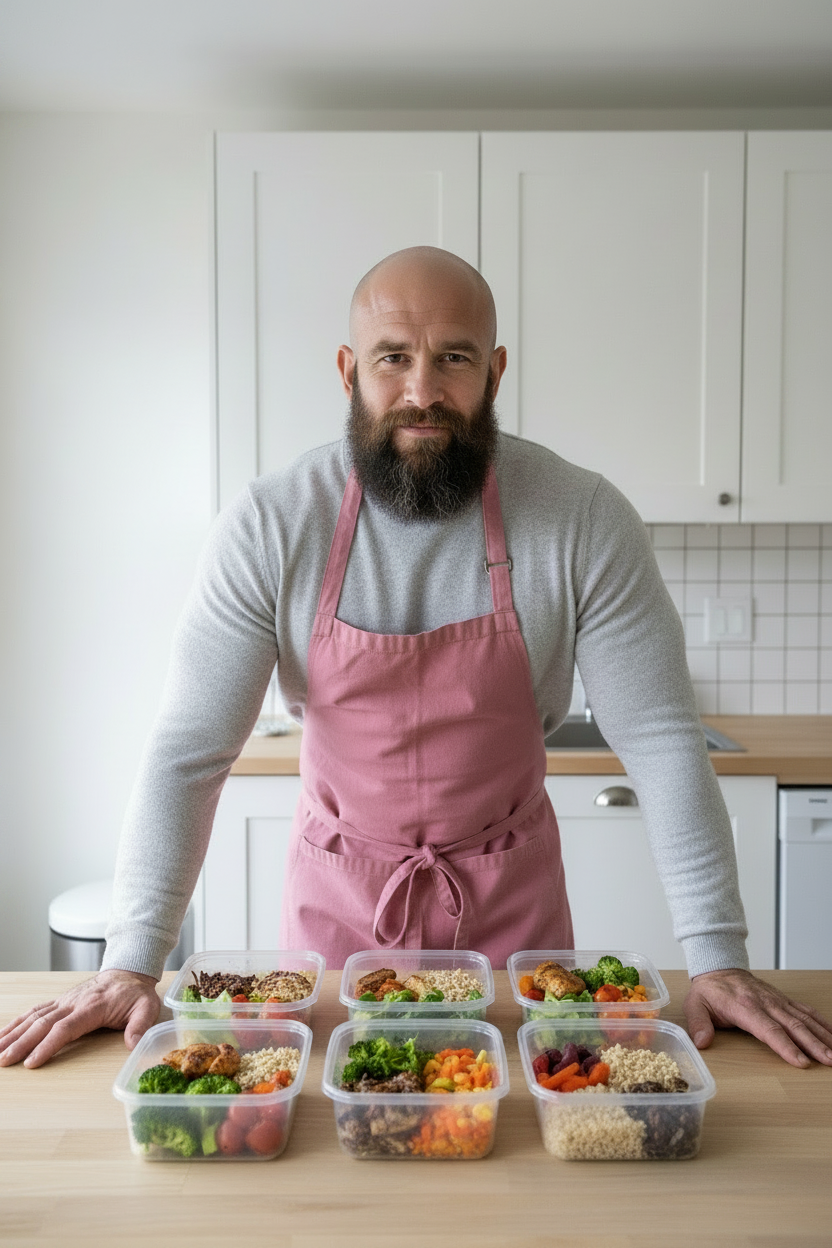
    Magnus Olafsson in his kitchen — bald, bearded and broad, in his pink apron, under cold light
    About the author

    Magnus Olafsson

    I’m Magnus — twenty years under the iron, from a cold gym in Stockholm to the classic-physique stage, and now mostly in my kitchen in a pink apron. I’ve cut for shows, bulked through winters, and I’ve been on TRT since I was thirty-five. I know what it takes to eat for the body you’re chasing, and I know it shouldn’t come with a side of shame.

    Everything here is food I actually cook and macros I actually count. I don’t diagnose, I don’t promise, and I never make a number up. I just feed you well and tell you the truth.

    B&K Classic Body Show Swedish Grand Prix · Super Series On TRT since 35 20 years training

    Slim Diet Era shares recipes and general nutrition information. It is not medical or dietetic advice, and we do not provide guidance on obtaining or using any controlled substance. See our Medical Disclaimer and Nutrition Disclaimer.
  • Sheet-Pan Chicken and Vegetables

    Sheet-Pan Chicken and Vegetables

    Recipe · Meal Prep / High-protein / One tray

    Sheet-Pan Chicken and Vegetables

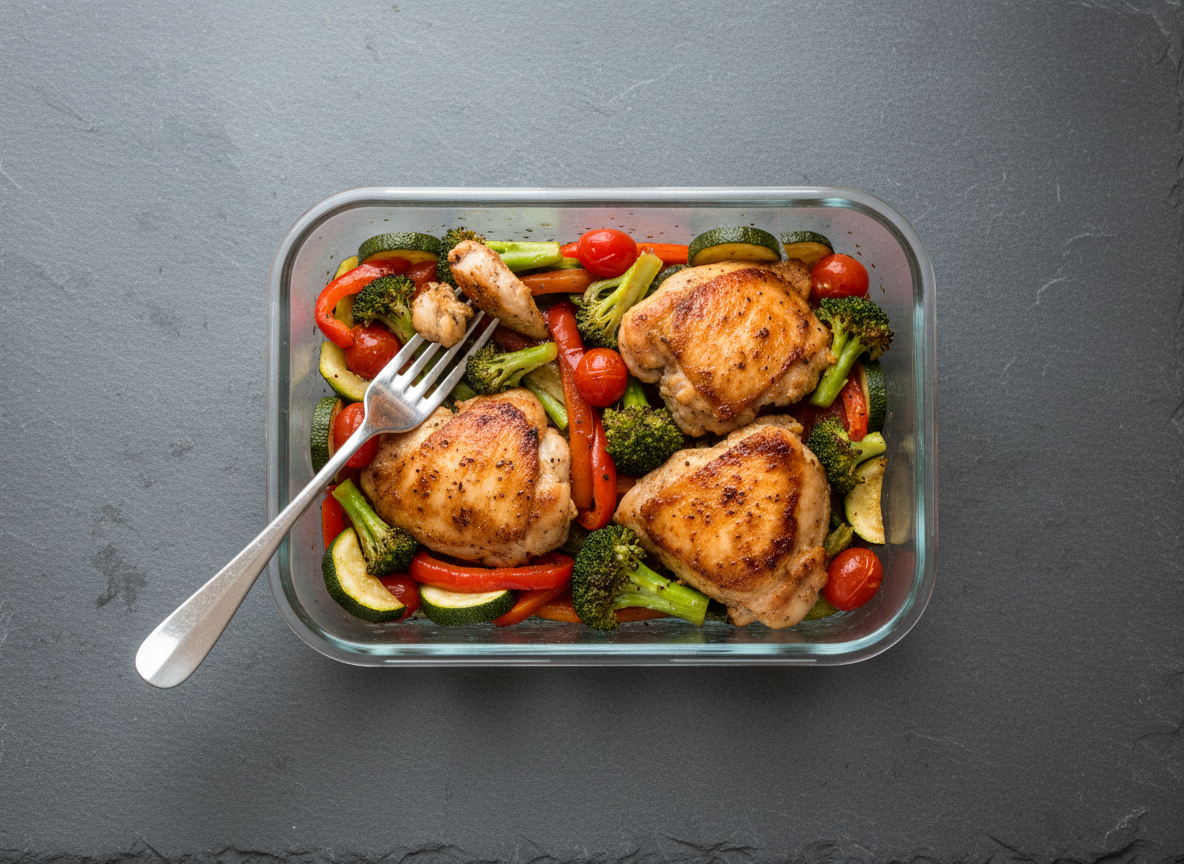
    One tray, one oven, four boxes of dinner sorted for the week. Chicken thighs and a heap of roasting veg, seasoned and spread across a single sheet pan, then split straight into containers when it comes out. Around 480 calories and a sturdy 47 grams of protein a portion, the macros already counted. This is the prep I reach for when I want a proper hot meal all week and I cannot face a sink full of pots.

    GoalPrep
    Total time45 min
    Makes4 boxes, one tray
    Protein / box47 g
    Calories / box480 kcal
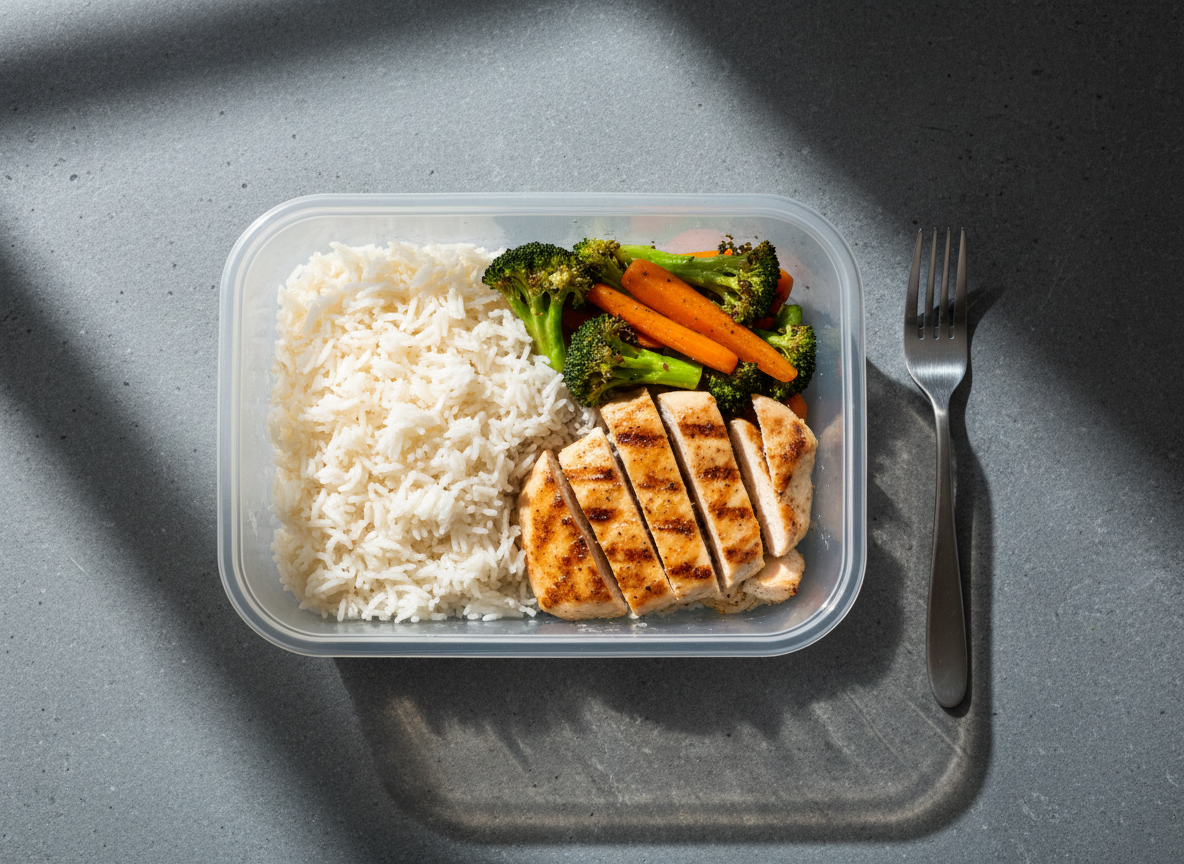
    Sheet-pan chicken thighs and roasted vegetables fresh from the oven, golden and charred at the edges under cold light Prep 01 / One tray

    I built this one on a bad week. Not a dramatic bad week — just one of those stretches where everything ran late and the washing-up never quite got done. I’d come home, look at the tower of pots by the sink, and decide a slice of bread standing at the counter would do for dinner. Again. And I knew better. I’ve spent twenty years telling people to feed themselves properly, and there I was, too tired to dirty a single pan. So I sat down and asked myself the only honest question: what’s the most food I can make with the least to clean up afterward? The answer was a sheet pan.

    One tray. That’s it. You line it, you pile chicken and veg on it, you season the lot, and the oven does the rest while you sit down. When it comes out, golden and a little charred at the corners, you don’t even plate it — you spoon it straight into four containers and the week’s dinners are done. One tray to wash, maybe a chopping board. That’s the whole mess. I make this most Sundays now, and I’ve handed the method to a few people who swore they couldn’t cook and just needed something that didn’t ask much of them. Every one of them came back the same way: “I actually ate properly all week.” That’s the bit I’m after, love — not a clever recipe, just a calm one that holds up till Thursday and leaves your kitchen nearly clean. I’ve got you on this.

    01Who it’s for & when to eat it

    This is for the person who wants real hot dinners all week but is done with the pile of pans. Cook one tray, box four nights, and your evenings get a lot quieter. Here’s how I steer the four boxes depending on what you’re chasing.

    On a cut

    Lean the chicken

    Swap the thighs for breast and keep the big tray of veg as it is. You hold all the protein and the full volume on the plate, and the calories drop toward 380 a box. Plenty of food, lighter numbers — that’s exactly what you want when the scale’s the focus.

    On a bulk

    Add a starch

    Same tray, but tuck a few baby potatoes among the veg or box a scoop of rice alongside. Thighs stay, a little extra olive oil over the lot. You’ll clear 650+ calories a box off the same easy method — calorie-dense without going heavy.

    On TRT

    Steady & balanced

    The standard box, even across the week. Lean protein, a generous fist of roasted veg, a little honest fat from the thighs and oil. Full, dependable fuel for a normal working day without a giant evening overshoot.

    Timing: I eat a box for dinner most nights, but it’s just as happy at lunch. It reheats well, so take one to work or have it around training — the protein and veg sit nicely either side of a session.

    02Ingredients

    Makes 4 boxes from one big sheet pan, each around 47g protein and 480 calories. Need more days? Run a second tray on the lower rack and keep every proportion the same.

    Per box ~47g protein · adjust on the live recipe card
    • Chicken thighs, boneless skinless800 g · 1.8 lb
    • Broccoli florets300 g · 10.6 oz
    • Bell peppers, chunked300 g · 10.6 oz
    • Red onion, in wedges200 g · 7.1 oz
    • Courgette (zucchini), sliced250 g · 8.8 oz
    • Carrots, in batons200 g · 7.1 oz
    • Olive oil2 tbsp · 30 ml
    • Garlic, grated3 cloves
    • Smoked paprika2 tsp
    • Dried oregano1 tsp
    • Lemon, juice + zest1
    • Black pepperto taste
    • Saltto taste (go light)

    Swaps I actually use: chicken breast in place of thighs runs the box leaner — see the cut note above. No courgette? Mushrooms, green beans or a couple of handfuls of cherry tomatoes all roast beautifully on the same tray. Swap the smoked paprika for cumin and a pinch of chilli if you want it warmer. Vegetarian? Drop the chicken for two big blocks of firm tofu, pressed and cubed, and a tin of chickpeas patted dry — same tray, same spices, same method.

    03Step by step

    Get the oven going

    Hot oven, lined tray, one board

    Set the oven to 220°C (425°F) and let it come right up to heat. Line your biggest sheet pan with baking paper — that’s the trick that keeps washing-up to almost nothing. Get one chopping board out and that’s your whole kit for tonight.

    Magnus says: a properly hot oven is what gives you colour instead of a steamed, sad tray. Let it heat fully first.

    A lined sheet pan and a single chopping board ready on a clear bench under cold light
    Cut the veg

    Chunk everything to a fair size

    Cut the broccoli into florets, the peppers and courgette into big chunks, the onion into wedges and the carrots into batons. Keep the pieces roughly even so they roast at the same pace — the carrot a touch smaller, since it’s the slowest to soften.

    Magnus says: even pieces, even cooking. No tiny bits to burn, no boulders left raw.

    Chopped broccoli, peppers, courgette, onion and carrots on a board ready to season
    Season it all

    One bowl, everything coated

    Tip the chicken thighs and all the veg into a big bowl. Add the olive oil, garlic, smoked paprika, oregano, lemon zest and juice, black pepper and a light pinch of salt. Toss it with your hands until every piece is coated. One bowl, one go — no separate dishes for this and that.

    Chicken thighs and vegetables tossed together in a bowl with spices and lemon
    Spread the tray

    One layer, room to breathe

    Spread everything across the lined tray in a single layer with the chicken sitting flat. Give each piece a little space — crowd the pan and it steams instead of roasting. If your tray’s full, split across two; better that than a soggy heap.

    Magnus says: space is what turns the corners golden. Crowding is what keeps them pale and wet.

    Seasoned chicken and vegetables spread in a single layer on a sheet pan before roasting
    Roast

    25 to 30 minutes, one turn

    Roast for 25–30 minutes, giving the tray a stir at the halfway mark so everything browns evenly. The chicken’s done at 74°C / 165°F in the thickest thigh, and the veg should have charred edges. Pull it out and let it sit five minutes before you touch it.

    Magnus says: that stir halfway is the difference between an even tray and one good corner. Don’t skip it.

    Roasted chicken and vegetables golden and charred at the edges fresh from the oven
    Box it up

    Divide the tray into four containers

    Pull out four meal-prep containers and split the tray evenly — roughly two thighs and a quarter of the veg in each. Eyeball it fairly so the macros land even, near 47g protein and 480 calories a box. Let them cool with the lids off before you seal them, then into the fridge.

    Magnus says: cool it before the lid goes on. Trapped steam is what turns a good roast soft and damp by Tuesday.

    Four meal-prep containers filled with roasted chicken and vegetables, lids off to cool

    04The spec sheet

    Real numbers, calculated — not guessed. One tray makes 4 boxes, about 1,100g of cooked food total, so a portion comes in around 275g. Here’s what one box and a flat 100g of it actually give you.

    Macros — per box & per 100g
    NutrientPer box (~275g)Per 100g
    Energy480 kcal175 kcal
    Protein47.0 g17.1 g
    Carbohydrate22.0 g8.0 g
    — of which sugars9.0 g3.3 g
    Fat22.0 g8.0 g
    — of which saturates5.0 g1.8 g
    Fibre6.0 g2.2 g
    Sodium~0.38 g~0.14 g
    Calorie density
    175 kcal / 100g

    Moderate, and most of that comes from the thighs. The big tray of veg keeps the plate full and the density honest — you get a proper-sized dinner for the number, which is the whole point of roasting a heap of veg alongside the meat.

    Protein per 100 kcal
    9.8 g / 100 kcal

    A lifter’s metric, and a strong one for a dinner made with thighs. Lean it up with breast on a cut and this climbs higher still — most of the energy you’re eating is pulling its weight as protein.

    Key micros (per box, approx.)
    • Vitamin C~110 mg · 122% DV
    • Vitamin A~430 µg · 48% DV
    • Niacin (B3)~11 mg · 69% DV
    • Vitamin B6~1.0 mg · 59% DV
    • Selenium~38 µg · 69% DV
    • Potassium~900 mg · 19% DV

    Macros are calculated from standard food-composition data and will shift a little with your exact ingredients and brands. Micronutrient figures are estimates against general adult Daily Values. Numbers are for guidance, not medical advice — see our Nutrition Disclaimer.

    05Bulk / Cut / TRT variations

    One tray, three jobs. The veg base stays the same — you move the protein cut and the starch around it. Macros below are per box, adjusted for each goal.

    Cut

    Swap to breast

    Use skinless chicken breast in place of the thighs and keep every gram of veg. You hold the full plate and all the protein while the fat and calories drop. This is how I run it when the scale’s the focus and I still want a real dinner.

    380Kcal
    50G Protein
    10G Fat
    Bulk

    Add a starch

    Keep the thighs and tuck a handful of baby potatoes among the veg, or box a scoop of rice alongside. A little extra olive oil over the tray finishes it. Calorie-dense and easy to eat after a hard session.

    660Kcal
    49G Protein
    24G Fat
    TRT

    Steady & balanced

    The standard tray as written, split four even ways. Moderate carbs from the veg, lean protein from the thighs, honest fat to keep you full. Steady energy across the day without a big evening overshoot.

    480Kcal
    47G Protein
    22G Fat

    06Meal prep & storage

    This whole recipe is a one-tray batch, so storage is the main event. Cool the boxes fully before the lids go on, label them if you’re running two trays at once, and you’ve got four hot dinners waiting with nothing to think about.

    Fridge
    4 days

    Boxed and sealed, roasted chicken and veg hold beautifully for four days. Cook a Sunday tray and you’re sorted clean through Wednesday or Thursday.

    Freezer
    3 months

    The chicken freezes well; the veg softens a little on thaw but still eats nicely. Cool fully, freeze the boxes flat, and thaw overnight in the fridge before reheating.

    Reheat
    3 min

    Microwave the box for 2–3 minutes, stirring once. For a crisper finish, spread it back on a tray under a hot grill for a few minutes — it brings the roasted edges right back.

    One tray, four boxes, almost nothing to wash — that’s the whole reason this prep earns its place in my week. Make it the night you’ve got the least left in the tank, and you’ll be glad of it for days.

    Free · the 7-day “Get Fed” plan

    Want a whole week built around food like this?

    Drop your email and I’ll send you my free 7-day plan — meals, macros already counted, grocery list written. No spam, no lectures.

    No spam. Unsubscribe whenever. See what’s in the plan →

    07Common questions

    Thighs or breast — which should I use? +

    Both work, it just depends on your goal. Thighs are juicier, more forgiving in the oven, and survive the fridge and reheat better — that’s why they’re my default for a prep. Breast is leaner, so it’s my pick on a cut when I want the calories down and the protein up. If you go breast, pull the tray a few minutes earlier so it doesn’t dry out.

    How do I stop the veg going soggy? +

    Three things. A properly hot oven, a single layer with space between the pieces, and not over-oiling. Crowding is the real culprit — pile it high and the veg steams in its own moisture instead of roasting. If your tray’s full, split it across two. Roasted veg holds up in the fridge far better than boiled, so this is worth getting right.

    Which vegetables roast best for this? +

    Sturdy ones that hold their shape and like a bit of char. Broccoli, peppers, onion, courgette, carrots and mushrooms are all reliable. Cherry tomatoes and green beans are lovely too. I’d steer clear of soft, watery veg like spinach or cucumber — they collapse. If you mix slow and fast veg, cut the slow ones (carrots, potatoes) a touch smaller so everything finishes together.

    Can I make a bigger batch for the whole week? +

    You can — just don’t overload one tray. Run two trays on separate racks, swapping their positions halfway so both brown evenly, rather than heaping everything onto one. Cooked chicken and veg are best inside four days in the fridge, so for a full seven I’ll freeze a couple of boxes and thaw them as I go.

    Do I have to eat it cold? +

    Not at all — reheat it. A couple of minutes in the microwave does the job. If you want those roasted edges back, spread the box onto a tray under a hot grill for a few minutes instead; it crisps right up again. It’s good cold straight from the fridge too, if that’s your thing.

    From my 7-day plans

    This tray is the backbone of a full week of meals.

    One-tray dinners like this are the engine room of my meal plans — seven days of high-protein meals with the macros counted and the grocery list written. You pick the goal; I do the maths and the cooking order.

    See the meal plans
    A sheet pan of roasted chicken and vegetables ready to be divided into a week of boxes under cold light

    08Pairs well with

    Browse all recipes →

    Magnus Olafsson in his kitchen — bald, bearded and broad, in his pink apron, under cold light
    About the author

    Magnus Olafsson

    I’m Magnus — twenty years under the iron, from a cold gym in Stockholm to the classic-physique stage, and now mostly in my kitchen in a pink apron. I’ve cut for shows, bulked through winters, and I’ve been on TRT since I was thirty-five. I know what it takes to eat for the body you’re chasing, and I know it shouldn’t come with a side of shame.

    Everything here is food I actually cook and macros I actually count. I don’t diagnose, I don’t promise, and I never make a number up. I just feed you well and tell you the truth.

    B&K Classic Body Show Swedish Grand Prix · Super Series On TRT since 35 20 years training

    Slim Diet Era shares recipes and general nutrition information. It is not medical or dietetic advice, and we do not provide guidance on obtaining or using any controlled substance. See our Medical Disclaimer and Nutrition Disclaimer.
  • Burrito-Bowl Meal Prep

    Burrito-Bowl Meal Prep

    Recipe · Meal Prep / High-protein / Batch

    Burrito-Bowl Meal Prep

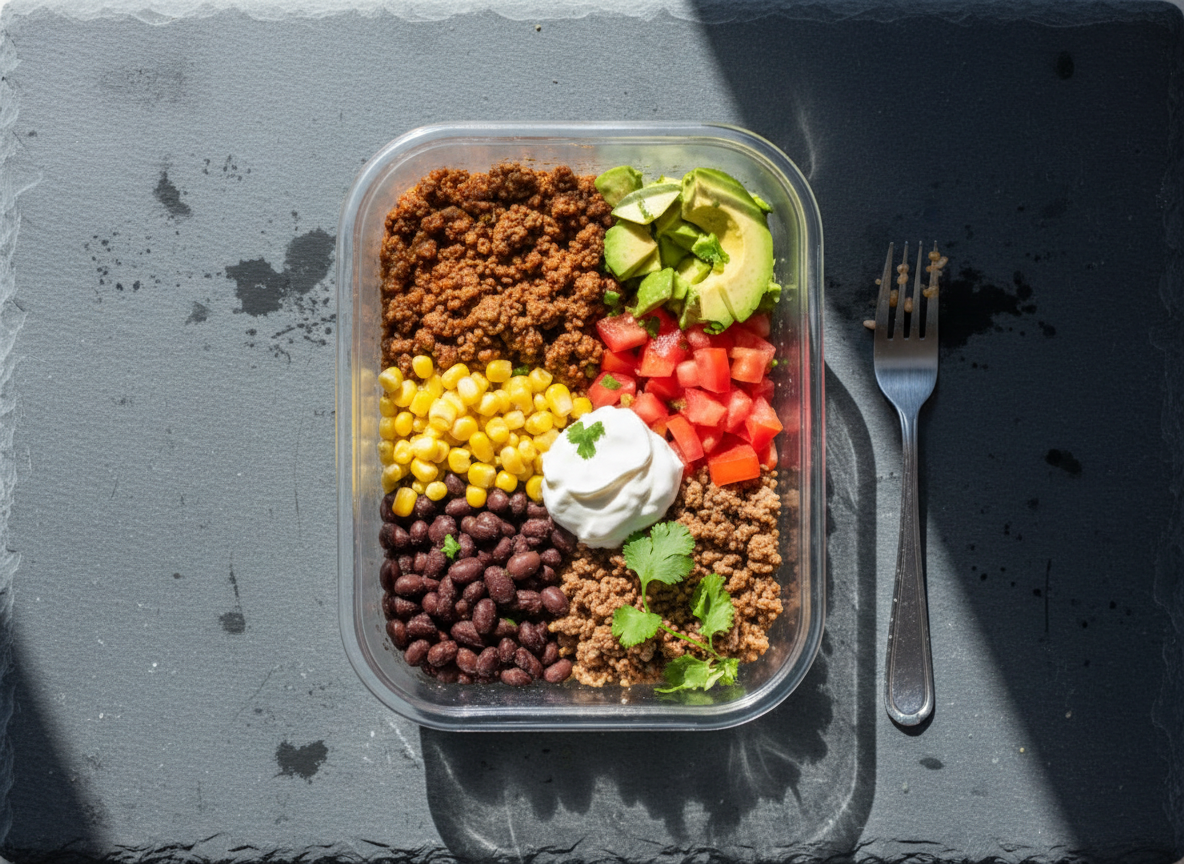
    One easy batch cook that fills four containers with everything you’d order at the burrito counter — seasoned chicken, rice, black beans, peppers, corn and salsa — boxed and waiting so a good lunch is just a lid away. Around 560 calories and 46 grams of protein per bowl, the macros already counted. This is the prep I keep on rotation when I want days of real, satisfying food and zero fuss after work.

    GoalMeal Prep
    Total time45 min
    Makes4 bowls
    Protein / bowl46 g
    Calories / bowl560 kcal
    Four burrito-bowl meal-prep containers lined up — seasoned chicken, rice, black beans, peppers, corn and salsa, portioned under cold light Prep 01 / Boxed

    There was a stretch a few years back when I’d finish at the gym, sit in the car, and drive straight to the burrito place on the corner before I’d even thought about it. Same order every time — bowl, double chicken, beans, rice, the lot. I told myself it was fine, it was mostly good food, and it mostly was. But it was costing me a small fortune, the portions wandered all over the place, and on the nights they were heavy-handed with the rice I’d eat half a day’s calories standing at the counter without meaning to. I’m a man who likes to know his numbers, love, and that bowl was a mystery every single time.

    So one Sunday I just made it myself. Same flavours, same comfort, but cooked in one batch and split into four boxes that I knew, down to the gram, what was in them. Seasoned chicken, a pot of rice, black beans warmed with a little cumin, charred peppers and corn, a good spoon of salsa. It took me about three-quarters of an hour, cost a fraction of four trips to the counter, and meant that for the rest of the week a proper, satisfying lunch was sitting in the fridge with the maths already done.

    I’ve made this for half the people I train with since. The ones who swore they couldn’t meal-prep because prep food is boring — they didn’t find this boring, because it doesn’t taste like prep, it tastes like the bowl you’d queue for. That’s the whole idea. You’re not eating sad fridge food for four days. You’re eating something you actually want, made calmly on a quiet afternoon. I’ve got you on this one.

    01Who it’s for & when to eat it

    This is built for the person who wants a good lunch waiting all week without thinking about it after a long day. Cook once on a quiet afternoon, eat for days, every bowl already counted. Here’s how I steer the four boxes depending on what you’re chasing.

    On a cut

    Lean on the protein

    Keep the chicken and beans exactly as they are and trim the rice down to a half scoop per bowl. You hold the full 46g of protein and a big pile of peppers and corn for satiety, and the calories drop toward 460. Volume stays high; that’s what keeps you full on a cut.

    On a bulk

    Build the bowl up

    Same protein, more around it. A bigger scoop of rice, an extra spoon of beans, and half an avocado sliced on top just before you eat. You’ll clear 750+ calories per bowl with the same lean base — full, satisfying, easy to get down on a busy day.

    On TRT

    Steady fuel

    Four even bowls across the week spread the protein and energy out nicely. Lean chicken, a fist of rice and beans, and a good hit of veg in each box is a calm, dependable way to fuel normal working days without a big evening overshoot.

    Timing: I usually eat one of these for lunch, but it sits just as happily as a post-training dinner — the chicken, rice and beans land well either side of a session. Eat it cold from the box if you’re short on time, or warm it through; both work.

    02Ingredients

    Makes 4 bowls, each landing near 46g protein and about 560 calories. Want a full week? Multiply every line by the days you’re prepping and keep the proportions the same — the method doesn’t change.

    Per bowl ~46g protein · adjust on the live recipe card
    • Chicken breast, skinless700 g · 1.5 lb
    • White rice, dry200 g · 7.1 oz
    • Black beans, cooked / canned drained400 g · 14 oz
    • Bell peppers, sliced300 g · 10.6 oz
    • Sweetcorn, kernels200 g · 7.1 oz
    • Salsa chunky, jarred or fresh240 g · 8.5 oz
    • Olive oil1 tbsp · 15 ml
    • Garlic, grated3 cloves
    • Ground cumin2 tsp
    • Smoked paprika2 tsp
    • Chilli powder1 tsp · to taste
    • Lime1, juiced
    • Salt & black pepperto taste (go light on salt)

    Swaps I actually use: lean beef mince (5% fat) works beautifully in place of the chicken if you want a deeper flavour — brown it with the same spices. No white rice? Swap in brown rice, jasmine, or cooked quinoa one-for-one; brown rice and quinoa add a little more fibre. Pinto or kidney beans stand in for black beans without a fuss. Vegetarian? Drop the chicken, double the beans and add a block of firm tofu browned hard — the bowl structure stays exactly the same.

    03Step by step

    Get organised

    Four containers, one clear bench

    Pull out four meal-prep containers and clear a stretch of bench. Get the rice going first since it takes the longest, then mix your spices in a small bowl — the cumin, smoked paprika, chilli, garlic, a pinch of salt and pepper. Having everything to hand makes this prep calm rather than frantic.

    Magnus says: prep is calmer when the kitchen is. Clear the decks first.

    Four empty meal-prep containers and burrito-bowl ingredients laid out on a clear bench under cold light
    The rice

    Cook the rice, fluff and cool

    Rinse the rice until the water runs clear, then cook it however you normally do — pot or rice cooker, whatever you’ve got. Once it’s done, squeeze in half the lime, fluff it with a fork and spread it on a plate to cool a little. Cooling it spread out keeps it from going gluey in the box.

    Cooked white rice fluffed with lime and spread on a plate to cool
    The chicken

    Season and cook the breast

    Cut the chicken into bite-sized chunks, pat dry, and toss with most of the spice mix and a little of the olive oil. Cook in a hot pan over a medium-high heat for 8–10 minutes, turning, until it catches some colour and reaches 74°C / 165°F in the centre. Don’t crowd the pan — work in two batches if you need to, so it browns rather than steams.

    Magnus says: a dry surface and a hot pan gives you colour. Colour is flavour.

    Seasoned chicken chunks browning in a hot pan
    The beans

    Warm the black beans

    Drain and rinse the beans, then warm them through in a small pan with the grated garlic, a teaspoon of cumin and a splash of water for two or three minutes. A short warm-through wakes them up — far better than spooning them straight from the tin. Take them off the heat once they’re hot and a little soft.

    Black beans warming in a pan with garlic and cumin
    The veg

    Char the peppers and corn

    In the same pan you used for the chicken, with the last of the olive oil, throw in the sliced peppers and the corn over a high heat. Leave them alone for a minute at a time so they catch and char at the edges rather than going soft. Five or six minutes and they’re done — a little colour, still a bit of bite.

    Magnus says: don’t fuss the veg. Let it sit and catch, and it holds up far better all week.

    Bell peppers and sweetcorn charring in a hot pan
    Portion

    Split it evenly across four boxes

    Divide everything across the four containers — roughly a quarter of the chicken, rice, beans, peppers and corn in each. Even portions mean even macros, so each bowl lands near 46g of protein and 560 calories. Squeeze the rest of the lime over the top. Let it all cool fully before the lids go on.

    Magnus says: cool it before the lid goes on. Trapped steam is what turns prep soggy.

    Four finished burrito bowls portioned with chicken, rice, beans, peppers and corn
    The wet toppings

    Keep the salsa separate

    Here’s the one rule that makes or breaks this prep: don’t box the salsa with the rest of it. Wet toppings sitting on warm rice for days will turn the whole bowl mushy. Spoon the salsa into small separate pots, or simply add it fresh from the jar each day. Same goes for avocado — cut it the morning you eat it, never days ahead.

    Magnus says: keep the wet stuff out until the last minute, and a four-day-old bowl still eats like fresh.

    Salsa portioned into small separate pots beside the prepped burrito bowls

    04The spec sheet

    Real numbers, calculated — not guessed. The batch makes 4 bowls. Each cooked bowl weighs about 430g with the salsa added. Here’s what one bowl and a flat 100g actually give you.

    Macros — per bowl & per 100g
    NutrientPer bowlPer 100g
    Energy560 kcal130 kcal
    Protein46.0 g10.7 g
    Carbohydrate62.0 g14.4 g
    — of which sugars8.0 g1.9 g
    Fat9.0 g2.1 g
    — of which saturates1.8 g0.4 g
    Fibre11.0 g2.6 g
    Sodium~0.52 g~0.12 g
    Calorie density
    130 kcal / 100g

    Low for a complete meal with rice and beans in it. The beans and charred veg pad the bowl out with bulk and fibre, so you get a genuinely full plate for a modest calorie count — exactly what you want whether you’re holding or losing.

    Protein per 100 kcal
    8.2 g / 100 kcal

    A lifter’s metric. Solid for a carb-forward bowl built around rice and beans — the lean chicken does the heavy lifting, so plenty of the energy you’re eating is working for your protein target.

    Key micros (per bowl, approx.)
    • Niacin (B3)~14 mg · 88% DV
    • Vitamin B6~1.1 mg · 65% DV
    • Folate~160 µg · 40% DV
    • Magnesium~110 mg · 26% DV
    • Iron~4.2 mg · 23% DV
    • Zinc~3.0 mg · 27% DV

    Macros are calculated from standard food-composition data and will shift a little with your exact ingredients and brands. Micronutrient figures are estimates against general adult Daily Values. Numbers are for guidance, not medical advice — see our Nutrition Disclaimer.

    05Bulk / Cut / TRT variations

    One prep, three jobs. The chicken and beans stay the same — you move the rice and the fat around them. Macros below are per bowl, adjusted for each goal.

    Cut

    The lean default

    Keep every gram of protein and the full pile of peppers and corn, but halve the rice across the bowls. Maximum food on the plate, calories pulled down. This is how I run it when I want the scale moving and still want a full box at lunch.

    460Kcal
    45G Protein
    8G Fat
    Bulk

    Build it up

    Same protein, a bigger scoop of rice and an extra spoon of beans, with half an avocado sliced on top just before you eat. Clean, calorie-dense, and easy to get down across a busy day without feeling stuffed.

    760Kcal
    48G Protein
    20G Fat
    TRT

    Steady & balanced

    The standard bowl, spread evenly across the week. Moderate carbs from the rice and beans, lean protein, a little healthy fat from the oil. Full, steady energy without a big evening overshoot.

    560Kcal
    46G Protein
    9G Fat

    06Meal prep & storage

    This whole recipe is a prep, so storage is the main event. Cool everything fully before the lids go on, label the boxes if you’re making several days at once, and keep the wet toppings out of the box until you’re ready to eat — that’s the difference between a bowl that holds and one that goes sad by Wednesday.

    Fridge
    4 days

    Boxed and sealed, the chicken, rice, beans and veg hold beautifully for four days. Cook on a Sunday afternoon and you’re sorted with lunches through Thursday.

    Freezer
    3 months

    The chicken, rice and beans freeze well; the veg softens a little on thaw but holds. Cool fully, freeze flat, thaw overnight in the fridge before reheating. Freeze without the salsa.

    Reheat
    3 min

    Microwave the box for 2–3 minutes, stirring once, with a splash of water over the rice to bring it back. Add the salsa and any avocado fresh after reheating so they stay bright.

    A word on prepping days ahead, because it’s the heart of this one: cook the bowls cold-store-ready, keep the salsa and avocado in separate pots, and you can box four days at once on a single afternoon. Reheat each bowl only once, until it’s piping hot, then top it fresh. Treated that way, a Sunday batch eats like it was made that morning right through the week.

    Free · the 7-day “Get Fed” plan

    Want a whole week built around food like this?

    Drop your email and I’ll send you my free 7-day plan — meals, macros already counted, grocery list written. No spam, no lectures.

    No spam. Unsubscribe whenever. See what’s in the plan →

    07Common questions

    How far ahead can I make these bowls? +

    Four days in the fridge is the sweet spot — cooked chicken, rice and beans are happiest eaten within about four days. For a full working week I cook the four fresh and freeze a second batch, thawing it overnight when the first lot runs out. Keep the salsa and avocado separate and even a four-day-old bowl eats like fresh.

    Why keep the salsa out of the box? +

    Wet toppings sitting on warm rice for days will turn the whole bowl soft and watery. Spoon the salsa into small separate pots, or just add it from the jar each day. Same with avocado — it browns fast, so cut it the morning you eat it rather than days ahead. Everything else holds beautifully; it’s only the wet stuff that needs keeping back.

    Can I use beef instead of chicken? +

    You can, and it’s lovely. Use lean beef mince at 5% fat and brown it with the same cumin, paprika and garlic. It nudges the fat up a touch, so if you’re watching calories on a cut, stick with the chicken. Otherwise it’s a straight swap and gives the bowl a deeper, richer flavour.

    How do I keep the rice from going hard? +

    Two things. Cool it spread out on a plate rather than in a lump, and when you reheat, add a splash of water over the rice before it goes in the microwave. The steam loosens it right back up. A lid or a damp paper towel over the box while it heats helps too.

    Can I make this vegetarian? +

    You can. Drop the chicken, double the black beans and add a block of firm tofu browned hard with the spices. You’ll want a little extra volume to reach the same protein without meat, but the bowl structure — protein, rice, beans, charred veg, salsa — stays exactly the same and tastes just as good.

    Do I have to eat it cold? +

    Not at all. These reheat well — a couple of minutes in the microwave with a splash of water over the rice brings the whole bowl back. I add the salsa and avocado fresh after reheating so they stay bright, but the chicken, rice, beans and veg are all happiest warm. Cold from the box works fine too if you’re short on time.

    From my 7-day plans

    This prep is the backbone of a full week of meals.

    These bowls are the engine room of my meal plans — seven days of high-protein meals with the macros counted and the grocery list written. You pick the goal; I do the maths and the cooking order.

    See the meal plans
    A week of burrito-bowl meal-prep boxes laid out and portioned under cold light

    08Pairs well with

    Browse all recipes →

    Magnus Olafsson in his kitchen — bald, bearded and broad, in his pink apron, under cold light
    About the author

    Magnus Olafsson

    I’m Magnus — twenty years under the iron, from a cold gym in Stockholm to the classic-physique stage, and now mostly in my kitchen in a pink apron. I’ve cut for shows, bulked through winters, and I’ve been on TRT since I was thirty-five. I know what it takes to eat for the body you’re chasing, and I know it shouldn’t come with a side of shame.

    Everything here is food I actually cook and macros I actually count. I don’t diagnose, I don’t promise, and I never make a number up. I just feed you well and tell you the truth.

    B&K Classic Body Show Swedish Grand Prix · Super Series On TRT since 35 20 years training

    Slim Diet Era shares recipes and general nutrition information. It is not medical or dietetic advice, and we do not provide guidance on obtaining or using any controlled substance. See our Medical Disclaimer and Nutrition Disclaimer.
  • Overnight-Oats Jars (batch of 5)

    Overnight-Oats Jars (batch of 5)

    Recipe · Meal Prep / High-protein / Batch

    Overnight-Oats Jars (Batch of 5)

    Five jars built in one calm sitting on a Sunday, so every weekday morning is already done for you — no cooking, no thinking, just lift a lid. Rolled oats, protein, milk, chia and fruit, layered and left overnight to go soft and creamy. Each jar lands at 420 calories and a real 32g of protein. This is the breakfast I make when I want the first decision of my day to already be made.

    GoalMeal Prep
    Active time15 min
    Makes5 jars
    Protein / jar32 g
    Calories / jar420 kcal
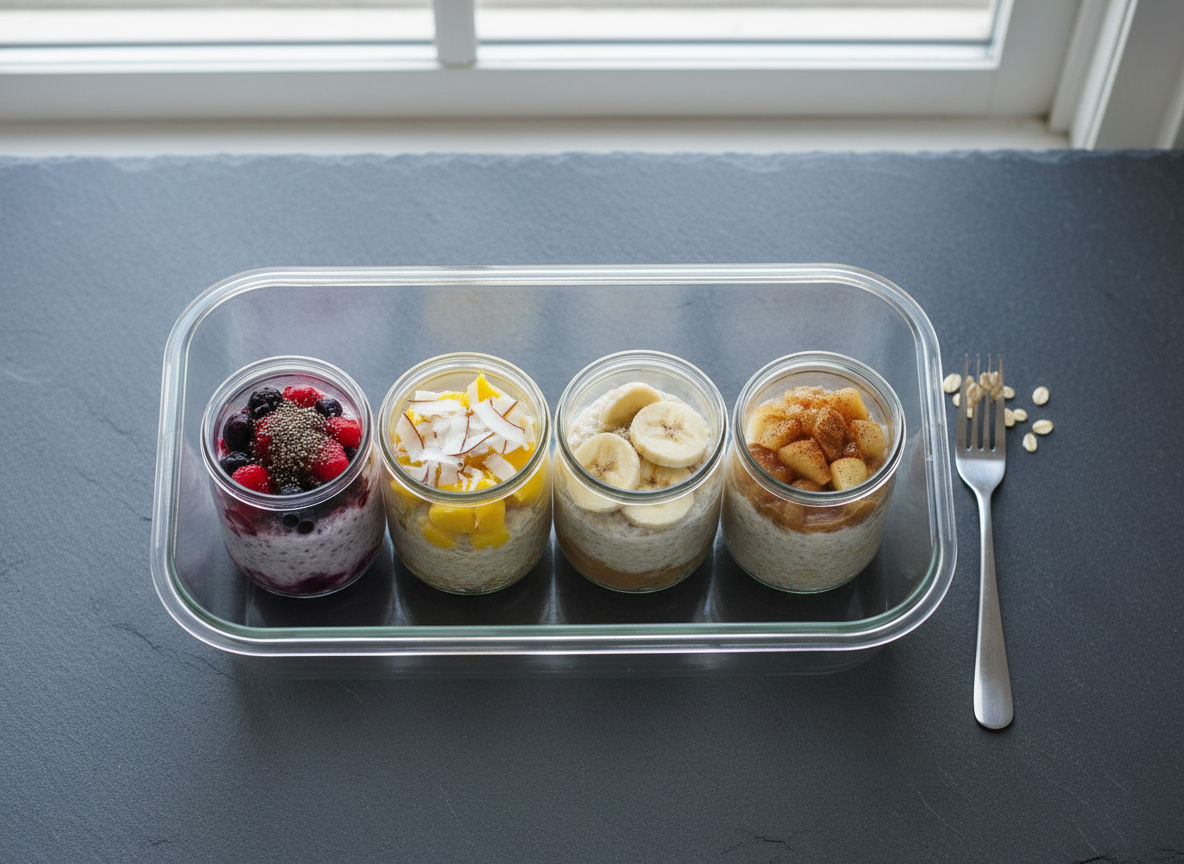
    Five overnight-oats jars lined up — rolled oats, chia and fruit layered under cold light, ready for the week Prep 01 / Five jars

    There was a stretch a few years back where my mornings were a small war. Up before the sun, gym keys in one hand, gym bag in the other, and the only breakfast I could manage was whatever I could grab on the way out the door — which usually meant nothing, and then a sad pastry at half-nine that did me no favours at all. I’d spent twenty years learning how to feed my body and I was still skipping the first meal of the day because I’d run out of time to think. That bothered me more than I’d like to admit.

    So one Sunday I sat down at my bench with five empty jars and decided I’d never have that fight again. Fifteen minutes later they were full — oats, a scoop of protein, milk, a spoon of chia, a handful of berries — and into the fridge they went. Monday morning I reached past the chaos, grabbed a cold jar and a spoon, and ate breakfast in the car like a man who had his life together. By Friday I was hooked. No pan, no stove, no early-morning maths. Just a soft, creamy, ready jar with 32 grams of protein already in it.

    That’s all this is, love. One quiet Sunday assembly that hands you five real breakfasts. I make a batch most weeks now, and I’ve talked half my gym into doing the same — people who swore they “just weren’t breakfast people,” who turned out to be people who’d never had breakfast made easy. Grab one on the way out and eat it cold, or warm it if you’d rather. Either way the morning’s already sorted. I’ve got you on this one.

    01Who it’s for & when to eat it

    This is built for the person whose mornings move too fast for cooking but who still wants a real, protein-packed breakfast in their hand. Assemble five jars once, eat all week, no decisions before coffee. Here’s how I steer the jars depending on what you’re chasing.

    On a cut

    Thin it down

    Drop the oats to a smaller scoop and lean on extra Greek yoghurt or skyr for the protein. You keep all 32g and the jar still sets thick and satisfying, but the calories slide toward 330. More volume from the dairy, fewer calories from the oats — easy on a cut.

    On a bulk

    Build the jar up

    Same protein base, a spoon of peanut or almond butter stirred through and half a sliced banana on top of each jar. Clean, calorie-dense fuel that clears 580+ per jar without you having to choke down extra food at the bench.

    On TRT

    Steady morning fuel

    The standard jar is a calm way to open the day — slow oats, a real hit of protein, a little fruit. It keeps you full through a busy morning and sits well before or after a session without spiking and crashing you.

    Timing: I eat mine first thing, but a jar is just as good mid-morning at your desk or after an early training session — the oats and protein settle the appetite for hours. Grab one cold on the way out or give it a minute in the microwave if you like it warm.

    02Ingredients

    Makes the full batch — 5 jars, each at 32g protein and about 420 calories. The amounts below are the whole batch, so just divide everything evenly across your five jars. Want fewer or more? Keep the proportions and scale the lot up or down.

    Per jar ~32g protein · adjust on the live recipe card
    • Rolled oats250 g · 2¾ cups
    • Whey or plant protein powder, vanilla150 g · 5 scoops
    • Greek yoghurt or skyr, plain300 g · 1¼ cups
    • Milk (dairy or unsweetened soy)750 ml · 3 cups
    • Chia seeds50 g · ⅓ cup
    • Mixed berries, fresh or frozen300 g · 10.6 oz
    • Banana, sliced optional1 medium
    • Vanilla extract1 tsp · 5 ml
    • Ground cinnamon1 tsp
    • Pinch of saltto taste
    • Honey or maple optionalto taste (go light)

    Swaps I actually use: no protein powder? Lean harder on the yoghurt or skyr and add a spoon of cottage cheese blended smooth — the jar still clears 30g. For dairy-free, swap the milk for unsweetened soy (it has the protein cows’ milk does), the yoghurt for a soy-based one, and a plant protein. Any fruit works in place of the berries — chopped apple, peach, grated pear. And if your oats turn out thicker than you like, just pour in a splash more milk in the morning and stir.

    03Step by step

    Get organised

    Five jars, one clear bench

    Line up five clean jars with lids — anything around 350–400ml works, a wide mouth makes eating easier. Clear a stretch of bench and have everything to hand. This is a no-cook assembly, so there’s no oven, no pan, nothing to time. Just measuring and layering.

    Magnus says: matching jars make even portions easy on the eye. Pick five the same and life gets simpler.

    Five empty glass jars lined up on a clear bench with oats, chia and berries laid out under cold light
    The dry base

    Mix the oats, protein and chia

    In one big bowl, stir together the rolled oats, protein powder, chia seeds, cinnamon and a pinch of salt. Mixing the powder in dry first is the trick — it stops the protein clumping later. Give it a proper stir so it’s all one even, sandy mix.

    Magnus says: dry-mix the protein every time. Powder dumped onto liquid goes lumpy, and nobody wants a gritty jar.

    Rolled oats, protein powder and chia seeds being stirred together dry in a large bowl
    The wet

    Pour in the milk and yoghurt

    Add the milk, the yoghurt or skyr, the vanilla and a light drizzle of honey if you’re using it. Stir it all into the dry mix until you’ve got one smooth, loose porridge — it’ll look thin now, but the oats and chia drink it up overnight and set it thick. Taste it and adjust the sweetness.

    Milk and yoghurt being stirred into the oat mixture to make a loose porridge
    Divide

    Split it evenly across the 5 jars

    Spoon the mixture into your five jars — about a heaped cup in each, filling them roughly the same. Even jars mean even macros, so each one lands near 32g of protein and 420 calories. A quick tap on the bench settles the mix and knocks out air pockets.

    Magnus says: if you want it exact, set the jars on a kitchen scale and split to the same weight. I rarely bother, but the option’s there.

    The oat mixture being spooned evenly into five jars on the bench
    Top and seal

    Add the fruit, lids on

    Share the berries across the tops, and the banana too if you’re going for the bulk version (banana’s best added the morning of, mind — it browns). Press the fruit down lightly or leave it sitting pretty on top, whichever you like. Lids on, firm.

    Mixed berries being spooned on top of the five filled jars before sealing
    Overnight set

    Into the fridge, leave them be

    All five jars into the fridge and leave them at least eight hours — overnight is ideal. That’s where the magic happens: the oats soften, the chia swells, and a thin porridge turns into a thick, creamy, spoonable jar. By morning the first one’s ready, and the other four are waiting for the rest of your week.

    Magnus says: give it the full overnight if you can. A jar eaten too soon is fine but a touch loose — patience pays off here.

    Five sealed overnight-oats jars resting on a fridge shelf, oats set thick and creamy

    04The spec sheet

    Real numbers, calculated — not guessed. The batch makes 5 jars, each about 300g of food. Here’s what one jar and a flat 100g actually give you. Oats carry the carbs and a good wedge of fibre, the protein and dairy do the rest.

    Macros — per jar & per 100g
    NutrientPer jarPer 100g
    Energy420 kcal140 kcal
    Protein32.0 g10.7 g
    Carbohydrate52.0 g17.3 g
    — of which sugars16.0 g5.3 g
    Fat9.0 g3.0 g
    — of which saturates2.4 g0.8 g
    Fibre8.0 g2.7 g
    Sodium~0.18 g~0.06 g
    Calorie density
    140 kcal / 100g

    Modest for a breakfast that keeps you full all morning. The chia and oats swell with liquid, so you get a big, creamy jar for a fair calorie count — the kind of full that lasts whether you’re holding or losing.

    Protein per 100 kcal
    7.6 g / 100 kcal

    A lifter’s metric. Strong for a grain-based breakfast — most cereal mornings barely hit half this. The protein powder and dairy do the heavy lifting so the oats can bring the slow carbs and fibre.

    Key micros (per jar, approx.)
    • Calcium~360 mg · 28% DV
    • Phosphorus~430 mg · 34% DV
    • Magnesium~120 mg · 29% DV
    • Manganese~2.1 mg · 91% DV
    • Riboflavin (B2)~0.5 mg · 38% DV
    • Vitamin B12~1.1 µg · 46% DV

    Macros are calculated from standard food-composition data and will shift a little with your exact ingredients and brands — protein powders especially vary jar to jar. Micronutrient figures are estimates against general adult Daily Values. Numbers are for guidance, not medical advice — see our Nutrition Disclaimer.

    05Bulk / Cut / TRT variations

    One assembly, three jobs. The protein base stays the same — you move the oats and the fat around it. Macros below are per jar, adjusted for each goal.

    Cut

    The lean default

    Drop the oats to a smaller scoop and add an extra spoon of yoghurt or skyr to keep the jar thick. You hold all 32g of protein and the jar still sets creamy, but the calories pull right down. This is how I run it when the scale needs to move and I still want a full breakfast.

    330Kcal
    32G Protein
    7G Fat
    Bulk

    Build it up

    Same protein, with a spoon of peanut or almond butter stirred through and half a sliced banana on top. Clean, calorie-dense morning fuel that goes down easy at the bench — no choking down extra food when you’re not hungry yet.

    590Kcal
    34G Protein
    18G Fat
    TRT

    Steady & balanced

    The standard jar, just as it’s written. Slow oats, a real hit of protein, a little fruit and healthy fat from the chia. Full, steady morning energy without a sugar spike and the slump that follows it.

    420Kcal
    32G Protein
    9G Fat

    06Meal prep & storage

    This whole recipe is a prep, so storage is the main event — and oats jars are about the friendliest prep there is. Sealed in the fridge, they only get better for the first day or two as everything softens and settles. Make all five on Sunday and your weekday breakfasts are done.

    Fridge
    4–5 days

    Sealed, the jars hold beautifully for four to five days — perfect for a Sunday batch that carries you through Friday. Keep fresh fruit toppings for the morning-of if you want them at their best.

    Freezer
    3 months

    You can freeze them — leave a little headroom in the jar, freeze without fresh fruit, and thaw a jar overnight in the fridge. The texture softens a touch but it’s still a good, ready breakfast.

    Serve
    0–1 min

    Eat it cold straight from the fridge, or warm it 60–90 seconds in the microwave if you like it like porridge. Stir in a splash of milk if it’s set thicker than you fancy. Either way, breakfast is done.

    One small thing, because I’d be a poor cook not to say it: trust the overnight set and don’t over-fill the jars. Leave a thumb’s width at the top so there’s room to stir and to add a splash of milk in the morning. A jar that’s packed to the lid is a jar you can’t fix once it’s set.

    Free · the 7-day “Get Fed” plan

    Want a whole week built around food like this?

    Drop your email and I’ll send you my free 7-day plan — meals, macros already counted, grocery list written. No spam, no lectures.

    No spam. Unsubscribe whenever. See what’s in the plan →

    07Common questions

    Can I use protein powder, or do I need the yoghurt? +

    Either gets you there — I use both because they work together. The powder gives you a clean, big bump of protein, the yoghurt or skyr brings creaminess and a bit more. If you’d rather skip the powder, just lean harder on the yoghurt or skyr and maybe a spoon of blended cottage cheese; the jar will still clear 30g of protein, it’ll just be a touch lower in calories and thicker in texture.

    Do overnight oats get gluey or slimy? +

    Not if you build them right. Use rolled oats, not instant or steel-cut — rolled is the sweet spot for this. Keep the liquid generous so they stay creamy rather than pasty, and don’t over-fill the jar. The chia thickens things naturally, which some people read as “slimy” the first time. If it’s not for you, halve the chia and add a splash more milk in the morning.

    How do I make them dairy-free? +

    Swap the milk for unsweetened soy milk — it carries roughly the protein cows’ milk does, which matters here — the yoghurt for a soy-based one, and use a plant protein powder you like the taste of. The rest of the recipe stays exactly the same, and so do the macros, give or take. Oat or almond milk works for the texture but adds less protein, so bump the powder a little to make up the gap.

    Do I have to eat them cold? +

    Not at all. Cold straight from the fridge is how I usually have mine — it’s grab-and-go, no faff. But if you like it warm, give the jar 60–90 seconds in the microwave with the lid off and a stir halfway. It turns into a lovely warm protein porridge. Add a splash of milk first if it’s set on the thick side.

    How far ahead can I assemble the whole batch? +

    The full five jars are good for four to five days sealed in the fridge, so a Sunday assembly easily covers a working week. If you want them at their freshest, hold off on fresh fruit toppings until the morning you eat each one. Want longer than a week? Freeze a couple without the fruit and thaw them overnight when you’re ready.

    Can I lower the sugar? +

    Easily. Skip the honey or maple entirely — a vanilla protein powder plus a little cinnamon usually carries the sweetness on its own. Most of the sugar in the jar is the natural kind from the fruit and milk, which comes with fibre and protein alongside it, so it behaves very differently from a spoon of sugar on its own. If you want it lower still, use fewer berries or a tarter fruit.

    From my 7-day plans

    This prep is the backbone of a full week of meals.

    These jars are the breakfast engine of my meal plans — seven days of high-protein meals with the macros counted and the grocery list written. You pick the goal; I do the maths and the cooking order.

    See the meal plans
    A week of overnight-oats jars laid out and portioned under cold light

    08Pairs well with

    Browse all recipes →

    Magnus Olafsson in his kitchen — bald, bearded and broad, in his pink apron, under cold light
    About the author

    Magnus Olafsson

    I’m Magnus — twenty years under the iron, from a cold gym in Stockholm to the classic-physique stage, and now mostly in my kitchen in a pink apron. I’ve cut for shows, bulked through winters, and I’ve been on TRT since I was thirty-five. I know what it takes to eat for the body you’re chasing, and I know it shouldn’t come with a side of shame.

    Everything here is food I actually cook and macros I actually count. I don’t diagnose, I don’t promise, and I never make a number up. I just feed you well and tell you the truth.

    B&K Classic Body Show Swedish Grand Prix · Super Series On TRT since 35 20 years training

    Slim Diet Era shares recipes and general nutrition information. It is not medical or dietetic advice, and we do not provide guidance on obtaining or using any controlled substance. See our Medical Disclaimer and Nutrition Disclaimer.
  • Batch Egg-White Muffins

    Batch Egg-White Muffins

    Recipe · Meal Prep / High-protein / Batch

    Batch Egg-White Muffins

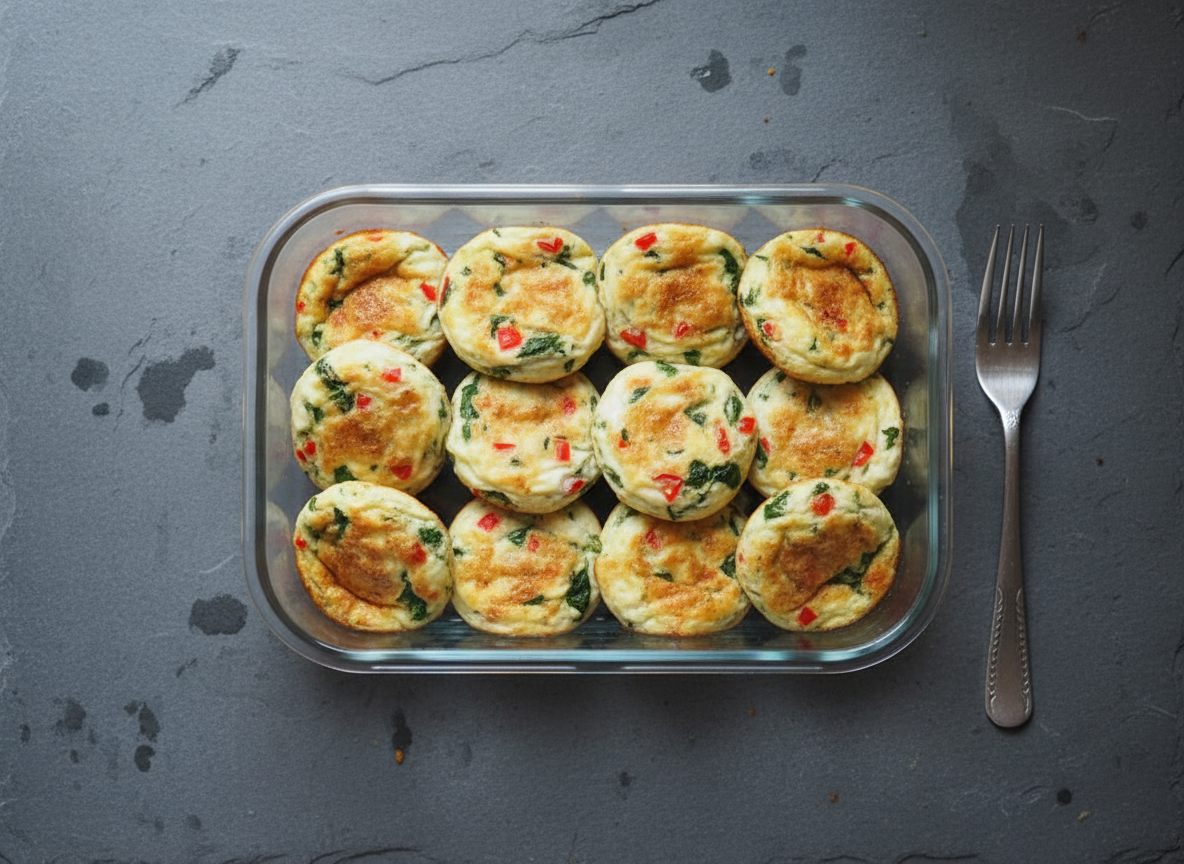
    One tray, twelve little muffins, a whole week of breakfast handled. Egg whites, soft veg and a touch of cheese baked into grab-and-go bites you box up on a Sunday and reach for half-asleep on a Wednesday. Two muffins land at about 120 calories and 18 grams of protein — a steady, honest start to the day with nothing to do at the counter when you’re tired.

    GoalPrep
    Total time35 min
    Makes12 muffins, 6 servings
    Protein / serving18 g
    Calories / serving120 kcal
    A tray of twelve baked egg-white muffins flecked with vegetables and a little cheese, cooling under cold light Prep 01 / Batch of 12

    For years my mornings were a small war I kept losing. I’d be up before the sun, kettle on, and somewhere between the first coffee and getting out the door I’d realise I hadn’t actually eaten anything with protein in it. A banana on the way to the gym, maybe. Then by ten o’clock I’m starving and grumpy and reaching for whatever’s nearest, which is never the thing I’d have chosen with a clear head. I don’t think I’m alone in that, love. Mornings are when good intentions go to die.

    So one quiet Sunday I sat down and worked out how to take the decision out of it entirely. I wanted breakfast to be a thing I lifted off a shelf, not a thing I made. Eggs were the obvious answer — cheap, sturdy, full of good protein — but a fried egg doesn’t travel and it doesn’t keep. Baked into little muffins, though? They keep beautifully, they reheat in a flash, and a tray of twelve covers most of a working week. I leaned on the whites to keep the calories low and the protein high, kept a little cheese in for the flavour, and folded through whatever veg I had to hand.

    Now I make a batch most Sundays without even thinking about it. I grab two on my way out, eat them warm or cold, and the morning war is just over. I’ve made these for tired parents, for shift workers, for a friend who swore she “couldn’t do breakfast” — and every one of them came back asking how I keep them from going rubbery. I’ll tell you that too. Make the tray once and you’ll see what I mean: a scary, scattered morning turns into lifting a lid. I’ve got you.

    01Who it’s for & when to eat it

    This is for the person who skips breakfast not because they want to, but because mornings are chaos. Bake one tray, box it, and the protein’s handled before the week even starts. Here’s how I steer the same twelve muffins depending on what you’re chasing.

    On a cut

    Keep them lean

    The base recipe is already a cut’s best friend — mostly egg whites and veg, very low calorie, very high protein for the count. Two muffins at 120 calories is a real breakfast you can build a deficit around. Load in extra veg for more volume and you’ll feel even fuller for the same numbers.

    On a bulk

    Fold in whole eggs

    Swap a few of the whites for whole eggs and add a heavier hand of cheese. The protein climbs, the calories climb sensibly, and you get richer muffins that carry more energy into a busy morning. Eat three or four instead of two.

    On TRT

    Steady morning fuel

    A couple of these with a slice of wholegrain toast is a calm, dependable start — lean protein early, a little carb beside it, full energy without a heavy breakfast sitting on you. Even, repeatable, no fuss.

    Timing: I eat mine first thing, two on the way out the door, but they’re not just a breakfast. A couple make a tidy mid-afternoon hit when the biscuit tin is calling, and they sit well before or after a session without weighing you down.

    02Ingredients

    Makes one tray — 12 muffins, 6 servings of 2. Each serving lands near 120 calories and 18g protein. Doubling up for a bigger crew? Run two trays and keep the proportions the same.

    Per serving 2 muffins · ~18g protein · adjust on the live recipe card
    • Egg whites480 g · 16.9 oz (about 16 large whites)
    • Whole egg (for binding)2 large
    • Baby spinach, chopped80 g · 2.8 oz
    • Bell pepper, finely diced120 g · 4.2 oz
    • Spring onion, sliced3
    • Reduced-fat cheddar, grated60 g · 2.1 oz
    • Cherry tomatoes, halved (optional)80 g · 2.8 oz
    • Garlic, grated1 clove
    • Smoked paprika½ tsp
    • Black pepperto taste
    • Saltto taste (go light)
    • Olive oil, for greasing1 tsp · 5 ml

    Swaps I actually use: any soft veg works — mushrooms, courgette, leftover roasted veg, all welcome, just chop them small and don’t overload the tin. No cheddar? Feta or a little parmesan brings the same savoury lift. Want it leaner still, drop the two whole eggs and the muffins hold fine, just a touch softer. For a dairy-free tray, leave the cheese out and lean on the smoked paprika and garlic to carry the flavour. Carton egg whites are perfect here and save you a pile of yolks.

    03Step by step

    Get organised

    Oven on, tin greased

    Set the oven to 180°C (350°F). Brush a 12-hole muffin tin well with the olive oil — into every corner of every hole — or drop in silicone liners. Egg loves to stick, so this is the one step you don’t rush. Chop all your veg small while the oven comes up to heat.

    Magnus says: grease like you mean it. A stuck muffin is a sad muffin.

    A greased twelve-hole muffin tin beside chopped vegetables on a bench under cold light
    The mix

    Whisk the eggs and season

    Pour the egg whites and the two whole eggs into a big jug or bowl. Add the grated garlic, smoked paprika, black pepper and a light pinch of salt, then whisk until it’s smooth and just a little frothy. A jug makes the pouring easy in a minute, so use one if you’ve got it.

    Magnus says: a jug, not a bowl. You’ll thank me when you’re filling twelve holes.

    Egg whites and whole eggs being whisked with seasoning in a large jug
    The veg

    Share out the fillings

    Scatter the spinach, pepper, spring onion and cheese evenly across the twelve holes — about a tablespoon of filling in each. Top a few with a halved cherry tomato if you’re using them. Doing the veg first, then pouring the egg over, gives you an even spread instead of it all sinking to the bottom.

    Chopped vegetables and grated cheese divided between the holes of a muffin tin
    Fill

    Pour the egg over

    Pour the egg mixture over the fillings, leaving a little gap at the top of each hole — they puff as they bake. Give each one a quick poke with a fork so the egg settles around the veg. Twelve even pours means twelve even muffins, so take your time across the tray.

    Egg mixture being poured over the vegetables in each muffin hole, filled near the top
    Bake

    Into the oven until just set

    Bake at 180°C for 18–22 minutes, until the tops are set and a touch golden and a knife comes out clean. Don’t push them too far — egg whites turn rubbery if you overbake them, so pull the tray the moment the centres stop wobbling.

    Magnus says: just set is the goal. A minute too long and the bounce goes out of them.

    Egg-white muffins baked golden and just set in the tray, fresh from the oven
    Cool & box

    Cool the tray, then fill your containers

    Let the muffins sit in the tin for five minutes, then run a knife round each and lift them onto a rack to cool fully. Once they’re properly cold — not warm — pack them into containers in twos, lids on, into the fridge. Cooling first is what keeps them from sweating and going soggy in the box.

    Magnus says: cold before the lid goes on. Trapped steam is the enemy of a good batch.

    Cooled egg-white muffins boxed in pairs in meal-prep containers under cold light

    04The spec sheet

    Real numbers, calculated — not guessed. The tray makes 12 muffins; a serving is 2, weighing roughly 120g. Here’s what one serving and a flat 100g actually give you. The headline is that protein-per-calorie number — it’s about as good as breakfast gets.

    Macros — per serving (2 muffins) & per 100g
    NutrientPer servingPer 100g
    Energy120 kcal100 kcal
    Protein18.0 g15.0 g
    Carbohydrate3.2 g2.7 g
    — of which sugars2.0 g1.7 g
    Fat3.8 g3.2 g
    — of which saturates1.8 g1.5 g
    Fibre1.0 g0.8 g
    Sodium~0.28 g~0.23 g
    Calorie density
    100 kcal / 100g

    Genuinely low. That’s what egg whites and veg do for you — a real, savoury breakfast that fills you up for a modest count. Perfect when you’re holding or losing and still want to feel fed in the morning.

    Protein per 100 kcal
    15.0 g / 100 kcal

    This is the whole reason I make these. Fifteen grams of protein for every hundred calories is exceptional — almost everything you’re eating is doing protein’s job. For a grab-and-go breakfast, you won’t find much better.

    Key micros (per serving, approx.)
    • Selenium~18 µg · 33% DV
    • Riboflavin (B2)~0.5 mg · 38% DV
    • Vitamin B12~0.7 µg · 29% DV
    • Choline~75 mg · 14% DV
    • Vitamin C~28 mg · 31% DV
    • Folate~45 µg · 11% DV

    Macros are calculated from standard food-composition data and will shift a little with your exact ingredients and brands. Micronutrient figures are estimates against general adult Daily Values. Numbers are for guidance, not medical advice — see our Nutrition Disclaimer.

    05Bulk / Cut / TRT variations

    One tray, three jobs. The egg-white base stays the same — you move the whole eggs, the cheese and the count around it. Macros below are per serving of 2 muffins, adjusted for each goal.

    Cut

    The lean default

    All whites, light on the cheese, heavy on the veg. About as much protein as you can get for the calories, with extra volume from the vegetables to keep you full all morning. This is the version I lean on when the scale’s the priority.

    100Kcal
    18G Protein
    2G Fat
    Bulk

    Build it up

    Swap half the whites for whole eggs and add a generous hand of cheese. Richer muffins, more energy, more protein. Eat three or four of these instead of two and you’ve a proper breakfast that pushes the day’s numbers up cleanly.

    210Kcal
    22G Protein
    13G Fat
    TRT

    Steady & balanced

    The standard tray, two muffins with a slice of wholegrain toast beside them. Lean protein early, a little carb to go with it, even energy through the morning without anything heavy sitting on you.

    120Kcal
    18G Protein
    4G Fat

    06Meal prep & storage

    These were built to be made ahead, so storage is the main event. Cool them fully before they go anywhere near a lid, box them in twos so a serving’s already counted, and you’ve a week of grab-and-go breakfast sorted from a single tray.

    Fridge
    5 days

    Cooled and sealed, the muffins hold for a good five days. Bake a Sunday tray and you’re covered through Friday — two on the way out each morning, no thinking required.

    Freezer
    3 months

    They freeze brilliantly. Cool fully, freeze on a tray so they don’t clump, then bag them up. Pull out what you need the night before and thaw in the fridge, or reheat from frozen.

    Reheat
    40 sec

    Microwave two muffins for 30–40 seconds, no more — egg goes rubbery if you blast it. They’re also genuinely good cold, straight from the box, if you’re truly out the door.

    A small word on grab-and-go, because it’s the whole point: wrap a pair in a bit of foil or drop them in a small container the night before and leave it by your keys. The decision’s made while you sleep. That’s how a scattered morning becomes a calm one — the food is already waiting for you.

    Free · the 7-day “Get Fed” plan

    Want a whole week built around food like this?

    Drop your email and I’ll send you my free 7-day plan — meals, macros already counted, grocery list written. No spam, no lectures.

    No spam. Unsubscribe whenever. See what’s in the plan →

    07Common questions

    Why do my egg-white muffins go rubbery? +

    Almost always overbaking. Egg whites firm up fast and then keep tightening, so the moment the centres stop wobbling and a knife comes out clean, the tray comes out. The same goes for reheating — 30 to 40 seconds in the microwave, no longer. Treated gently, they stay soft and tender; pushed too far, they bounce. Pull them early and you’ll never have a rubbery muffin again.

    Can I use whole eggs instead of just whites? +

    Absolutely. Whole eggs make a richer, softer muffin with more flavour and more fat — lovely if you’re not chasing the lowest calorie count. The reason I lean on whites is the numbers: you get nearly all the protein for far fewer calories, which is what makes these such a strong breakfast on a cut. Mix and match to suit your goal; the method doesn’t change a bit.

    Do they freeze well? +

    Really well — this is one of the best things about them. Cool them fully, freeze them spread on a tray so they don’t stick together, then bag them up for up to three months. Thaw a couple overnight in the fridge, or reheat straight from frozen for a minute or so. A full freezer of these means breakfast is sorted weeks ahead.

    How do I stop them sticking to the tin? +

    Egg is sticky stuff, so grease generously — brush oil into every corner of every hole, or use silicone liners, which lift out clean every time. Let the muffins rest in the tin for five minutes after baking, then run a knife around the edge of each before you lift them. Do that and they’ll come away whole.

    Can I prep the mix the night before? +

    You can. Whisk the eggs and seasoning, cover and keep in the fridge overnight, then chop your veg fresh in the morning or the night before too. Give the mix a quick stir before you pour, since it settles. That said, baking the whole tray takes barely half an hour, so I usually just do it all on a Sunday and box the finished muffins instead.

    Do I have to eat them warm? +

    Not at all — they’re genuinely good cold, straight from the box, which is half the appeal on a rushed morning. Warm them for half a minute if you’ve a moment and like them that way, but don’t feel you have to. Cold or warm, the protein’s the same; eat them however gets you out the door fed.

    From my 7-day plans

    This prep is the backbone of a full week of meals.

    These boxes are the engine room of my meal plans — seven days of high-protein meals with the macros counted and the grocery list written. You pick the goal; I do the maths and the cooking order.

    See the meal plans
    A tray of egg-white muffins boxed and portioned for the week under cold light

    08Pairs well with

    Browse all recipes →

    Magnus Olafsson in his kitchen — bald, bearded and broad, in his pink apron, under cold light
    About the author

    Magnus Olafsson

    I’m Magnus — twenty years under the iron, from a cold gym in Stockholm to the classic-physique stage, and now mostly in my kitchen in a pink apron. I’ve cut for shows, bulked through winters, and I’ve been on TRT since I was thirty-five. I know what it takes to eat for the body you’re chasing, and I know it shouldn’t come with a side of shame.

    Everything here is food I actually cook and macros I actually count. I don’t diagnose, I don’t promise, and I never make a number up. I just feed you well and tell you the truth.

    B&K Classic Body Show Swedish Grand Prix · Super Series On TRT since 35 20 years training

    Slim Diet Era shares recipes and general nutrition information. It is not medical or dietetic advice, and we do not provide guidance on obtaining or using any controlled substance. See our Medical Disclaimer and Nutrition Disclaimer.
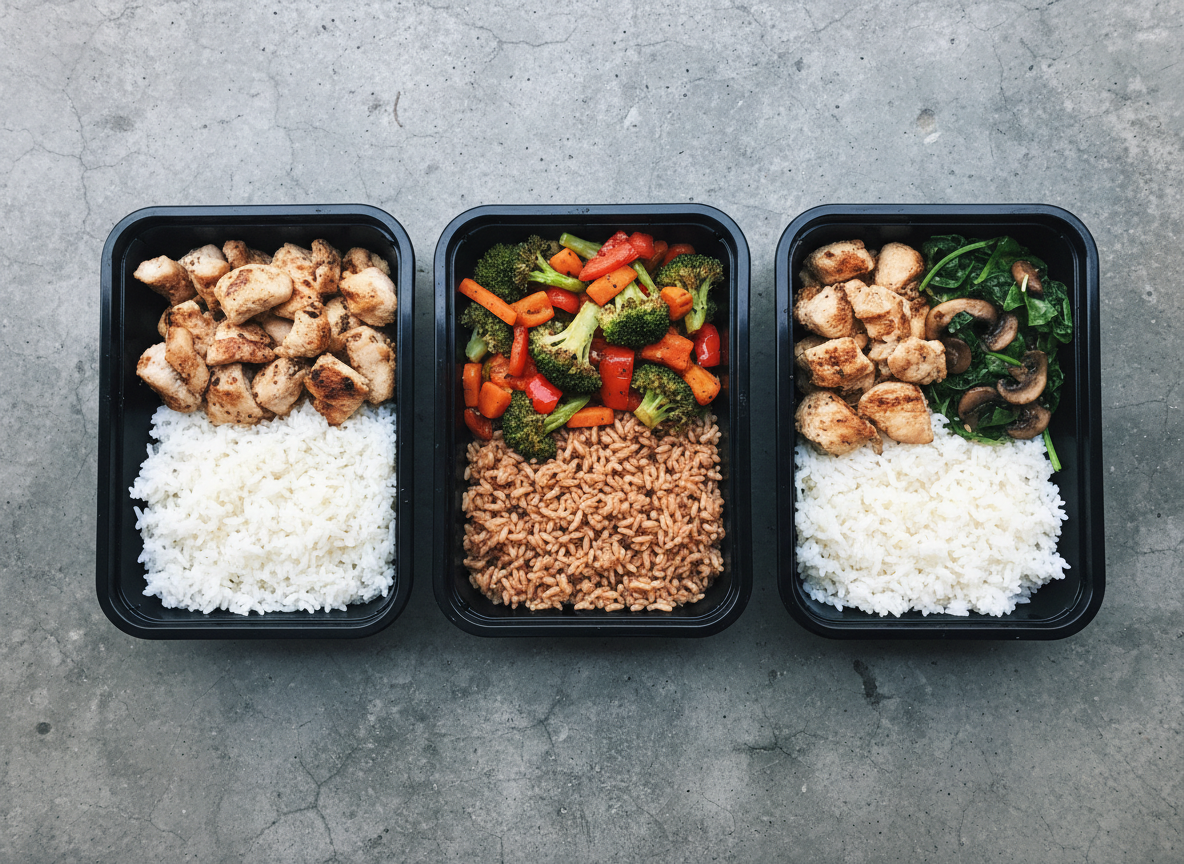
  • Salmon and Rice Prep Boxes

    Salmon and Rice Prep Boxes

    Recipe · Meal Prep / High-protein / Batch

    Salmon and Rice Prep Boxes

    One steady cook that fills four boxes with roasted salmon, fluffy rice and a tray of greens — portioned, labelled, and ready for the days ahead. Each box lands near 42g of protein and 560 calories, with the omega-3 fat the salmon brings along for free. This is the prep I reach for when I want something that feels a bit special sitting in the fridge, not just fuel.

    GoalPrep
    Total time45 min
    Makes4 boxes
    Protein / box42 g
    Calories / box560 kcal
    Four meal-prep boxes lined up — roasted salmon, white rice and green vegetables, portioned under cold light Prep 01 / Boxed

    For years I treated salmon like a treat I had to save for a restaurant. A nice fillet, a nice plate, a nice evening — never something I’d batch on a Sunday and eat at my desk. Then one winter in Stockholm, a fishmonger near my old gym started selling end-of-day fillets cheap, and I’d buy four at a time because I couldn’t bear to see good fish go to waste. So I learned to prep it. Roast the lot in one go, box it with rice and greens, and suddenly the fanciest thing in my fridge was also the easiest lunch of the week.

    That’s the thing nobody tells you about salmon and prep: it’s kinder to batch than chicken in a lot of ways. It cooks in twelve minutes flat, it stays moist if you don’t bully it, and the fat it carries keeps it from drying out the way lean meat can. The only rule I hold firm on is the calendar — cooked fish wants eating within three days in the fridge, so I plan these boxes for the front half of the week and freeze any I won’t get to. Treat that three-day line as a friend, not a fuss. It keeps every box tasting like fish you’d be glad to eat.

    I’ve made this for people who swore they hated meal prep because it always meant the same dry chicken on repeat. I put a box of salmon, rice and bright green veg in front of them and watched the doubt go. It’s the same calm structure as any prep — cook once, eat for days — but it feels like you’re being looked after. That’s the bit I care about. You deserve a fridge that feels like that, love. I’ve got you.

    01Who it’s for & when to eat it

    This is for the person who’s tired of dry chicken prep and wants their batch cooking to feel like an actual meal. Cook once, box four, eat well through the front half of the week. Here’s how I steer the boxes depending on what you’re chasing.

    On a cut

    Trim the rice

    Keep the salmon and the full tray of greens exactly as they are, and pull the rice back to two-thirds of a portion per box. You hold all 42g of protein and a big plate of volume, and the calories drop toward 480. The salmon’s own fat keeps it satisfying even with less rice.

    On a bulk

    Add easy calories

    Same salmon, more around it. A bigger scoop of rice in each box, a drizzle of olive oil over the greens, maybe a wedge of avocado on the side. You’ll clear 750+ calories per box on a clean base that’s already rich in good fat.

    On TRT

    Steady through the day

    Salmon’s omega-3 fat and a fist of rice make for a calm, even meal that sits well and supports recovery. Spread the boxes across your days and you’ve got lean protein and steady energy without a big swing either way.

    Timing: I usually eat one of these for lunch and keep the rest for the days that follow. A box sits nicely after training too — the protein and rice land well either side of a session, and the fat won’t slow you down a few hours out.

    02Ingredients

    Makes 4 boxes, each near 42g protein and about 560 calories. Want more or fewer? Multiply every line by the boxes you’re after and keep the proportions steady. Buy the salmon fresh and cook it the same day for the best of the three-day window.

    Per box ~42g protein · adjust on the live recipe card
    • Salmon fillets, skinless4 × 150 g · 4 × 5.3 oz
    • White rice, dry240 g · 8.5 oz
    • Tenderstem broccoli300 g · 10.6 oz
    • Green beans, trimmed200 g · 7.1 oz
    • Olive oil2 tbsp · 30 ml
    • Garlic, grated2 cloves
    • Lemon1, juice and zest
    • Low-sodium soy sauce1 tbsp · 15 ml
    • Smoked paprika1 tsp
    • Black pepperto taste
    • Saltto taste (go light)

    Swaps I actually use: trout fillets stand in for salmon almost exactly, and a firm white fish like cod works too — just know cod is leaner, so add a teaspoon of oil to keep the boxes around the same calories. No tenderstem? Regular broccoli, asparagus or courgette all roast happily here. Swap white rice for jasmine, basmati or quinoa one-for-one, or run it half-and-half with brown rice for more fibre. On the fish: once it’s cooked, eat these boxes within three days in the fridge — cooked salmon doesn’t keep as long as cooked chicken, so plan them for the front of the week and freeze the rest.

    03Step by step

    Get organised

    Four boxes, one clear bench

    Pull out four meal-prep containers and clear a stretch of bench. Set the oven to 200°C (400°F) and line a large tray with paper. This is a one-cook prep, so having everything to hand before you start keeps it calm — the rice goes on while the oven heats.

    Magnus says: prep is calmer when the kitchen is. Clear the decks first, love.

    Four empty meal-prep boxes and ingredients laid out on a clear bench under cold light
    The rice

    Cook the rice, fluff and cool

    Rinse the rice until the water runs clear, then cook it however you normally do — pot, rice cooker, whatever you’ve got. Fluff it with a fork and spread it on a plate or tray to cool a little before boxing. Cooling it spread out keeps it from going gluey.

    Cooked white rice fluffed and spread on a tray to cool
    The salmon

    Season and roast the fillets

    Pat the salmon fillets dry and lay them on the lined tray. Rub them with half the garlic, the smoked paprika, the lemon zest, black pepper and a light pinch of salt, then a thin brush of olive oil. Roast at 200°C for 11–13 minutes, until the flesh turns opaque and flakes gently at a fork. Don’t push past that — overcooked fish is dry fish.

    Magnus says: salmon is done sooner than you think. Pull it the moment it flakes.

    Seasoned salmon fillets roasting on a lined tray
    The greens

    Roast the broccoli and beans

    Toss the tenderstem and green beans with the rest of the olive oil, the remaining garlic, a little black pepper and a light pinch of salt. Spread them on a second tray and roast alongside the salmon for 12–14 minutes, until the edges char. Roasting beats boiling here — it holds up in the fridge far better than soft, watery greens.

    Magnus says: boiled greens go sad by Wednesday. Roasted greens stay bright.

    Tenderstem broccoli and green beans roasting on a tray with charred edges
    The dressing

    A quick lemon-soy finish

    Stir the lemon juice and the low-sodium soy together in a small bowl. You’ll spoon a little over each box just before it goes in the fridge — it keeps the salmon and rice from tasting flat after a couple of days, and brings the whole box back to life when you reheat it. A small thing that does a lot.

    A small bowl of lemon and soy dressing beside the cooked salmon
    Portion

    Split it evenly across four boxes

    Cool everything for ten minutes first. Then divide it across the four containers — one salmon fillet, a quarter of the rice and a quarter of the greens in each, with a spoon of the lemon-soy over the top. Even portions mean even macros, so each box lands near 42g of protein and 560 calories. Cool fully, lids on, into the fridge.

    Magnus says: cool it before the lid goes on. Trapped steam is what turns prep soggy.

    Four finished prep boxes filled with salmon, rice and roasted greens

    04The spec sheet

    Real numbers, calculated — not guessed. The batch makes 4 boxes. Each cooked box weighs roughly 350g. Here’s what one box and a flat 100g actually give you, salmon’s good fat included.

    Macros — per box & per 100g
    NutrientPer boxPer 100g
    Energy560 kcal160 kcal
    Protein42.0 g12.0 g
    Carbohydrate48.0 g13.7 g
    — of which sugars3.0 g0.9 g
    Fat22.0 g6.3 g
    — of which saturates4.0 g1.1 g
    Fibre4.5 g1.3 g
    Sodium~0.42 g~0.12 g
    Calorie density
    160 kcal / 100g

    Moderate, and that’s by design — salmon carries more fat than chicken, which is exactly what makes these boxes satisfying and rich in omega-3. You still get a genuinely full plate for the calories, just with more good fat doing the work.

    Protein per 100 kcal
    7.5 g / 100 kcal

    A lifter’s metric. A touch lower than a lean chicken box because the salmon’s fat brings calories with it — a fair trade for the omega-3 and the moisture that keeps the box from drying out by day three.

    Key micros (per box, approx.)
    • Omega-3 (EPA+DHA)~2.2 g
    • Vitamin D~12 µg · 60% DV
    • Vitamin B12~4.8 µg · 200% DV
    • Selenium~46 µg · 84% DV
    • Vitamin B6~1.1 mg · 65% DV
    • Niacin (B3)~12 mg · 75% DV

    Macros are calculated from standard food-composition data and will shift a little with your exact ingredients and brands. Micronutrient figures are estimates against general adult Daily Values. Numbers are for guidance, not medical advice — see our Nutrition Disclaimer.

    05Bulk / Cut / TRT variations

    One prep, three jobs. The salmon stays the same — you move the rice and the fat around it. Macros below are per box, adjusted for each goal.

    Cut

    The lean default

    Keep every gram of salmon and the full tray of greens, and pull the rice back to two-thirds a portion per box. Maximum food on the plate, calories pulled down, and the salmon’s fat keeps it from feeling thin. This is how I run it when I want the scale moving.

    480Kcal
    41G Protein
    21G Fat
    Bulk

    Build it up

    Same salmon, a bigger scoop of rice in each box and a drizzle of olive oil over the greens. A few slices of avocado on the side if you want them. Clean, calorie-dense, and easy to eat across a busy day.

    760Kcal
    43G Protein
    32G Fat
    TRT

    Steady & balanced

    The standard box, spread evenly across your days. Moderate carbs, plenty of protein, and healthy omega-3 fat from the salmon. Full, steady energy without a big evening overshoot.

    560Kcal
    42G Protein
    22G Fat

    06Meal prep & storage

    This whole recipe is a prep, so storage is the main event — and with fish, the calendar matters more than usual. Cool everything fully before the lids go on, label the boxes with the date if you’re making the full batch, and respect the three-day line on cooked salmon.

    Fridge
    3 days

    Cooked salmon is best eaten within three days, sealed and cold. Cook these at the start of the week and they carry you through to Wednesday — plan around that and every box still tastes like fresh fish.

    Freezer
    2 months

    Salmon and rice freeze well. Cool fully, freeze the box flat, and thaw it overnight in the fridge before reheating. The greens soften a touch on thaw but hold their flavour.

    Reheat
    2 min

    Go gently — fish overcooks fast. Microwave the box for 90 seconds to 2 minutes at medium power, with a splash of water over the rice. Stop the moment it’s warm through; blasting it on high dries the salmon out.

    A word on the fish, because I’d be a poor cook not to say it: cooked salmon is happiest eaten cold or barely warmed. If you can eat one of these straight from the fridge over a desk lunch, honestly, it’s lovely that way — flaked over the rice, a squeeze more lemon, done. No reheating, no risk of drying it out at all.

    Free · the 7-day “Get Fed” plan

    Want a whole week built around food like this?

    Drop your email and I’ll send you my free 7-day plan — meals, macros already counted, grocery list written. No spam, no lectures.

    No spam. Unsubscribe whenever. See what’s in the plan →

    07Common questions

    How do I reheat salmon without drying it out or stinking up the office? +

    Two things solve both. For drying: heat it gently — 90 seconds to two minutes at medium power, never full blast, and stop the moment it’s warm through. A splash of water over the rice and a loose lid traps a little steam so the fish stays moist. For the smell: that lemon-soy finish does a lot, and reheating low and slow keeps the strong fishy notes down. Honestly, though, the cleanest fix is to eat it cold — flaked over the rice straight from the fridge, it’s genuinely good, and there’s no smell at all.

    How long do these boxes actually keep? +

    Cooked salmon is best eaten within three days in the fridge — shorter than cooked chicken, so plan these for the front of the week. If you want them later, freeze the boxes the day you cook them and thaw overnight in the fridge when you’re ready. That way nothing sits too long and every box still tastes like fish you’d be glad to eat.

    Can I use frozen salmon fillets? +

    Yes, and they’re often the better-value buy. Thaw them fully in the fridge overnight, then pat them very dry before seasoning — frozen fish carries extra water, and a dry surface is what gives you a proper roast instead of a steam. One thing: if your fillets were frozen raw, cook them and eat the boxes within three days rather than refreezing the cooked fish.

    How do I keep the rice from going hard? +

    Cool it spread out rather than in a lump, and when you reheat, add a splash of water over the rice before it goes in the microwave. The steam loosens it right back up. A loose lid or a damp paper towel over the box while it heats helps too.

    Can I make this with a leaner white fish instead? +

    You can — cod, haddock or pollock all work and drop the calories a fair bit. Just know they’re far leaner than salmon, so they dry out faster and you lose the omega-3. I’d add a teaspoon of olive oil per fillet to keep them moist, roast them a minute or two less, and still keep them inside the three-day window.

    From my 7-day plans

    This prep is the backbone of a full week of meals.

    These boxes are the engine room of my meal plans — seven days of high-protein meals with the macros counted and the grocery list written. You pick the goal; I do the maths and the cooking order.

    See the meal plans
    A row of salmon and rice prep boxes laid out and portioned under cold light

    08Pairs well with

    Browse all recipes →

    Magnus Olafsson in his kitchen — bald, bearded and broad, in his pink apron, under cold light
    About the author

    Magnus Olafsson

    I’m Magnus — twenty years under the iron, from a cold gym in Stockholm to the classic-physique stage, and now mostly in my kitchen in a pink apron. I’ve cut for shows, bulked through winters, and I’ve been on TRT since I was thirty-five. I know what it takes to eat for the body you’re chasing, and I know it shouldn’t come with a side of shame.

    Everything here is food I actually cook and macros I actually count. I don’t diagnose, I don’t promise, and I never make a number up. I just feed you well and tell you the truth.

    B&K Classic Body Show Swedish Grand Prix · Super Series On TRT since 35 20 years training

    Slim Diet Era shares recipes and general nutrition information. It is not medical or dietetic advice, and we do not provide guidance on obtaining or using any controlled substance. See our Medical Disclaimer and Nutrition Disclaimer.

  • Turkey and Quinoa Prep Bowls

    Turkey and Quinoa Prep Bowls

    Recipe · Meal Prep / High-protein / Batch

    Turkey and Quinoa Prep Bowls

    One steady batch cook that boxes up four lunches in an afternoon — lean turkey mince, fluffy quinoa, roasted veg and a bright little dressing, split into four containers so the week is sorted before it even starts. Around 500 calories and 44g of protein a bowl, the macros already counted. This is the prep I reach for when I want lunch handled days ahead and I don’t want to think about it again.

    GoalPrep
    Total time45 min
    Makes4 bowls
    Protein / bowl44 g
    Calories / bowl500 kcal
    Four turkey and quinoa prep bowls lined up — seasoned turkey mince, fluffy quinoa and roasted vegetables, portioned under cold light Prep 01 / Boxed

    There was a stretch of years where I had no business eating well, and somehow I did anyway — and the reason was a stack of these bowls in the fridge. I was working long days, training in the evenings, getting home far too late to be trusted near a kitchen. If lunch wasn’t already cooked and boxed, lunch became whatever was nearest and saddest. A petrol-station sandwich. A handful of nothing. So one quiet Sunday I made a deal with myself: cook once, eat for four days, and never let a tired version of me decide what I had for lunch.

    Turkey and quinoa became the backbone of that deal, and they’ve stayed there ever since. Turkey mince gives you a big lean wall of protein without much fat to carry. Quinoa cooks while you’re doing everything else and brings a bit of its own protein along too — sturdy, nutty, holds its shape in a box all week. Roast a tray of veg alongside, stir through a quick dressing, and you’ve got four bowls that taste like a proper lunch on day four, not leftovers someone forgot about.

    I’ve made this for myself most weeks for years, and I’ve handed the method to friends who swore meal prep wasn’t for them — too fiddly, too bland, too much like punishment. It isn’t, when it’s done with a little care. They come back telling me Wednesday lunch was the easiest part of their week. That’s the bit I love. Not the macros, though they’re solid. The quiet relief of opening a fridge and finding that someone already took care of you. Let that someone be you, days ahead. I’ve got you on this one.

    01Who it’s for & when to eat it

    This is built for the person whose weekdays are loud and whose lunches keep falling apart because of it. Cook one batch on a quiet afternoon, box four bowls, and lunch is decided through Thursday with no thinking required. Here’s how I steer the bowls depending on what you’re chasing.

    On a cut

    Lean on the veg

    Keep the full turkey, trim the quinoa to two-thirds, and add an extra big handful of roasted veg to each box. You hold all 44g of protein and a full-looking bowl while the calories drop toward 420. Plenty of food, fewer calories — that’s the trick on a cut.

    On a bulk

    Add easy calories

    Same turkey, a bigger scoop of quinoa in each box and a proper drizzle of olive oil over the veg. A spoon of avocado or some toasted seeds on top works too. You’ll clear 650+ calories a bowl on the same lean base — calorie-dense without feeling heavy.

    On TRT

    Steady through the day

    The standard bowl is a calm, even meal — lean protein, a fist of quinoa, a pile of veg. Spread one across each midday and you keep full, steady energy without a big swing. Lean protein plus complex carbs is a dependable way to fuel a normal working week.

    Timing: I built these as lunches, but they’re yours to place wherever the day needs them. One around training sits nicely — the protein and quinoa work either side of a session. Cold straight from the box on a hot day, or warm through when you want comfort.

    02Ingredients

    Makes 4 bowls, each landing near 44g protein and about 500 calories. Prepping more than four days? Multiply every line by however many bowls you want and keep the proportions the same — the method doesn’t change.

    Per bowl ~44g protein · adjust on the live recipe card
    • Lean turkey mince, 5% fat600 g · 21 oz
    • Quinoa, dry180 g · 6.3 oz
    • Courgette, diced250 g · 8.8 oz
    • Bell peppers, sliced250 g · 8.8 oz
    • Red onion, wedged1 medium
    • Olive oil1 tbsp · 15 ml
    • Garlic, grated3 cloves
    • Ground cumin1 tsp
    • Smoked paprika1 tsp
    • Tomato purée1 tbsp · 15 g
    • Low-sodium stock or water400 ml · 13.5 fl oz
    • Lemon, juiced1 small
    • Fresh parsley, choppedsmall handful
    • Black pepperto taste
    • Saltto taste (go light)

    Swaps I actually use: chicken mince or extra-lean beef mince stands in for the turkey one-for-one if that’s what you have. No quinoa? Brown rice, bulgur or couscous all work — keep the dry weight roughly the same and adjust the liquid to the packet. Any firm veg roasts well here: broccoli, carrots, mushrooms, aubergine. Vegetarian? A drained tin of lentils plus a block of browned firm tofu replaces the turkey and keeps the protein up — the bowl structure stays exactly the same.

    03Step by step

    Get organised

    Four containers, one clear bench

    Pull out four meal-prep containers and clear a stretch of bench. Set the oven to 200°C (400°F) and put the kettle on for the quinoa. This is a batch cook with a pan, a pot and a tray all going at once, so having everything to hand before you start keeps it calm.

    Magnus says: prep is calmer when the kitchen is. Clear the decks first.

    Four empty meal-prep containers and ingredients laid out on a clear bench under cold light
    The quinoa

    Rinse, simmer and fluff

    Rinse the quinoa well under cold water — it takes a bitter coating off the grains. Tip it into a pot with the stock, bring to a boil, then drop to a low simmer with the lid on for 13–15 minutes until the liquid is gone and you see little curls on each grain. Take it off the heat, lid on, rest 5 minutes, then fluff with a fork.

    Magnus says: rinsing isn’t optional, love. Skip it and the quinoa tastes soapy.

    Fluffed quinoa in a pot, grains separated and curled
    The veg

    Roast the courgette, peppers and onion

    Toss the courgette, peppers and red onion with the olive oil, a little black pepper and a light pinch of salt. Spread them on a tray in one layer and roast for 20–22 minutes until the edges char. Roasting beats boiling here — it survives the fridge far better and keeps its flavour all week.

    Magnus says: boiled veg turns sad by Tuesday. Roasted veg holds up all week.

    Courgette, peppers and red onion roasting on a tray with charred edges
    The turkey

    Brown the mince with spice

    Get a wide pan hot. Add the turkey mince and break it up well, letting it catch some colour before you stir — that browning is where the flavour lives. Once it’s no longer pink, stir in the garlic, cumin, smoked paprika and tomato purée. Cook another 2–3 minutes until it smells warm and looks glossy, then season lightly.

    Lean turkey mince browning in a pan with garlic, cumin and paprika
    The dressing

    Brighten it with lemon and parsley

    Off the heat, squeeze the lemon over the turkey and stir through most of the chopped parsley. That hit of acid lifts the whole bowl and stops four days of the same lunch tasting flat. Taste it — a little more lemon or pepper here is what makes day-four lunch still feel alive.

    Lemon being squeezed over seasoned turkey mince with parsley stirred through
    Portion

    Split it evenly across four boxes

    Divide everything across the four containers — a quarter of the quinoa, the turkey and the roasted veg in each, scattered with the last of the parsley. Even portions mean even macros, so each bowl lands near 44g of protein and 500 calories. Let them cool fully on the bench, lids on, then into the fridge.

    Magnus says: cool it before the lid goes on. Trapped steam is what turns prep soggy.

    Four finished prep bowls filled with turkey, quinoa and roasted vegetables, portioned evenly

    04The spec sheet

    Real numbers, calculated — not guessed. The batch makes 4 bowls, each weighing about 440g cooked. Here’s what one bowl and a flat 100g actually give you, so you can slot a bowl into your day with the maths already done.

    Macros — per bowl & per 100g
    NutrientPer bowlPer 100g
    Energy500 kcal114 kcal
    Protein44.0 g10.0 g
    Carbohydrate44.0 g10.0 g
    — of which sugars7.0 g1.6 g
    Fat16.0 g3.6 g
    — of which saturates3.6 g0.8 g
    Fibre6.5 g1.5 g
    Sodium~0.42 g~0.10 g
    Calorie density
    114 kcal / 100g

    Low for a complete, hearty meal. That’s the gift of lean turkey and a tray of veg — you get a genuinely full bowl for a modest calorie count, which is exactly what you want whether you’re holding or losing.

    Protein per 100 kcal
    8.8 g / 100 kcal

    A lifter’s metric. Strong for a full meal with quinoa and veg in it — most of the energy you’re eating is doing protein’s job, which is the whole point of a prep like this.

    Key micros (per bowl, approx.)
    • Niacin (B3)~11 mg · 69% DV
    • Selenium~36 µg · 65% DV
    • Vitamin B6~0.9 mg · 53% DV
    • Phosphorus~410 mg · 33% DV
    • Magnesium~115 mg · 27% DV
    • Zinc~3.6 mg · 33% DV

    Macros are calculated from standard food-composition data and will shift a little with your exact ingredients and brands. Micronutrient figures are estimates against general adult Daily Values. Numbers are for guidance, not medical advice — see our Nutrition Disclaimer.

    05Bulk / Cut / TRT variations

    One prep, three jobs. The turkey base stays the same — you move the quinoa and the fat around it. Macros below are per bowl, adjusted for each goal.

    Cut

    The lean default

    Keep every gram of turkey, trim the quinoa to two-thirds, and pile in extra roasted veg. Maximum food in the bowl, calories pulled down. This is how I run it when I want the scale moving and still want to feel full through the afternoon.

    420Kcal
    43G Protein
    13G Fat
    Bulk

    Build it up

    Same turkey, a bigger scoop of quinoa in each box and a proper drizzle of olive oil over the veg. A spoon of avocado or toasted seeds on top if you want it. Clean, calorie-dense and easy to eat across a busy day.

    660Kcal
    45G Protein
    24G Fat
    TRT

    Steady & balanced

    The standard bowl, eaten as built. Moderate carbs from the quinoa, lean protein from the turkey, a little healthy fat from the oil. Full, steady energy across a working day without a big swing.

    500Kcal
    44G Protein
    16G Fat

    06Meal prep & storage

    This whole recipe is a prep, so storage is the main event. Cool everything fully before the lids go on, label the boxes with the date if you’re cooking several days at once, and you’ve got lunch settled well in advance. The beauty of turkey and quinoa is that both hold their texture for days — no sad, mushy box on Thursday.

    Fridge
    4 days

    Boxed and sealed, these bowls hold beautifully for four days. Cook on a Sunday afternoon and lunch is handled clean through Thursday with nothing left to decide.

    Freezer
    3 months

    Turkey and quinoa both freeze well; the veg softens a touch on thaw but holds. Cool fully, freeze flat, and thaw overnight in the fridge before reheating.

    Reheat
    3 min

    Microwave the bowl for 2–3 minutes, stirring once, with a splash of water over the quinoa to loosen it. A fresh squeeze of lemon after reheating wakes the whole thing up.

    A note on cooking days ahead, because that’s the heart of this one: the bowls you make on Sunday are at their best Monday through Wednesday, so if you want a full Friday lunch too, freeze one or two boxes from the batch and pull them the night before. Done that way, every bowl tastes like food, not leftovers — and the whole week’s lunch is sorted before Monday even arrives.

    Free · the 7-day “Get Fed” plan

    Want a whole week built around food like this?

    Drop your email and I’ll send you my free 7-day plan — meals, macros already counted, grocery list written. No spam, no lectures.

    No spam. Unsubscribe whenever. See what’s in the plan →

    07Common questions

    Can I really make all four bowls days ahead? +

    You can — that’s exactly what this prep is for. Cooked turkey and quinoa keep well for about four days in the fridge, so a Sunday batch carries you cleanly through Thursday. If you want a Friday bowl too, freeze one or two from the batch and thaw the night before. Cool everything fully before the lids go on and you’ll be opening a proper lunch all week, not a soggy one.

    Why does my quinoa taste bitter? +

    Almost always because it wasn’t rinsed. Quinoa carries a natural coating called saponin that tastes soapy and bitter if you leave it on. Give it a good rinse under cold running water in a fine sieve before it goes in the pot, until the water runs clear. After that it’s nutty and clean. Most packaged quinoa is pre-rinsed, but a quick rinse anyway is cheap insurance.

    Can I swap the turkey for something else? +

    Easily. Chicken mince or extra-lean beef mince drops straight in one-for-one if that’s what you’ve got — the macros shift only a little. For a vegetarian bowl, brown a block of firm tofu hard and stir in a drained tin of lentils to keep the protein up. The spices, the quinoa and the roasted veg all stay exactly the same, so the bowl still tastes like the same lunch.

    Do I have to eat these cold? +

    Not at all. They’re good cold straight from the box on a warm day, but a couple of minutes in the microwave with a splash of water over the quinoa brings the whole bowl back to life. Stir once halfway, and finish with a fresh squeeze of lemon after reheating — that little hit of acid is what stops day-four lunch tasting flat.

    How do I keep the quinoa from going dry in the box? +

    Two things. Don’t overcook it on the day — pull it off the heat the moment the liquid’s gone and let it steam under the lid, so it finishes gently. Then when you reheat, add a small splash of water over the quinoa first. The steam loosens it right back up to how it was on day one.

    From my 7-day plans

    This prep is the backbone of a full week of meals.

    These bowls are the engine room of my meal plans — seven days of high-protein meals with the macros counted and the grocery list written. You pick the goal; I do the maths and the cooking order.

    See the meal plans
    A batch of turkey and quinoa prep bowls laid out and portioned under cold light

    08Pairs well with

    Browse all recipes →

    Magnus Olafsson in his kitchen — bald, bearded and broad, in his pink apron, under cold light
    About the author

    Magnus Olafsson

    I’m Magnus — twenty years under the iron, from a cold gym in Stockholm to the classic-physique stage, and now mostly in my kitchen in a pink apron. I’ve cut for shows, bulked through winters, and I’ve been on TRT since I was thirty-five. I know what it takes to eat for the body you’re chasing, and I know it shouldn’t come with a side of shame.

    Everything here is food I actually cook and macros I actually count. I don’t diagnose, I don’t promise, and I never make a number up. I just feed you well and tell you the truth.

    B&K Classic Body Show Swedish Grand Prix · Super Series On TRT since 35 20 years training

    Slim Diet Era shares recipes and general nutrition information. It is not medical or dietetic advice, and we do not provide guidance on obtaining or using any controlled substance. See our Medical Disclaimer and Nutrition Disclaimer.

  • Beef and Rice Meal-Prep Bowls

    Beef and Rice Meal-Prep Bowls

    Recipe · Meal Prep / High-protein / Batch

    Beef and Rice Meal-Prep Bowls

    One pan of lean beef, one pot of rice, one tray of veg — cooked in a single go on a quiet evening and split into four sturdy bowls that carry you through the working week. Around 640 calories and a solid 50 grams of protein a bowl, the macros already counted, the lids already on. This is the prep I reach for when I want the week handled before it even starts.

    GoalPrep
    Total time45 min
    Makes4 bowls
    Protein / bowl50 g
    Calories / bowl640 kcal
    Four beef and rice meal-prep bowls lined up — browned lean mince, fluffed rice and roasted vegetables, portioned and sealed under cold light Prep 01 / Boxed

    There was a stretch of years when my whole week ran on a bowl like this. I was working long shifts on a gym floor in Stockholm, training before dawn, and the last thing I had in me by Sunday evening was a complicated cook. So I worked out the simplest sturdy meal I could batch in one stretch — beef, rice, veg — and I made four of them at once, stacked them in the fridge, and stopped thinking about it. By Monday I’d already won the argument with myself about what to eat. The hard part was done.

    That’s really all a good prep is, love. A decision you make once, on a calm night, so your tired self never has to make it again at six o’clock on a Wednesday. Beef does a lot of heavy lifting here — it’s rich, it holds up beautifully in the fridge, and it carries a real load of protein and iron without much fuss. Rice gives you the energy to actually train. The veg keeps the bowl honest and full. Four bowls, one pan, no maths at the desk.

    I still cook this most weeks, and I’ve taught it to people who swore they couldn’t meal-prep to save their life — who thought it meant sad grey chicken and rubbery broccoli forever. It doesn’t. Done with a little care, a beef and rice bowl on day four still tastes like food someone cooked for you. That’s the bit I want for you. Not just hitting your numbers, but opening the fridge to something warm and waiting. I’ve got you on this one.

    01Who it’s for & when to eat it

    This is built for the person who wants a real, filling meal ready to go and doesn’t want to cook every single night to get it. Batch it once, eat it for days, no decisions when you’re running on empty. Here’s how I steer the four bowls depending on what you’re chasing.

    On a cut

    Trim the rice

    Keep the beef and the full tray of veg exactly as they are, and cut the rice down to two-thirds across the bowls. You hold all 50g of protein and a big plate of volume, and the calories drop toward 520. Full bowl, lower number — that’s the goal on a cut.

    On a bulk

    Add easy calories

    Same beef, more around it. A bigger scoop of rice in each bowl, a drizzle of olive oil over the veg, maybe a spoon of the sauce. You’ll clear 800+ calories a bowl on the same lean base — sturdy fuel, not heavy stodge.

    On TRT

    Steady through the week

    Four even bowls spread protein and energy across your days, which keeps you full and supports recovery without a giant evening overshoot. Lean beef plus a fist of carbs and veg is a calm, dependable way to fuel a normal working week.

    Timing: I usually have one of these as lunch and lean on it again post-training, but it’s yours to place wherever your day runs. The protein and carbs sit nicely either side of a session, and the bowl reheats fast enough that even a rushed lunch break can carry it.

    02Ingredients

    Makes 4 bowls, each around 50g protein and about 640 calories. Prepping a longer stretch? Multiply every line by however many bowls you want and keep the proportions the same — the cooking order doesn’t change.

    Per bowl ~50g protein · adjust on the live recipe card
    • Lean beef mince, 5% fat800 g · 28 oz
    • White rice, dry300 g · 10.6 oz
    • Broccoli florets300 g · 10.6 oz
    • Bell peppers, sliced300 g · 10.6 oz
    • Red onion, diced1 medium
    • Garlic, grated4 cloves
    • Olive oil1 tbsp · 15 ml
    • Soy sauce, low-sodium2 tbsp · 30 ml
    • Tomato purée2 tbsp · 30 g
    • Smoked paprika2 tsp
    • Ground cumin1 tsp
    • Beef stock or water150 ml · 5 fl oz
    • Black pepperto taste
    • Saltto taste (go light)

    Swaps I actually use: turkey or chicken mince drops straight in for the beef if you want the bowls leaner, though you’ll lose a little of the iron and richness. No white rice? Swap in jasmine, basmati, or cooked quinoa one-for-one. For more fibre, run the rice half-and-half with brown rice. Any firm veg works — courgette, green beans, mushrooms — use what you’ve got and what holds up in the fridge.

    03Step by step

    Get organised

    Four bowls, one clear bench

    Pull out four meal-prep bowls and a clear stretch of bench. Set the oven to 200°C (400°F) for the veg. This is a one-cook prep running a pot, a pan and the oven together, so having everything to hand before you start is half the work done.

    Magnus says: prep is calmer when the kitchen is. Clear the decks first.

    Four empty meal-prep bowls and ingredients laid out on a clear bench under cold light
    The rice

    Get the rice going first

    Rinse the rice until the water runs clear, then cook it however you normally do — pot, rice cooker, whatever you’ve got. Starting it first means it can cook while you handle everything else. Fluff it with a fork when it’s done and spread it out to cool a little before boxing.

    Cooked white rice fluffed and spread on a plate to cool
    The veg

    Roast broccoli and peppers

    Toss the broccoli and peppers with the olive oil, a little black pepper and a light pinch of salt, spread them across a tray and roast at 200°C for 18–20 minutes until the edges char. Roasting beats boiling here — it survives the fridge far better and keeps a bit of bite all week.

    Magnus says: boiled veg turns sad by Tuesday. Roasted veg holds up all week.

    Broccoli and peppers roasting on a tray with charred edges
    The beef

    Brown the lean mince hard

    Brown the 5% beef mince in a dry hot pan — no oil needed, it has enough of its own. Break it up and leave it alone long enough to catch real colour before you stir; that browning is most of the flavour. Once it’s no longer pink, tip out any pooled liquid so the next bit can sear rather than stew.

    Magnus says: a crowded, wet pan steams the meat. Give it room and a minute to colour.

    Lean beef mince browning in a dry pan and catching colour
    Build the sauce

    Onion, garlic, spice, simmer

    Add the diced onion to the beef and cook until soft, then stir in the garlic, smoked paprika and cumin for a minute until fragrant. Spoon in the tomato purée and low-sodium soy, pour in the stock, and let it bubble for 5–6 minutes until it’s glossy and just a little saucy — not dry, not soupy.

    Beef mince simmering with onion, garlic and a glossy paprika-tomato sauce
    Portion

    Split it evenly across four bowls

    Divide everything across the four bowls — a quarter of the rice, a quarter of the beef and a quarter of the roasted veg in each. Even portions mean even macros, so every bowl lands near 50g of protein and 640 calories. Cool the whole lot fully, lids on, and into the fridge they go.

    Magnus says: cool it before the lid goes on. Trapped steam is what turns prep soggy.

    Four finished meal-prep bowls filled with beef, rice and roasted vegetables, sealed and ready for the fridge

    04The spec sheet

    Real numbers, calculated — not guessed. The batch makes 4 bowls, each weighing roughly 420g cooked. Here’s what one bowl and a flat 100g actually give you, plus the headline of 50g protein a bowl.

    Macros — per bowl & per 100g
    NutrientPer bowlPer 100g
    Energy640 kcal152 kcal
    Protein50.0 g11.9 g
    Carbohydrate65.0 g15.5 g
    — of which sugars7.0 g1.7 g
    Fat16.0 g3.8 g
    — of which saturates5.5 g1.3 g
    Fibre6.5 g1.5 g
    Sodium~0.52 g~0.12 g
    Calorie density
    152 kcal / 100g

    Moderate for a full, hearty meal. Beef and rice carry more energy than a chicken-and-veg box, but the roasted veg keeps the bowl big and filling for the calories — a genuinely substantial plate that still works whether you’re holding or losing.

    Protein per 100 kcal
    7.8 g / 100 kcal

    A lifter’s metric. Solid for a bowl built on beef and rice — a real chunk of the energy you’re eating is doing protein’s job, which is exactly what you want from a prep that’s also meant to fuel training.

    Key micros (per bowl, approx.)
    • Vitamin B12~3.5 µg · 146% DV
    • Zinc~9 mg · 82% DV
    • Selenium~28 µg · 51% DV
    • Niacin (B3)~10 mg · 63% DV
    • Vitamin B6~1.0 mg · 59% DV
    • Iron~4.5 mg · 25% DV

    Macros are calculated from standard food-composition data and will shift a little with your exact ingredients and brands. Micronutrient figures are estimates against general adult Daily Values. Numbers are for guidance, not medical advice — see our Nutrition Disclaimer.

    05Bulk / Cut / TRT variations

    One prep, three jobs. The beef base stays the same — you move the rice and the fat around it. Macros below are per bowl, adjusted for each goal.

    Cut

    The lean default

    Keep every gram of beef and the full tray of veg, but cut the rice to two-thirds across the bowls. Maximum food on the plate, calories pulled down, protein untouched. This is how I run it when I want the scale moving and still want a real bowl at lunch.

    520Kcal
    49G Protein
    15G Fat
    Bulk

    Build it up

    Same beef, a bigger scoop of rice in each bowl and a teaspoon of olive oil over the veg. Add a spoon of the sauce or a piece of fruit on the side if you want it. Sturdy, calorie-dense, and easy to eat across a busy day of training.

    820Kcal
    52G Protein
    22G Fat
    TRT

    Steady & balanced

    The standard bowl, spread evenly across the week. Moderate carbs, lean protein, a little healthy fat from the oil and the beef. Full, steady energy without a big evening overshoot.

    640Kcal
    50G Protein
    16G Fat

    06Meal prep & storage

    This whole recipe is a prep, so storage is the main event. Cool everything fully before the lids go on, label the bowls with the day you cooked them if you’re making the full four ahead, and treat the rice with a little respect — it’s the one component that doesn’t love being left at room temperature.

    Fridge
    4 days

    Boxed and sealed, the beef, rice and veg hold beautifully for four days. Cook a Sunday batch and you’re set with lunches straight through Wednesday or Thursday.

    Freezer
    3 months

    Beef and rice freeze especially well — the veg too, knowing it softens a little on thaw. Cool fully, freeze flat, and thaw a bowl overnight in the fridge before reheating.

    Reheat
    3 min

    Microwave the bowl for 2–3 minutes, stirring once, with a splash of water over the rice to bring it back. Make sure it’s piping hot all the way through before you tuck in.

    A note on rice, because I’d be a poor cook not to say it: cool it quickly, keep it cold, eat it within a few days, and only reheat it once until it’s steaming hot the whole way through. Treated kindly, rice is the backbone of cheap, easy prep all week long. The same care goes for the beef — cool it fast, keep it cold, reheat it properly.

    Free · the 7-day “Get Fed” plan

    Want a whole week built around food like this?

    Drop your email and I’ll send you my free 7-day plan — meals, macros already counted, grocery list written. No spam, no lectures.

    No spam. Unsubscribe whenever. See what’s in the plan →

    07Common questions

    Can I make all four bowls days ahead? +

    That’s exactly what this is for. Cooked beef, rice and roasted veg are best eaten within about four days in the fridge, so a Sunday cook covers you comfortably to Wednesday or Thursday. If you want a longer stretch, cook the full batch and freeze the bowls you won’t reach in four days, thawing one overnight before you need it.

    Why lean 5% beef mince and not regular? +

    Lean mince keeps the protein high and the fat — and the calories — sensible, which is the whole point of a bowl you’re eating most days. Regular mince works fine too; it’ll taste a touch richer, but the fat and calories climb, so drain it well and know your per-bowl numbers will shift up. Either way, brown it hard for the flavour.

    How do I keep the rice from going hard? +

    Two things. Cool it spread out rather than in a lump, and when you reheat, add a splash of water over the rice before it goes in the microwave. The steam loosens it right back up. A lid or a damp paper towel over the bowl while it heats helps too.

    Can I make this leaner without losing the protein? +

    You can. Swap the beef for turkey or chicken mince to drop the fat and calories while holding the protein steady, and cut the rice to two-thirds — that’s the cut version above, landing nearer 520 calories a bowl. You keep the full plate of veg for volume, so it still eats like a proper meal, not a sad one.

    Do I have to eat it cold? +

    Not at all — this one is much happier hot. A couple of minutes in the microwave with a splash of water over the rice brings the whole bowl back to life. Stir it once halfway and make sure it’s steaming all the way through before you eat. Beef and rice were never meant to be eaten straight from the fridge.

    From my 7-day plans

    This prep is the backbone of a full week of meals.

    These bowls are the engine room of my meal plans — seven days of high-protein meals with the macros counted and the grocery list written. You pick the goal; I do the maths and the cooking order.

    See the meal plans
    A week of beef and rice meal-prep bowls laid out and portioned under cold light

    08Pairs well with

    Browse all recipes →

    Magnus Olafsson in his kitchen — bald, bearded and broad, in his pink apron, under cold light
    About the author

    Magnus Olafsson

    I’m Magnus — twenty years under the iron, from a cold gym in Stockholm to the classic-physique stage, and now mostly in my kitchen in a pink apron. I’ve cut for shows, bulked through winters, and I’ve been on TRT since I was thirty-five. I know what it takes to eat for the body you’re chasing, and I know it shouldn’t come with a side of shame.

    Everything here is food I actually cook and macros I actually count. I don’t diagnose, I don’t promise, and I never make a number up. I just feed you well and tell you the truth.

    B&K Classic Body Show Swedish Grand Prix · Super Series On TRT since 35 20 years training

    Slim Diet Era shares recipes and general nutrition information. It is not medical or dietetic advice, and we do not provide guidance on obtaining or using any controlled substance. See our Medical Disclaimer and Nutrition Disclaimer.

  • Chicken, Rice and Veg Prep (5 days)

    Chicken, Rice and Veg Prep (5 days)

    Recipe · Meal Prep / High-protein / Batch

    Chicken, Rice and Veg Prep (5 Days)

    One steady cook on a Sunday and five lunches are done — chicken, rice and roasted veg, portioned into five containers and waiting in the fridge for the week ahead. Around 520 calories and a sturdy 48g of protein per box, the macros already counted so you never have to think at your desk. This is the plain, dependable prep I come back to more than any other.

    GoalPrep
    Total time70 min
    Makes5 boxes
    Protein / box48 g
    Calories / box520 kcal
    Five meal-prep containers lined up — chicken, white rice and roasted vegetables, portioned and ready for the week under cold light Prep 01 / Five days boxed

    There’s a stretch every winter where my weeks get loud. Coaching, the gym, family, the kind of admin that piles up when you’re not looking — and that’s exactly when most people stop eating well. Not because they don’t care. Because by Wednesday they’re tired, the fridge is bare, and a sad sandwich is the path of least resistance. I’ve been that tired person. I know how fast a good plan falls apart when there’s nothing cooked.

    So years ago, in that cold little kitchen in Stockholm, I made myself a promise: I’d never again let a busy week decide what I ate. Sunday evening, oven on, one pot of rice, two trays in the oven, and by the time I’d cleaned the bench I had five lunches sealed and stacked. Monday me didn’t have to think. Thursday me — the one running on fumes — just lifted a lid. That’s the whole gift of this prep. It’s not clever. It’s chicken, rice and veg, the most honest plate there is. But cooked once and boxed for five days, it quietly takes care of you when you’ve got nothing left to give yourself.

    I’ve taught this one to more people than I can count — busy parents, shift workers, a young lad who’d never owned a set of containers in his life. Every one of them came back saying the same thing: it wasn’t the recipe that changed anything, it was opening the fridge on a hard day and finding lunch already done. That look of relief is the whole reason I cook. Five boxes, love. Let me show you.

    01Who it’s for & when to eat it

    This is for the person who’s tired of deciding what to eat every single day, especially at lunch when the week is already winning. Cook it once, eat it five times, and let the macros stay steady whether you’re holding, losing or building. Here’s how I steer the boxes depending on what you’re chasing.

    On a cut

    Trim the rice

    Keep the full chicken and the whole tray of veg, and cut the rice down to two-thirds across the boxes. You hold all 48g of protein and a big plate of volume, and each box drops toward 430 calories. Plenty to fill you; lighter on the day.

    On a bulk

    Add easy calories

    Same protein, a bigger scoop of rice in each box and a good drizzle of olive oil over the veg. Add a piece of fruit on the side if you want it. You’ll clear 680+ calories per box from the same lean base — sturdy, not heavy.

    On TRT

    Steady through the day

    A balanced box — lean protein, a fist of carbs, a little fat — eaten at the same time each day keeps energy even and supports recovery without a giant evening overshoot. Dependable fuel for a normal working week.

    Timing: I treat this as lunch, one box a day, Monday through Friday. But it’s yours — eat it around training if that suits you, since the protein and carbs sit nicely either side of a session. A box also makes a quiet, easy dinner on a night you can’t be bothered.

    02Ingredients

    Makes 5 boxes — one full work week — at about 520 calories and 48g protein each. The amounts below are the full batch; keep the proportions and you can scale up or down without losing the macros.

    Per box ~48g protein · adjust on the live recipe card
    • Chicken breast, skinless1.1 kg · 2.4 lb
    • White rice, dry375 g · 13.2 oz
    • Broccoli florets400 g · 14.1 oz
    • Bell peppers, sliced300 g · 10.6 oz
    • Courgette (zucchini), sliced250 g · 8.8 oz
    • Olive oil3 tbsp · 45 ml
    • Garlic, grated4 cloves
    • Smoked paprika2 tsp
    • Dried oregano1 tsp
    • Soy sauce, low-sodium2 tbsp · 30 ml
    • Lemon, juice of1
    • Black pepperto taste
    • Saltto taste (go light)

    Swaps I actually use: chicken thigh works in place of breast if you want it juicier — it adds a little fat, so trim a touch of oil to keep the box near 520. No white rice? Swap in jasmine, basmati, or cooked quinoa one-for-one, or run it half-and-half with brown rice for more fibre. Any sturdy veg roasts well here — green beans, carrots, red onion, cauliflower — use whatever’s good and cheap that week. Going meat-free? A block of firm tofu, browned hard, slots straight into the same box; you’ll want a little more of it to match the protein.

    03Step by step

    Get organised

    Five containers, one clear bench

    Pull out five meal-prep containers and clear a good stretch of bench. Set the oven to 200°C (400°F). This is a one-cook prep with the oven, the hob and a pot all going at once, so having everything to hand before you start is half the work done.

    Magnus says: prep is calmer when the kitchen is. Clear the decks first, love.

    Five empty meal-prep containers and raw ingredients laid out on a clear bench under cold light
    The chicken

    Season and roast the breast

    Pat the chicken dry, then rub it with two-thirds of the garlic, the smoked paprika, the oregano, black pepper and a light pinch of salt. Lay it on a lined tray and roast at 200°C for 22–28 minutes, until it reaches 74°C / 165°F in the thickest part. Rest it five minutes before you slice or cube it.

    Magnus says: a dry surface and a hot oven gives you colour. Colour is flavour.

    Seasoned chicken breasts roasting on a lined tray until golden
    The rice

    Cook the rice, fluff and cool

    Rinse the rice until the water runs clear, then cook it however you normally do — pot, rice cooker, whatever you’ve got. Fluff it with a fork and spread it out on a tray to cool a little before boxing. Cooling it spread out keeps it from going gluey and helps it hold up all week.

    Cooked white rice fluffed and spread on a tray to cool
    The veg

    Roast broccoli, peppers and courgette

    Toss the broccoli, peppers and courgette with the olive oil, the rest of the garlic, a little black pepper and a light pinch of salt. Spread them across one or two trays — don’t crowd them — and roast alongside the chicken for the last 20–22 minutes until the edges char. Roasting beats boiling here; it survives five days in the fridge far better.

    Magnus says: boiled veg turns sad by Tuesday. Roasted veg still tastes like food on Friday.

    Broccoli, peppers and courgette roasting on a tray with charred edges
    Dress it

    The little hit of brightness

    Stir the low-sodium soy and the lemon juice together in a cup, then trickle it over the sliced chicken and toss. It’s a small thing, but five days of plain chicken gets dull — this keeps every box tasting alive without adding any real calories. Taste, and adjust the pepper.

    Sliced roast chicken being tossed with a soy and lemon dressing in a bowl
    Portion

    Split it evenly across five boxes

    Divide everything across the five containers — roughly a fifth of the chicken, rice and veg in each. Even portions mean even macros, so every box lands near 48g of protein and 520 calories. A kitchen scale helps here if you’ve got one; eyeballing is fine once you’ve done it a couple of times. Cool fully, lids on, into the fridge.

    Magnus says: cool it before the lid goes on. Trapped steam is what turns prep soggy.

    Five finished meal-prep boxes filled evenly with chicken, rice and roasted vegetables

    04The spec sheet

    Real numbers, calculated — not guessed. The batch makes 5 boxes of about 425g of food each. Here’s what one box and a flat 100g actually give you, with the headline of 48g protein and 520 calories per box.

    Macros — per box & per 100g
    NutrientPer boxPer 100g
    Energy520 kcal122 kcal
    Protein48.0 g11.3 g
    Carbohydrate54.0 g12.7 g
    — of which sugars6.0 g1.4 g
    Fat12.0 g2.8 g
    — of which saturates2.4 g0.6 g
    Fibre4.6 g1.1 g
    Sodium~0.42 g~0.10 g
    Calorie density
    122 kcal / 100g

    Low for a complete, satisfying meal. That’s the gift of a high-protein, veg-heavy box — a genuinely full plate for a modest calorie count, which is exactly what you want whether you’re holding or losing.

    Protein per 100 kcal
    9.2 g / 100 kcal

    A lifter’s metric, and a strong one for a full meal with rice and a tray of veg in it. Most of the energy you’re eating is doing protein’s job — exactly the point of a prep like this.

    Key micros (per box, approx.)
    • Niacin (B3)~18 mg · 113% DV
    • Vitamin B6~1.3 mg · 76% DV
    • Selenium~40 µg · 73% DV
    • Vitamin C~95 mg · 106% DV
    • Phosphorus~410 mg · 33% DV
    • Potassium~780 mg · 17% DV

    Macros are calculated from standard food-composition data and will shift a little with your exact ingredients and brands. Micronutrient figures are estimates against general adult Daily Values. Numbers are for guidance, not medical advice — see our Nutrition Disclaimer.

    05Bulk / Cut / TRT variations

    One prep, three jobs. The chicken and veg stay the same — you move the rice and the fat around them. Macros below are per box, adjusted for each goal.

    Cut

    The lean default

    Keep every gram of protein and the full tray of veg, but cut the rice to two-thirds across the boxes and go light on the oil. Maximum food on the plate, calories pulled down. This is how I run it when I want the scale moving and still want to feel full at my desk.

    430Kcal
    47G Protein
    9G Fat
    Bulk

    Build it up

    Same protein, a bigger scoop of rice in each box and a good drizzle of olive oil over the veg. Add a piece of fruit on the side if you want it. Sturdy, calorie-dense and easy to eat across a busy day.

    690Kcal
    49G Protein
    18G Fat
    TRT

    Steady & balanced

    The standard box, eaten at the same time each day. Moderate carbs, lean protein, a little healthy fat from the oil. Full, steady energy without a big evening overshoot.

    520Kcal
    48G Protein
    12G Fat

    06Meal prep & storage

    This whole recipe is built to be made days ahead, so storage is the main event. Cool everything fully before the lids go on, label the boxes with the day if it helps you, and treat the rice with a little respect — it’s the one component that doesn’t love sitting at room temperature.

    Fridge
    5 days

    Boxed and sealed, chicken, rice and roasted veg hold beautifully across a full work week. Cook on Sunday evening and you’re sorted clean through Friday lunch — that’s the whole design.

    Freezer
    3 months

    The chicken and rice freeze very well; the veg softens a little on thaw but still eats fine. Cool fully, freeze flat, and thaw overnight in the fridge before reheating.

    Reheat
    3 min

    Microwave the box for 2–3 minutes, stirring once, with a splash of water over the rice to bring it back. A lid or damp paper towel over the top steams it gently and stops the chicken drying out.

    A word on the rice, because I’d be a poor cook not to say it: cool it quickly, keep it cold, eat it within five days, and only reheat each box once until it’s piping hot all the way through. Treated kindly, rice is the backbone of cheap, easy prep all week long.

    Free · the 7-day “Get Fed” plan

    Want a whole week built around food like this?

    Drop your email and I’ll send you my free 7-day plan — meals, macros already counted, grocery list written. No spam, no lectures.

    No spam. Unsubscribe whenever. See what’s in the plan →

    07Common questions

    Is five days too long to keep cooked chicken in the fridge? +

    Five days is the sensible upper edge for cooked chicken kept cold and sealed, and this prep is built to land right on it. The two things that matter most: cool it fast after cooking and keep your fridge properly cold. If your fridge runs warm or you know you won’t get to the last box, freeze days four and five on prep day and thaw them the night before — nothing ever sits too long that way.

    Can I swap the chicken for something else? +

    Easily. Chicken thigh makes the boxes juicier (trim a little oil to hold the calories), turkey breast keeps it just as lean, and a block of firm tofu browned hard takes it meat-free — you’ll want a touch more of it to match the 48g protein. Whatever you choose, the box structure of protein, rice and roasted veg stays exactly the same.

    How do I keep the rice from going hard in the fridge? +

    Two things. Cool it spread out on a tray rather than in a lump, and when you reheat, add a splash of water over the rice before it goes in the microwave. The steam loosens it right back up. A lid or a damp paper towel over the box while it heats helps too.

    Can I eat it cold, straight from the fridge? +

    You can — plenty of people eat this as a cold lunch and it’s perfectly good. But it’s at its best reheated: a couple of minutes in the microwave with a splash of water over the rice brings the whole box back to life. If you’re eating it cold, that little soy-and-lemon dressing earns its keep, since brightness reads stronger when food is cool.

    How do I keep five days of the same lunch from getting boring? +

    This is the real question, and I love it. Vary the veg across the batch — peppers and broccoli in some, carrots and green beans in others. Keep a few sauces in the fridge to add at the table: hot sauce, a spoon of Greek yoghurt, a different dressing. Same base, different finish each day, and the prep work stays the same. Variety lives in the last thirty seconds, not the cook.

    From my 7-day plans

    This prep is the backbone of a full week of meals.

    These boxes are the engine room of my meal plans — seven days of high-protein meals with the macros counted and the grocery list written. You pick the goal; I do the maths and the cooking order.

    See the meal plans
    A week of chicken, rice and veg prep boxes laid out and portioned under cold light

    08Pairs well with

    Browse all recipes →

    Magnus Olafsson in his kitchen — bald, bearded and broad, in his pink apron, under cold light
    About the author

    Magnus Olafsson

    I’m Magnus — twenty years under the iron, from a cold gym in Stockholm to the classic-physique stage, and now mostly in my kitchen in a pink apron. I’ve cut for shows, bulked through winters, and I’ve been on TRT since I was thirty-five. I know what it takes to eat for the body you’re chasing, and I know it shouldn’t come with a side of shame.

    Everything here is food I actually cook and macros I actually count. I don’t diagnose, I don’t promise, and I never make a number up. I just feed you well and tell you the truth.

    B&K Classic Body Show Swedish Grand Prix · Super Series On TRT since 35 20 years training

    Slim Diet Era shares recipes and general nutrition information. It is not medical or dietetic advice, and we do not provide guidance on obtaining or using any controlled substance. See our Medical Disclaimer and Nutrition Disclaimer.

  • 100g-Protein Meal-Prep Containers

    100g-Protein Meal-Prep Containers

    Recipe · Meal Prep / High-protein / Batch

    100g-Protein Meal-Prep Containers (One Cook, Whole Day)

    One steady Sunday cook that hands you a full 100 grams of protein across the day, boxed and ready — chicken, lean beef, rice, roasted veg and a soft-boiled egg, split into containers so a big number stops feeling like a mountain. Around 900 calories across the day’s boxes, the macros already counted. This is the prep I lean on when life gets loud and I still want to eat well.

    GoalPrep
    Total time75 min
    Makes1 full day, 3 boxes
    Protein / day100 g
    Calories / day900 kcal
    Three meal-prep containers lined up — chicken, lean beef, rice, roasted vegetables and a soft-boiled egg, portioned under cold light Prep 01 / Boxed

    The first time someone told me to eat 100 grams of protein in a day, I nearly laughed. Not because it’s hard — it isn’t, once you know the trick — but because of how it’s always sold. As a chore. As a punishment. As one of those things you “have to” do, said by someone who clearly doesn’t want you to enjoy a single bite of it. I was about fifteen years into training by then, prepping for a winter of solid work, and I remember sitting in my cold little Stockholm kitchen thinking: there has to be a kinder way to do this. So I started boxing it instead of dreading it.

    That’s all this prep really is, love. A big number, broken into three calm meals you can actually look forward to. I cook everything in one go on a Sunday — chicken in the oven, lean beef in the pan, a pot of rice, a tray of veg, a couple of eggs gently boiled — and then I split it into containers so that by the time Tuesday lunch rolls around, hitting 100 grams of protein is just lifting a lid. No maths at the desk. No panic at 9pm. The whole day’s protein is already done and waiting for you.

    I make this for myself most weeks, and I’ve made it for people who’d never weighed an ingredient in their life and were sure they couldn’t possibly eat “that much protein.” They could. They did. And they came back the next week asking how to do it again. That’s the bit I love. Not the macros — the look on someone’s face when a scary number turns out to be three nice meals in a box. I’ve got you on this one.

    01Who it’s for & when to eat it

    This is built for the person who knows they should hit their protein but keeps losing the war at lunchtime. Cook once, eat all day, no decisions to make when you’re tired. Here’s how I steer the three boxes depending on what you’re chasing.

    On a cut

    Trim the rice

    Keep the protein boxes exactly as they are and cut the rice down to a half portion across the day. You keep all 100g of protein and a big plate of veg for satiety, and the calories drop toward 720. Volume stays high; that’s the whole point on a cut.

    On a bulk

    Add easy calories

    Same protein, more around it. A bigger scoop of rice in each box, a drizzle of olive oil over the veg, a piece of fruit on the side. You’ll clear 1,300+ calories across the day with the same lean base — clean, not heavy.

    On TRT

    Steady through the day

    Three even meals spread the protein and energy out, which keeps you full and supports recovery without a giant evening overshoot. Lean protein plus a fist of carbs in each box is a calm, dependable way to fuel a normal working day.

    Timing: I split it three ways — a box for late morning, one mid-afternoon, one for the evening — but it’s yours to spread however your day runs. Eat a box around training if that suits you; the protein and carbs sit nicely either side of a session.

    02Ingredients

    Makes one full day — 3 boxes, totalling 100g protein and about 900 calories. Cooking for the whole week? Multiply every line by however many days you’re prepping and keep the proportions the same.

    Per box ~33g protein · adjust on the live recipe card
    • Chicken breast, skinless200 g · 7.1 oz
    • Lean beef mince, 5% fat150 g · 5.3 oz
    • Egg soft-boiled1 large
    • White rice, dry120 g · 4.2 oz
    • Broccoli florets200 g · 7.1 oz
    • Bell peppers, sliced150 g · 5.3 oz
    • Olive oil2 tsp · 10 ml
    • Garlic, grated2 cloves
    • Smoked paprika1 tsp
    • Soy sauce, low-sodium1 tbsp · 15 ml
    • Black pepperto taste
    • Saltto taste (go light)

    Swaps I actually use: turkey mince or extra chicken works in place of the beef if you want the day leaner. No white rice? Swap in jasmine, basmati, or cooked quinoa one-for-one. For more fibre, run the rice half-and-half with brown rice. Vegetarian? Drop the meat and lean on a block of firm tofu and a scoop of Greek yoghurt to keep the protein up — the structure of the prep stays exactly the same.

    03Step by step

    Get organised

    Three containers, one clear bench

    Pull out three meal-prep containers and a clear stretch of bench. Set the oven to 190°C (375°F). This is a one-cook prep, so having everything to hand before you start is half the battle — you’ll be running the oven, a pot and a pan at once.

    Magnus says: prep is calmer when the kitchen is. Clear the decks first.

    Three empty meal-prep containers and ingredients laid out on a clear bench under cold light
    The chicken

    Season and roast the breast

    Pat the chicken breast dry, rub it with half the garlic, the smoked paprika, black pepper and a light pinch of salt. Roast at 190°C for 22–26 minutes until it hits 74°C / 165°F in the centre. Rest it five minutes, then slice or cube.

    Magnus says: a dry surface and a hot oven gives you colour. Colour is flavour.

    Seasoned chicken breast roasting on a tray
    The beef

    Brown the lean mince

    While the chicken roasts, brown the 5% beef mince in a dry hot pan — no oil needed, it has enough of its own. Break it up, let it catch a little colour, then stir in the remaining garlic and the low-sodium soy. Cook until no pink remains.

    Lean beef mince browning in a pan with garlic and soy
    The rice

    Cook the rice, fluff and cool

    Rinse the rice until the water runs clear, then cook it however you normally do — pot, rice cooker, whatever you’ve got. Fluff it with a fork and spread it on a plate to cool a little before boxing. Cooling it spread out keeps it from going gluey.

    Cooked white rice fluffed and spread on a plate to cool
    The veg

    Roast broccoli and peppers

    Toss the broccoli and peppers with the olive oil, a little black pepper and a light pinch of salt, spread them on a tray and roast alongside the chicken for the last 18–20 minutes until the edges char. Roasting beats boiling here — it survives the fridge far better.

    Magnus says: boiled veg turns sad by Tuesday. Roasted veg holds up all week.

    Broccoli and peppers roasting on a tray with charred edges
    The egg

    Soft-boil one egg

    Lower the egg into gently boiling water for 7 minutes for a just-set yolk, then straight into cold water. Peel it once cool. One egg is your little extra hit of protein and a nice change of texture in the box.

    A peeled soft-boiled egg halved to show a just-set yolk
    Portion

    Split it evenly across three boxes

    Divide everything across the three containers — roughly a third of the chicken, beef, rice and veg in each, with the halved egg shared between two of them. Even portions mean even macros, so each box lands near 33g of protein and 300 calories. Cool fully, lids on, into the fridge.

    Magnus says: cool it before the lid goes on. Trapped steam is what turns prep soggy.

    Three finished meal-prep boxes filled with chicken, beef, rice, roasted veg and egg

    04The spec sheet

    Real numbers, calculated — not guessed. The full day makes 3 boxes, about 900g of food total. Here’s what one box (about 300g) and a flat 100g actually give you, plus the day’s headline of 100g protein.

    Macros — per box & per 100g
    NutrientPer boxPer 100g
    Energy300 kcal100 kcal
    Protein33.3 g11.1 g
    Carbohydrate30.0 g10.0 g
    — of which sugars3.2 g1.1 g
    Fat5.6 g1.9 g
    — of which saturates1.5 g0.5 g
    Fibre3.0 g1.0 g
    Sodium~0.34 g~0.11 g
    Calorie density
    100 kcal / 100g

    Low for a complete meal. That’s the magic of a high-protein, veg-heavy box — you get a genuinely full plate for a modest calorie count, which is exactly what you want whether you’re holding or losing.

    Protein per 100 kcal
    11.1 g / 100 kcal

    A lifter’s metric. Strong for a full meal with rice and veg in it — most of the energy you’re eating is doing protein’s job, which is exactly the point of a prep like this.

    Key micros (per box, approx.)
    • Vitamin C~70 mg · 78% DV
    • Selenium~32 µg · 58% DV
    • Vitamin B6~0.7 mg · 41% DV
    • Niacin (B3)~9 mg · 56% DV
    • Zinc~3.4 mg · 31% DV
    • Iron~2.3 mg · 13% DV

    Macros are calculated from standard food-composition data and will shift a little with your exact ingredients and brands. Micronutrient figures are estimates against general adult Daily Values. Numbers are for guidance, not medical advice — see our Nutrition Disclaimer.

    05Bulk / Cut / TRT variations

    One prep, three jobs. The protein base stays the same — you move the rice and the fat around it. Macros below are per box (a third of the day), adjusted for each goal.

    Cut

    The lean default

    Keep every gram of protein and the full tray of veg, but halve the rice across the boxes. Maximum food on the plate, calories pulled down. This is how I run it when I want the scale moving and still want to feel full at my desk.

    240Kcal
    33G Protein
    5G Fat
    Bulk

    Build it up

    Same protein, a bigger scoop of rice in each box and a teaspoon of olive oil over the veg. Add a piece of fruit on the side if you want it. Clean, calorie-dense, and easy to eat across a busy day.

    440Kcal
    34G Protein
    10G Fat
    TRT

    Steady & balanced

    The standard box, spread evenly across the day. Moderate carbs, lean protein, a little healthy fat from the egg and oil. Full, steady energy without a big evening overshoot.

    300Kcal
    33G Protein
    6G Fat

    06Meal prep & storage

    This whole recipe is a prep, so storage is the main event. Cool everything fully before the lids go on, label the boxes if you’re making several days at once, and treat the rice with a little respect — it’s the one component that doesn’t love being left at room temperature.

    Fridge
    4 days

    Boxed and sealed, the chicken, beef and veg hold beautifully for four days. Cook a Sunday batch and you’re sorted through Wednesday or Thursday.

    Freezer
    2 months

    The protein and rice freeze well; freeze the veg too, knowing it softens a little on thaw. Cool fully, freeze flat, thaw overnight in the fridge before reheating.

    Reheat
    3 min

    Microwave the box for 2–3 minutes, stirring once, with a splash of water over the rice to bring it back. Add the egg cold after reheating so it doesn’t go rubbery.

    A note on rice, because I’d be a poor cook not to say it: cool it quickly, keep it cold, eat it within a few days, and only reheat it once until it’s piping hot. Treated kindly, rice is the backbone of cheap, easy prep all week long.

    Free · the 7-day “Get Fed” plan

    Want a whole week built around food like this?

    Drop your email and I’ll send you my free 7-day plan — meals, macros already counted, grocery list written. No spam, no lectures.

    No spam. Unsubscribe whenever. See what’s in the plan →

    07Common questions

    Is 100g of protein a day right for me? +

    It depends on your size, your training and your goals, so I can’t put a number on you from here — that’s a conversation for you and a doctor or dietitian if you want one. What I can tell you is that 100g is a common, sensible target for many active adults, and this prep is just a calm way to reach it if it’s the number you’re working toward. Adjust the portions to fit your own plan.

    Can I make a whole week at once? +

    Yes, with a small caveat. Cooked chicken, beef and rice are best eaten within about four days in the fridge, so for a full seven days I cook half fresh and freeze the rest, thawing two days’ worth at a time. That way nothing sits too long and every box still tastes like food, not leftovers.

    How do I keep the rice from going hard? +

    Two things. Cool it spread out rather than in a lump, and when you reheat, add a splash of water over the rice before it goes in the microwave. The steam loosens it right back up. A lid or a damp paper towel over the box while it heats helps too.

    Can I make this vegetarian and still hit the protein? +

    You can. Swap the chicken and beef for a block of firm tofu, browned hard, plus a generous scoop of Greek yoghurt or a vegetarian protein source you like across the day. You’ll need a touch more volume to reach 100g without meat, but the box structure — protein, rice, veg — stays exactly the same.

    Do I have to eat it cold? +

    Not at all — reheat it. A couple of minutes in the microwave with a splash of water over the rice brings the whole box back to life. I add the soft-boiled egg cold after reheating, since eggs go rubbery if you blast them, but everything else is happiest warm.

    From my 7-day plans

    This prep is the backbone of a full week of meals.

    These boxes are the engine room of my meal plans — seven days of high-protein meals with the macros counted and the grocery list written. You pick the goal; I do the maths and the cooking order.

    See the meal plans
    A week of meal-prep boxes laid out and portioned under cold light

    08Pairs well with

    Browse all recipes →

    Magnus Olafsson in his kitchen — bald, bearded and broad, in his pink apron, under cold light
    About the author

    Magnus Olafsson

    I’m Magnus — twenty years under the iron, from a cold gym in Stockholm to the classic-physique stage, and now mostly in my kitchen in a pink apron. I’ve cut for shows, bulked through winters, and I’ve been on TRT since I was thirty-five. I know what it takes to eat for the body you’re chasing, and I know it shouldn’t come with a side of shame.

    Everything here is food I actually cook and macros I actually count. I don’t diagnose, I don’t promise, and I never make a number up. I just feed you well and tell you the truth.

    B&K Classic Body Show Swedish Grand Prix · Super Series On TRT since 35 20 years training

    Slim Diet Era shares recipes and general nutrition information. It is not medical or dietetic advice, and we do not provide guidance on obtaining or using any controlled substance. See our Medical Disclaimer and Nutrition Disclaimer.